
Journal of Samuel Kiechel
16 – 30 March 1586
From Stockholm to Kalmar
“The road across [the Bråviken] looked bad, and I was reluctant to use it because the water on the ice already reached halfway up my knee and the ice had many holes […]. But I went and hurried across it in the name of our Lord. I felt very hot as I spotted many large gaps in the ice where a horse’s hoof could easily get caught.“
Die Reisen des Samuel Kiechel aus drei Handschriften, K. D. Haszler (ed.), Stuttgart 1866, pp. 74f; Bayerische Staatsbibliothek.
Departure from Stockholm
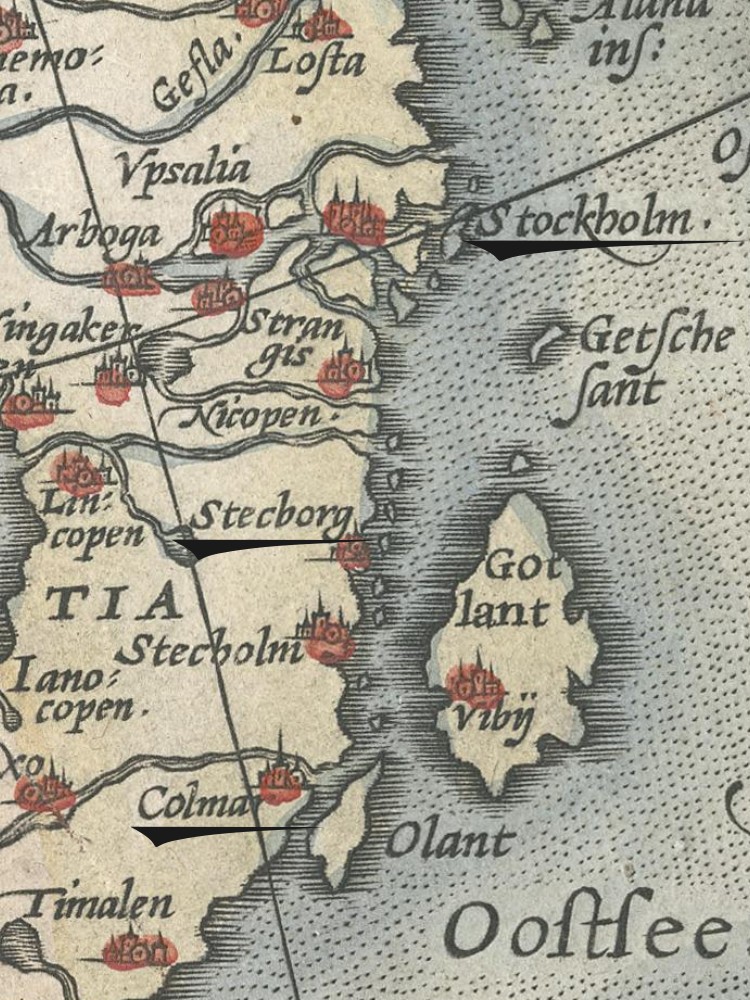
Map of the east coast of Sweden (1587), with Stockholm at the top and Kalmar at the bottom
Samuel Kiechel’s first attempt to leave Stockholm failed. After getting lost, he and his Danish companion had to return. They spent three more days in the city and then left for the second and final time early in the morning on 16 March.
The two men were in a hurry. Kiechel wrote in his journal that spring was approaching and it had started to rain. The snow on the ground was melting fast. While crossing a frozen lake, the water on the ice was already higher than the skids of the travellers’ sledges. However, Kiechel knew there was no danger of the ice breaking just yet. He noted that, even though the snow had been melting for eight days, the ice was still one cubit thick. But our traveller had also heard stories of people and animals drowning every year when they stepped on the ice too late in the spring or too early in the autumn.
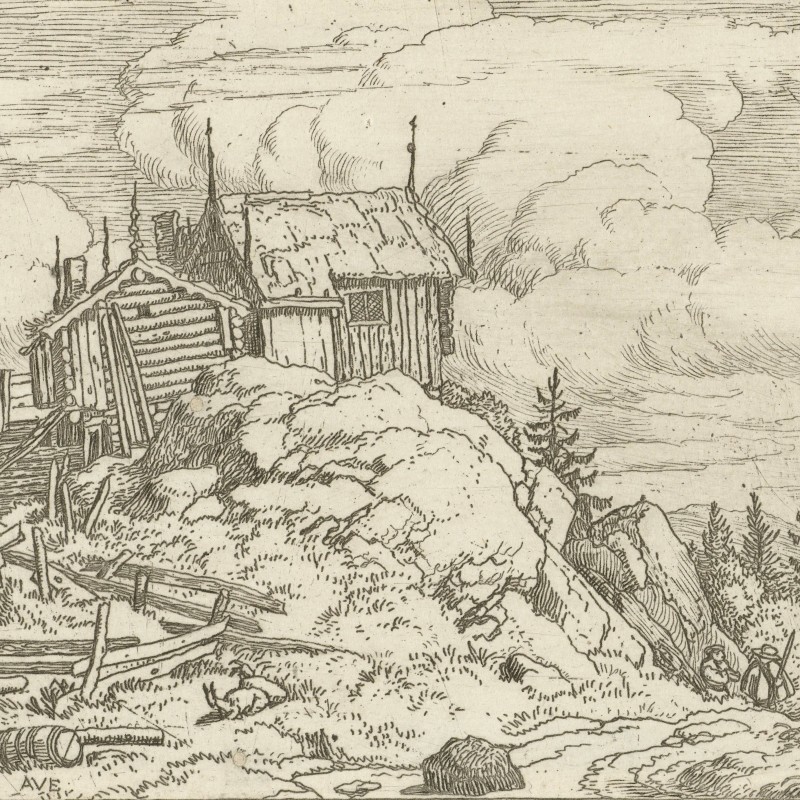
At lunchtime, Kiechel and his companion stopped for a short break. Afterwards, they continued but got lost and had to travel through the night until they found the road again. It was so dark that the two men could barely see each other. Finally, they spotted a light in the darkness and headed towards it. The light came from a small hut. The travellers woke the inhabitant, a poor peasant, and asked him for shelter. After some persuasion, the man agreed, but the hut was little more than a small stable where the peasant and four or five animals lived. It had such a low door that the horse of Kiechel’s companion did not fit through and had to spend the night outside. His own horse was a smaller animal and managed to get through. The peasant sold the travellers some barley for their horses but was unwilling to provide them with any food or drink. Kiechel thought the man had little himself and therefore could not sell anything. The travellers were thirsty but wisely decided against drinking melted snow.
The following morning, Samuel Kiechel and his companion continued their journey. The land beyond the forests was no longer covered in snow. They had to walk for the most part rather than use their sledges. Kiechel considered leaving the sledge behind and riding his horse, but he decided against it. He did not want to lose the sledge and had no saddle. After a long walk, they arrived in Nyköping, 115 kilometres southwest of Stockholm.
Rising Waters
On the way to Nyköping, the horse of Kiechel’s companion had begun to limp, and the man considered staying in the town for the animal to recuperate and to exchange his sledge for a saddle. But Samuel wanted to press on to Söderköping that day. One of his former companions, whom he had travelled with from Copenhagen, stayed there, and our traveller wrote that he wanted to spend the night in the house of people he knew. After a short break, Kiechel left his companion in Nyköping and continued alone.
Samuel Kiechel wrote that he neither knew the road nor spoke Swedish, yet he hurried onward. The question of orientation keeps cropping up in the journal. I mentioned earlier that in the sixteenth century, no maps were available for this purpose, and road signs were very rare. This was even worse in Scandinavia, where pathways shifted with the seasons. In winter, frozen lakes and bays were the most common pathways. In summer, they were unusable. Even major roads on land were rarely more than muddy tracks.
However, Kiechel was not completely unfamiliar with the area between Nyköping and Söderköping. He had already travelled through there on the way to Stockholm. In addition, Scandinavian infrastructure was quite rudimentary, with few major roads. In fact, I would hazard the guess that there was only one major road southwards from Nyköping. Roads in the Middle Ages and early modern period were not planned for long-distance traffic, but to connect nearby towns and villages. Norrköping and Söderköping were the next towns to the south. Regardless of the road’s poor quality, our traveller would have been able to follow it, if only for lack of alternatives.
Following the road south, Kiechel came to a small lake, and upon stepping onto it, his horse broke through the ice and stood in the water. The water reached the belly of the animal and began to seep into the sledge. Our traveller managed to get the horse and sledge out of the lake and then drove around it along a rough, swampy path.
In the afternoon, Samuel reached the Bråviken, the inlet from the Baltic Sea he had already crossed on his way to Stockholm a few weeks earlier. Then it was frozen solid; now Kiechel was weary from driving his sledge across it. He could see many holes cut into the ice by fishermen during the winter. The water was now rising through them, reaching almost knee-high.
After some deliberation and with no viable alternative route, Kiechel spurred his horse on, praying he might reach the other side safely. He wrote that he felt hot and nervous because he spotted many gaps in the ice large enough for a horse’s hoof to become caught. If he got stuck, or worse, broke through the ice, there would have been no one to help or rescue him. Fortunately, our traveller reached the other side of the inlet unharmed.
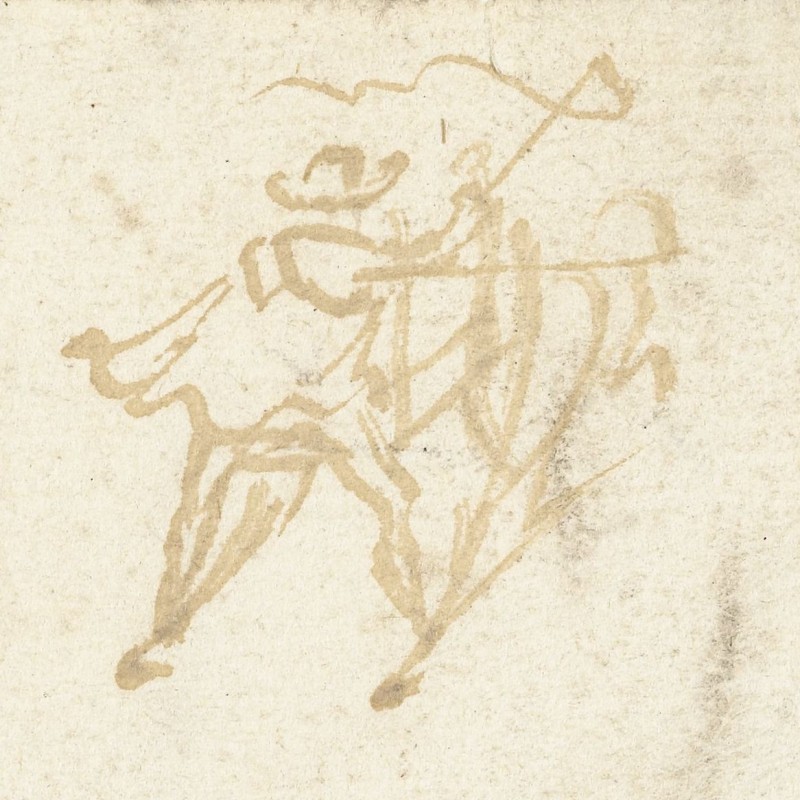
Due to the slow progress, Samuel Kiechel would not reach Söderköping that day. He stopped in the evening at a peasant’s house. This house was a familiar place. Our traveller had already spent a night there on his way to Stockholm. The house’s owner, a peasant, recognised the traveller and tried to talk to him, but Samuel did not speak Swedish and could not answer.
Nevertheless, Samuel was given food and drink to the best of his host’s abilities. His horse was also fed. Our traveller was even offered a bench to sleep on instead of the floor, as was usually the case.
To eat the soup the peasant served, Kiechel was given a silver spoon. Our traveller wrote: It is common in Sweden that even poor peasants have some silver spoons, even if they do not have a bed in their house. Wealthier farmers own fifty or more solid silver spoons. The spoons are considered their treasure. Kiechel believed that peasants and farmers mistrusted those who paid in money. As soon as someone had enough money to afford it, this person would not buy a silver spoon but have one made. The spoon would be thick enough to weigh three to four Reichsthaler. Our traveller was also told that the population had been much wealthier before the war (the Northern Seven Years’ War, 1563-1570). Peasants would occasionally work in the mines, and some of them had accumulated half a barrel of silver spoons.1
Later, Samuel Kiechel would meet the master of the royal mint, a Dutchman, who told our traveller that he still knew a peasant who had half a barrel of silver spoons. But most spoons had been melted down during the war. What wealth the peasants had left was still expressed in silver spoons, and guests would be given one to eat with.
On the morning of 18 March, Kiechel paid the peasant for his hospitality and left. The further he travelled, the more the snow had turned into sludge or mud and the ice into deep water. Kiechel came to a small brook he had to cross. When he was in the middle of it, the ice broke under his horse, and the animal and sledge fell in. Kiechel jumped out, but when he landed on the ice, it broke, and our traveller stood up to his waist in the cold water. Afraid the animal might run away, Samuel did not want to let go of his horse’s reins. He waded through the freezing brook after the animal until they arrived on the other side.
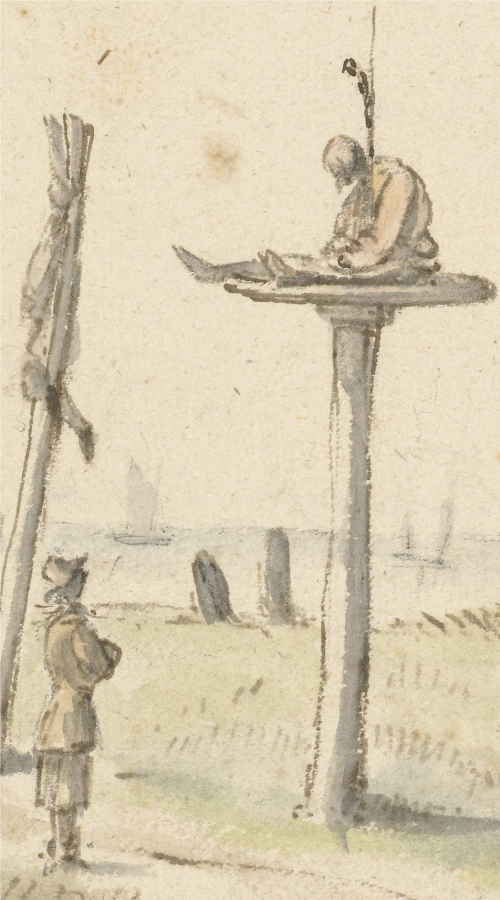
There, it did not get better. Stepping out of the cold water, Kiechel was confronted by two execution wheels. Two murderers had been executed there, and apparently their bodies were still on the wheels.2
Execution wheels were a gruesome form of torture and execution used in the Middle Ages and early modern period. The wheel was a typical spoked wooden wheel used by carts. First, the bones of the condemned were broken by dropping the wheel on them. Then the broken body was braided onto the wheel and erected on a pole. It was left standing to decay as a warning. It could not have been a pretty sight that greeted Samuel Kiechel on the bank of the river.
Our traveller hurried onwards. It was only one mile to Söderköping. His clothes were soaked from his fall into the river, and he was cold. Kiechel decided to walk most of the way in an unsuccessful attempt to warm up. Eventually, he reached his destination around lunchtime. He went to the house of his old companion, the merchant with whom he had come from Copenhagen, and was welcomed and invited to spend the rest of the day and the next in Söderköping to dry his belongings, warm up again, and allow his horse some rest.
A Trip to Stegeborg Castle
On 20 March, his host and friend planned to travel to a nearby castle to conduct business with the local reeve. He asked Kiechel whether he would be interested in joining him, and our traveller agreed. The two men and a servant left Söderköping in two sledges. Kiechel noted that most of the snow on the roads had now disappeared.
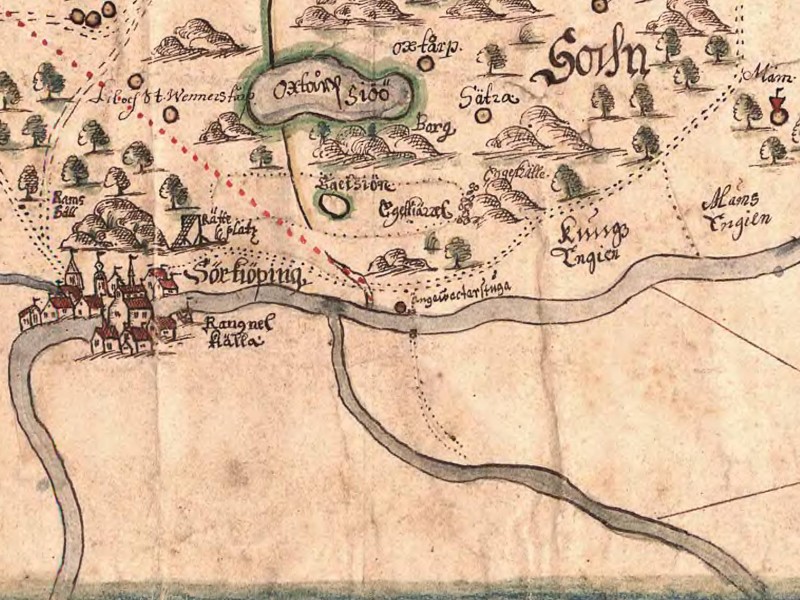
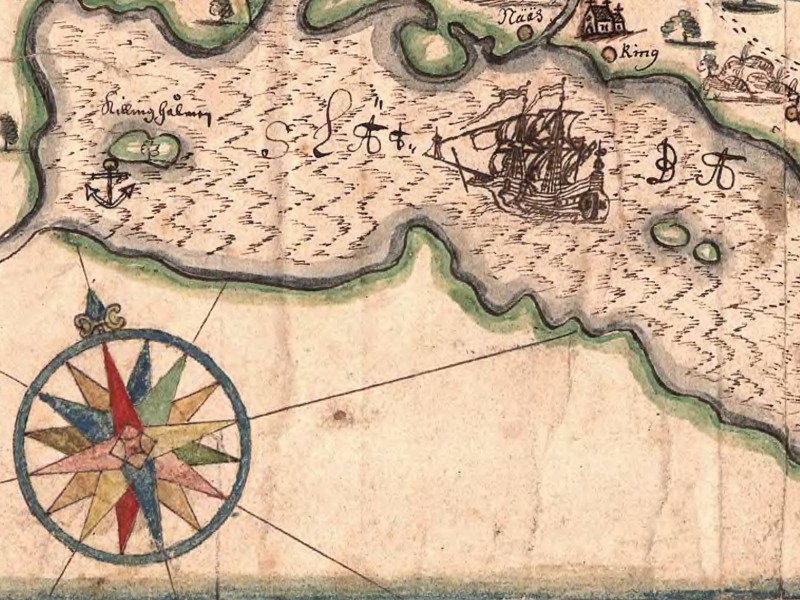
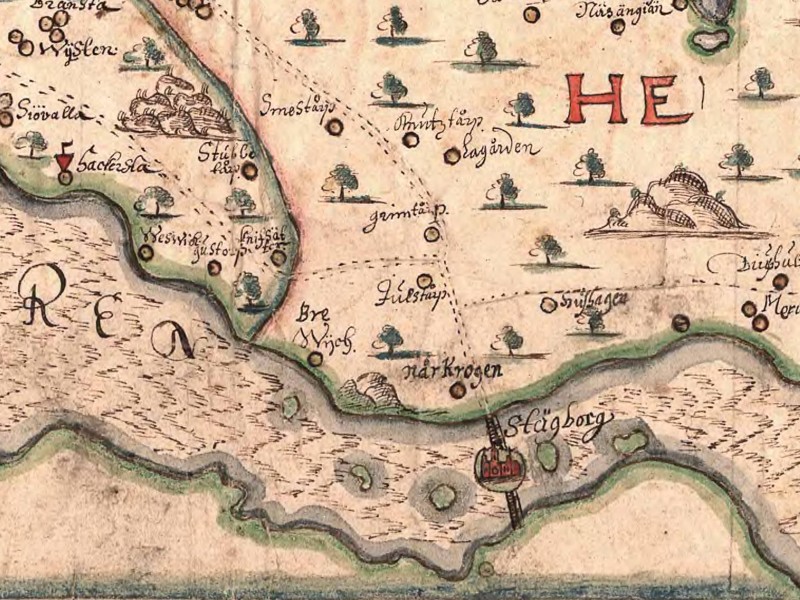
Slätbaken Sound from Söderköping (Sörkiöping) in the west to Stegeborg Castle (Stägborg) in the east
The group’s destination was Stegeborg Castle. According to the journal, it was built on an island in the middle of an inlet from the Baltic Sea (Slätbaken Sound). Ships sailed to and from Söderköping along this waterway and had to pay a customs duty at Stegeborg. At the time of Kiechel’s visit, the inlet was still frozen, but a lot of water had already accumulated on top of the ice. Our traveller saw many holes and gaps, and they had to watch their step on the way to the castle.3
When the group arrived, they were invited to lunch with the reeve. Kiechel learnt that the current king, John III, had been born in Stegeborg Castle. After their meal, the reeve showed his guests around. They visited the stables to look at the horses, and Kiechel’s host bought one of the animals.
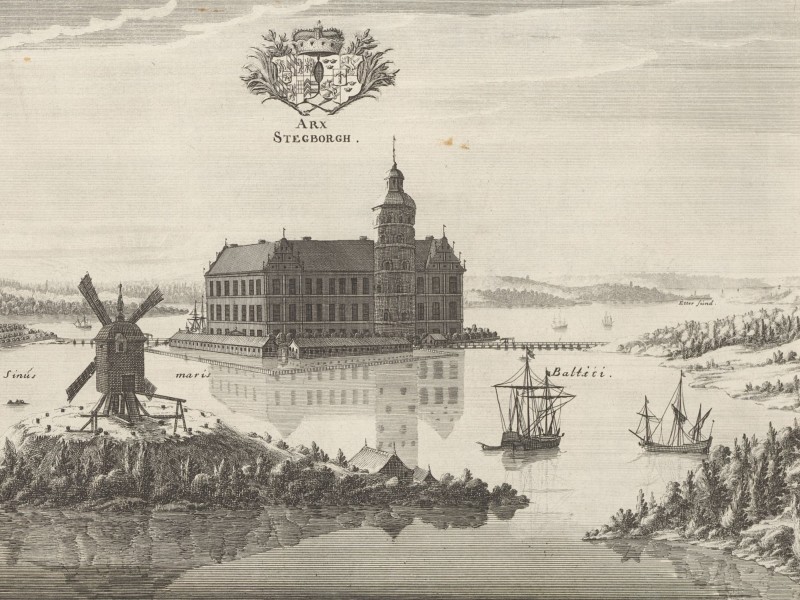
Stegeborg Castle, 1692
In the afternoon, the three men left the castle to return to Söderköping. The servant followed the sledges at a distance on the newly acquired horse. As they travelled across the frozen inlet, the ice suddenly gave way beneath the horse. The servant jumped off and landed on the ice, but the animal broke through. However, it managed to keep its front legs on the ice with great effort. Kiechel and his friend were startled but could not drag the horse out of the water for fear the ice would break further. After a long struggle, the horse managed to clamber out of the hole on its own.
As a result of this accident, the three men decided to spread out and keep some distance between them. The servant was no longer in the mood to ride the horse; instead, he walked beside it. Kiechel was worried and scared as long as they remained on the ice. He saw more and more gaps. When he arrived back in Söderköping in the evening, our traveller decided that this had been his last sledge ride of the winter. There was just not enough snow left, and the ice was becoming too treacherous.
Samuel stayed in Söderköping for two days. He wanted to swap his sledge for a saddle but could not find anyone willing to make the exchange. Eventually, someone took pity on him and gave our traveller a simple wooden saddle. The saddle had no stirrups, leather or straps, but Kiechel was glad to make the exchange and continue his journey.
To Kalmar
Our traveller was preparing to leave when, on 23 March, the Master of the Royal Mint arrived in Söderköping. He was accompanied by a Dutchman and Kiechel’s former companion, the Dane whom he had left behind in Nyköping. The group was on its way to Kalmar, where the Swedish King was at the time.
Travelling to Kalmar would be a significant detour for Kiechel, who simply wanted to leave the country. But he could not find companions for a more direct route to the Øresund. Unlike the short trip from Nyköping to Söderköping, Kiechel could not travel to the Øresund alone. The distance was greater; the landscape was wild, with dense forests, high mountains and a sparse population. Without a companion or a guide, he would likely get lost.
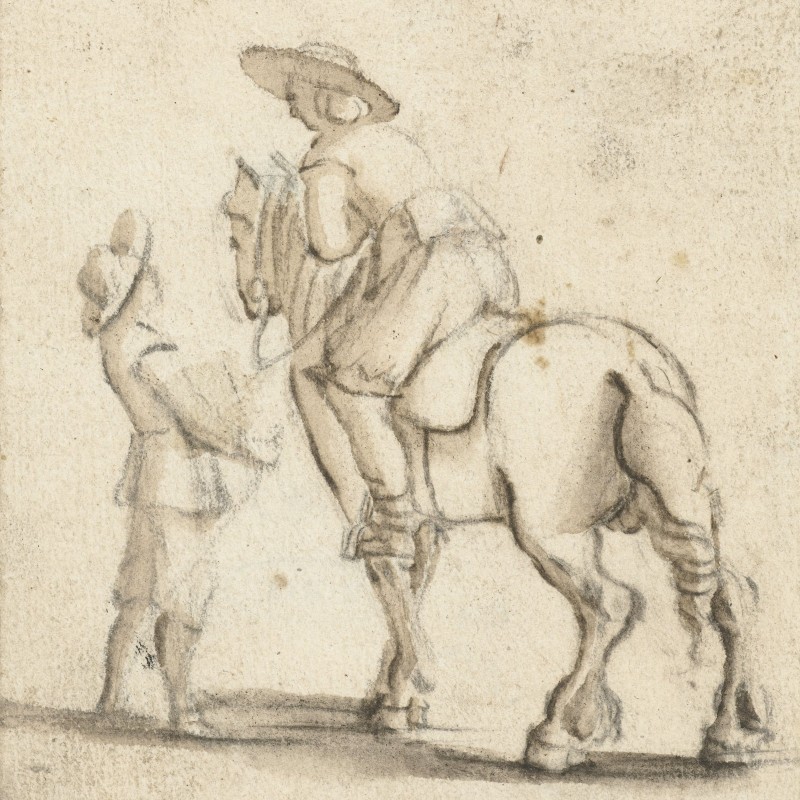
So Kiechel chose the safer option to join the group and visit Kalmar. They left Söderköping in the afternoon of the same day, but the start was not promising. Samuel now rode his horse, but learned that the animal was not used to carrying a saddle. It gave our traveller some trouble. Initially, it refused to move or walked backwards. As a result, the group travelled only a mile to the village of Hälla.
In the following days, they continued their journey south towards Kalmar. The travellers spent the nights in small villages and farmsteads. While Kiechel recorded their names, I was unable to locate them (in the journal, the places are called: Degree, Nügart, Wy, Auaby, Cadry and Abwy). They were all quite small settlements, and our traveller provided barely any information about this part of the journey.
Fortunately, Kiechel’s horse grew accustomed to its rider, and Samuel managed to acquire stirrups. He also exchanged the small sack of straw he had placed on the wooden saddle as a cushion for an actual cushion, to provide a bit of comfort. He noted in his journal that he did not tell the peasant the purpose of this exchange. Maybe our traveller felt a bit embarrassed.
Kiechel wrote that there were no roads or paths in this region, as people mostly travelled in winter by sledge along frozen tracks. The route the group followed was very swampy. The water had come down from the mountains as the snow began to melt, turning the countryside into one enormous mire.
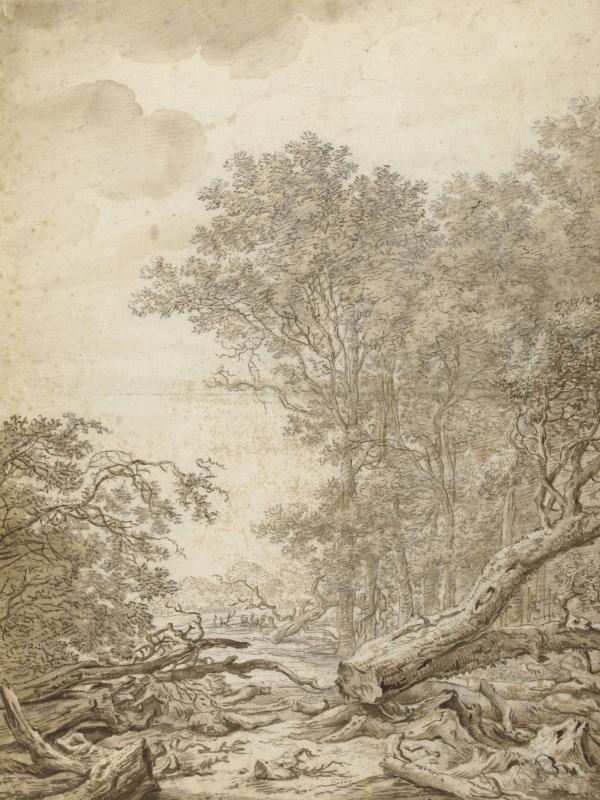
On 30 March, the travellers finally arrived in Kalmar. However, the last short stretch of the journey took them six hours. During the night, the temperatures had dropped, and the water along the route had frozen. The ice was not thick enough to support a horse, and the animals kept breaking through. Walking on foot and leading the horses was also difficult on the thin ice. Kiechel wrote that their horses were hurt more during those six hours than in the previous eight days.
Illustrations & References
All images are in order of appearance with links to sources on external websites:
- Scandinavia, in: Ortelius, Abraham, Theater of the World, Antwerp 1587, fol. 2v; Library of Congress.
- van Everdingen, Allaert, The Hamlet on the Hill, 1631 – 1675; Rijksmuseum Amsterdam.
- van Swanevelt, Herman, Italiaans landschap, c. 1610; Rijksmuseum Amsterdam.
- van Uden, Lucas, Boslandschap, 1605 – 1673; Rijksmuseum Amsterdam.
- ter Borch, Gerard, Drie studies van een slede met een paard ervoor, 1631; Rijksmuseum Amsterdam.
- van Borssom, Anthonie, Galgenveld aan de rand van de Volewijk, 1664 – 1665; Rijksmuseum Amsterdam.
- Anonymous, Östergötland, detaljkartor, 1653; Riksarkivet Stockholm.
- Swidde, Willem, Arx Stegborgh, 1692; Rijksmuseum Amsterdam.
- ter Borch, Gerard, Ruiter te paard pratend met een jongetje, 1630; Rijksmuseum Amsterdam.
- Saftleven, Herman, Hoog Soerensche Bosschen bij Apeldoorn, 1640 – 1649; Rijksmuseum Amsterdam.
- Die Reisen des Samuel Kiechel aus drei Handschriften, K. D. Haszler (ed.), Stuttgart 1866, p. 75; Bayerische Staatsbibliothek. ↩︎
- Ibid., p. 76. ↩︎
- Ibid., p. 76f. ↩︎