
Journal of Samuel Kiechel
9 – 12 February 1586
From Helsingborg towards Jönköping
“It was late in the day when we carried on with our journey. We still had two miles to go, and the road was terrible. When we tried to cross a wide ditch, the ice broke and two of our horses with their sledge fell into the water.“
Die Reisen des Samuel Kiechel aus drei Handschriften, K. D. Haszler (ed.), Stuttgart 1866, p. 59; Bayerische Staatsbibliothek.
Rural Accommodation
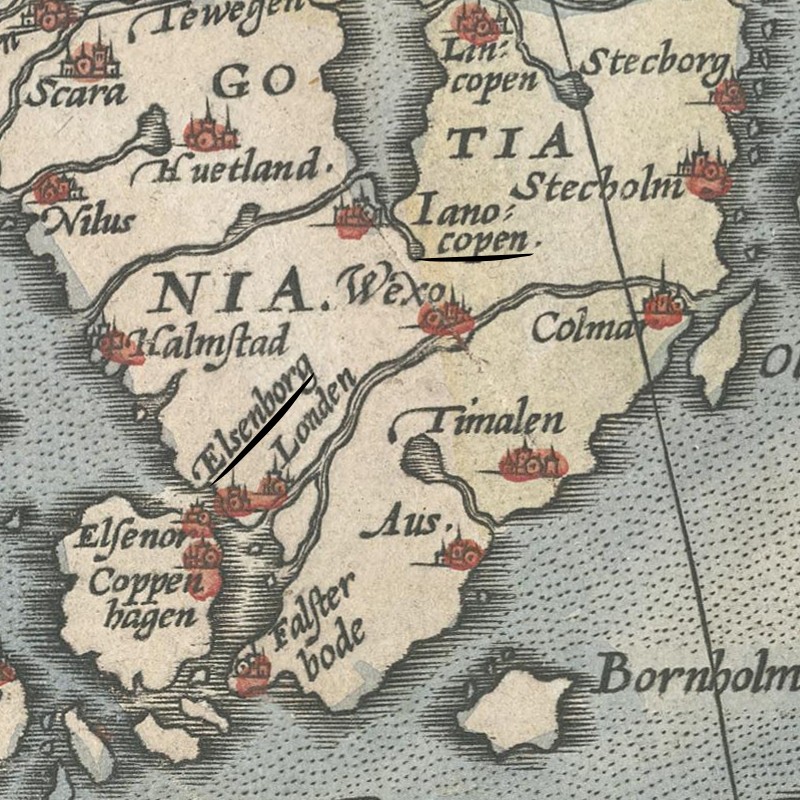
Southern Sweden with Helsingborg (Elsenborg) and Jönköping (Ianocopen)
After crossing the Øresund, Samuel Kiechel and his companions, two German merchants from Lübeck, hired two sledges to take them to a village two miles away. The road was covered in deep snow, and progress was slow. Kiechel noted that the horses already struggled to pull an empty sledge. After covering the agreed-upon distance, the group hired two more sledges with drivers to carry them a further two miles.
The stop-and-start progress our traveller described was because none of the local carters wished to venture too far from home during winter. The roads were snow-covered and icy, and their horses tired quickly.
In the evening, the three travellers stopped at a village that Kiechel called Ruy. I was unable to locate the place. Sixteenth-century maps of Scandinavia are rare and not very detailed. Additionally, Kiechel mentioned that he often stayed in small villages or farmsteads. Considering that our traveller wrote down the names of places as he heard them, finding those settlements today can be difficult and sometimes impossible.
The travellers spent the night in a peasant’s house. The accommodation was poor, with little food and only murky water to drink. Fortunately, they carried a supply of beverages. Kiechel and his companions had to sleep on the ground. Our traveller noted that during the winter months, not only does the peasant and his family stay in the house, but so do young farm animals such as lambs, calves, goats and pigs. The worst animals to have in the house are young pigs. They have a strong smell and walk around at night, licking the faces of the sleeping people. According to Kiechel, the smell was so bad that anyone subjected to such treatment would lose their appetite.
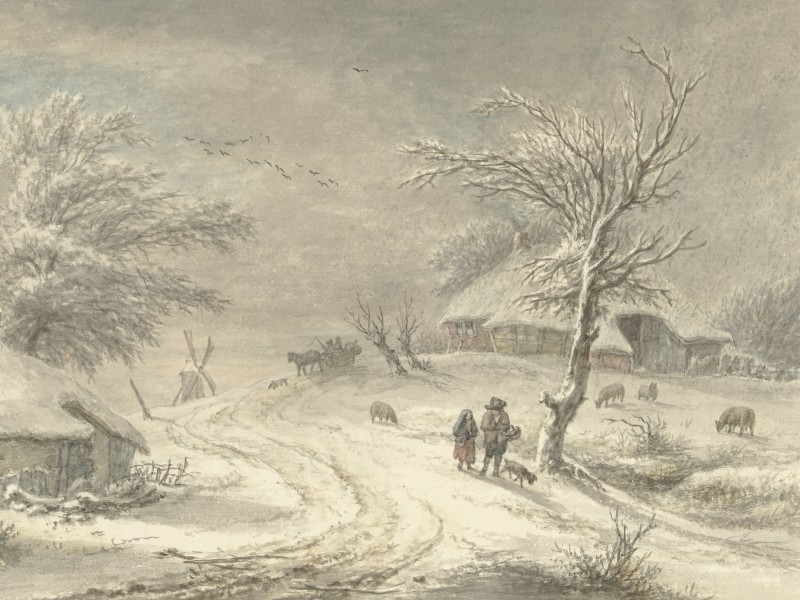
Swedish Farmhouses
Although Samuel Kiechel seldom provided lengthy descriptions of what he observed, especially during the early part of his journey, he did note some details about Swedish farmsteads.
Kiechel wrote: The houses in the provinces of Småland and Blekinge are built from the trunks of fir trees fitted together. These houses have four walls and are usually only one storey high. Inside, the walls of the main room are not covered with panels or plaster. The inhabitants seal the gaps between the logs with loam or cow dung. The roofs are made of wooden planks and covered with grass sods. During the summer, sheep and goats graze on the roofs. Most peasant houses feature just one tiny window, about a cubit long and wide, positioned in the roof. The window is covered with parchment or glass. The residents do not need more windows.1
The doors of the houses are very low, requiring people to bend down to enter. Conversely, the threshold is so high that crossing it is difficult. Kiechel learnt that this tall threshold is meant to keep young animals inside.2
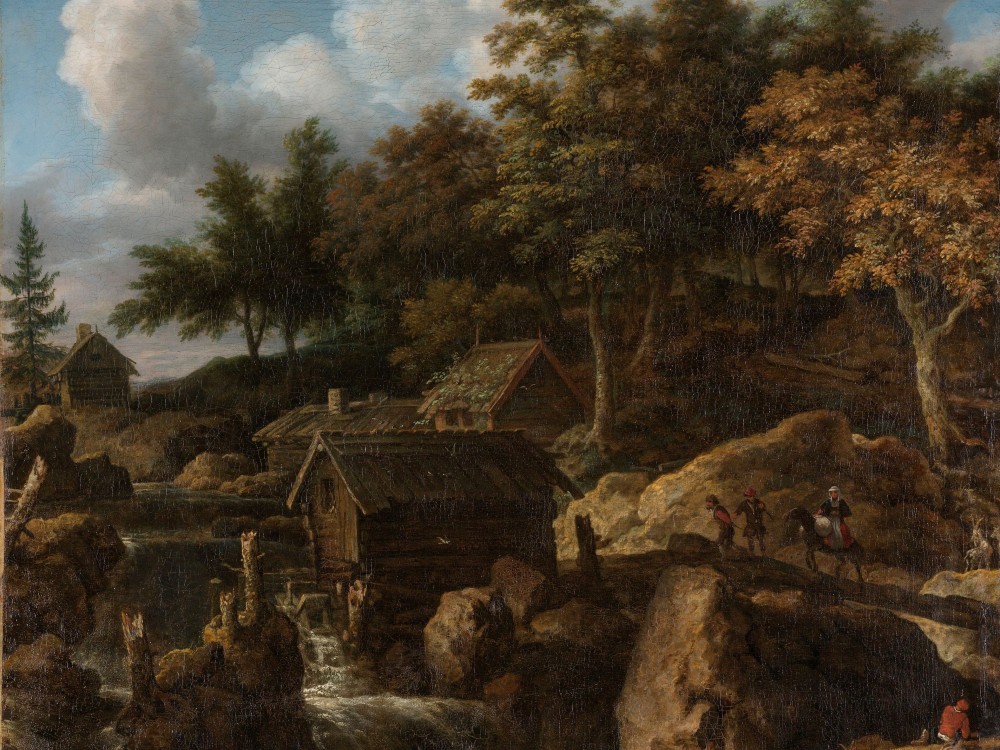
Swedish landscape with three wooden houses
Our traveller’s account of Swedish farmhouses largely aligns with Olaus Magnus’ descriptions in the Historia de Gentibus Septentrionalibus. According to the Historia, the square houses made of tree trunks are the simplest. Their roofs could be covered with birch bark, bricks or wooden tiles made from spruce, fir, oak or beech. Wealthier households often covered their roofs with copper or lead. Magnus wrote that the wooden houses had only a single window in the roof made of glass or bleached linen. He also mentioned the narrow doors, but wrote that this was done so enemies could not easily open and enter them.3
Regarding the interiors, Kiechel reported: In the main room, there is a table usually as long as the room is wide. In winter, this room functions as a kitchen, larder and bedroom. Instead of a stove, a baking oven is used for heating. Each day, three hours before dawn, a large fire is built in the oven, which keeps the house warm throughout the day. The warmth is so substantial that women, children and servants — who do not work outdoors — wear only shirts despite the cold outside.4
Kiechel noted that each person in the household has a specific sleeping spot. The bed of the head of the house and his wife is usually beside the table. It has minimal bedding and is mainly made of straw. The children sleep near the oven, where it is warm. Infants sleep in a box made from a single piece of wood, hung from a beam by a rope. Servants sleep on straw-covered benches, and guests are expected to sleep on the floor or, if shown kindness, on the table.5
Furthermore, Kiechel wrote that young animals, such as calves, lambs, goats and piglets, are kept in the main room of the house. Dogs, cats, chickens, and pigeons are not allowed inside. The young animals are placed in the centre of the room and, as mentioned earlier, tend to lick the faces of sleeping individuals. Our traveller commented that it is easy to imagine the smell of a room where people and animals live so closely together, with the scent unable to escape due to the absence of windows and the narrow door. The smell would hit a guest as they opened the door, leaving them feeling more fed up than after a fine meal.6
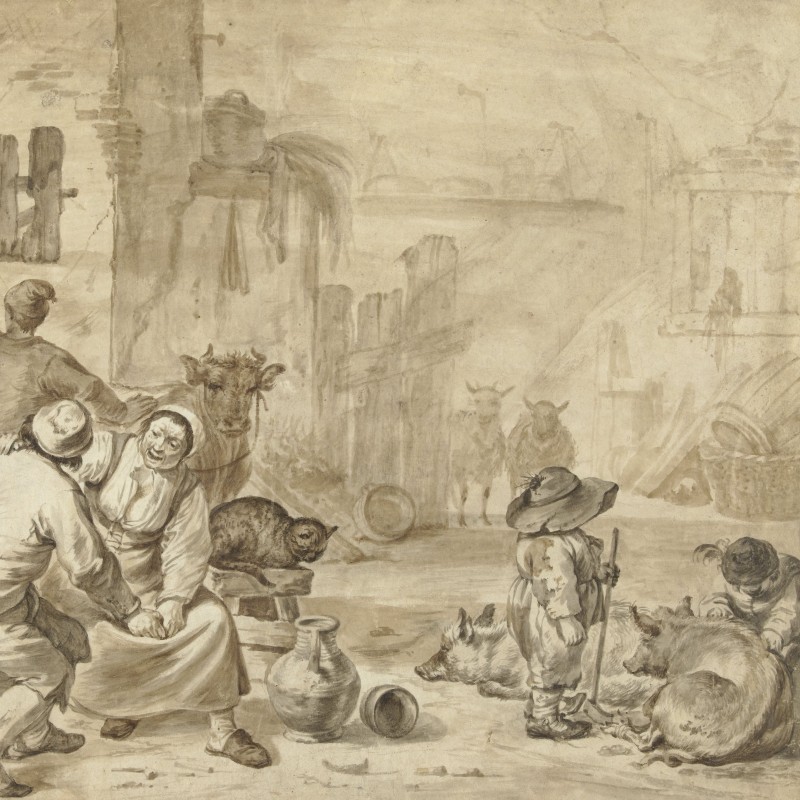
Regarding table manners, Kiechel wrote that the man of the house always seats himself first, at the head of the table, with his wife beside him. During the meal, he will burp loudly, as do his wife and children. Our traveller assumes they do this to amuse the guests. A large wooden bowl on the table serves as a drinking vessel and must be lifted with both hands.7
Olaus Magnus did not describe daily life in farmhouses, but noted that household items such as plates, cups and other utensils were usually made of metal. He argued that due to the cold, Swedes are accustomed to a firmer grip when holding objects. Ceramic or glass dishes would crack or break, and liquids in ceramic jugs or bowls could freeze and burst their container. Common materials for dishes were copper, brass and tin, while silver dishes and cutlery were carefully collected and kept by families.8
In terms of local customs, Samuel Kiechel wrote: If guests wished to be welcomed into a Swedish home, they must give the woman of the house nutmeg, cloves, cinnamon, ginger or similar items. For children, he recommends bringing brass rings, mirrors, knives, necklaces, and other small trinkets. If a guest brings enough food to share, they are welcomed. However, if guests request something and even offer to pay for it, they will find it difficult to obtain it.9
Getting Around
On the morning of 10 February, the travellers pressed on with their journey. Once again, they hired a sledge and driver to take them two miles. The snow was so deep that it took the group five hours to cover the distance. Kiechel wrote that there was little traffic in this area, as it was close to the border between Denmark and Sweden.
After two miles, the travellers struggled to find transport to continue their journey. The man who had brought them there with his sledge was unwilling to go further because his horses were exhausted. The hamlet where they had stopped was on the Swedish side of the border and consisted of only three houses.
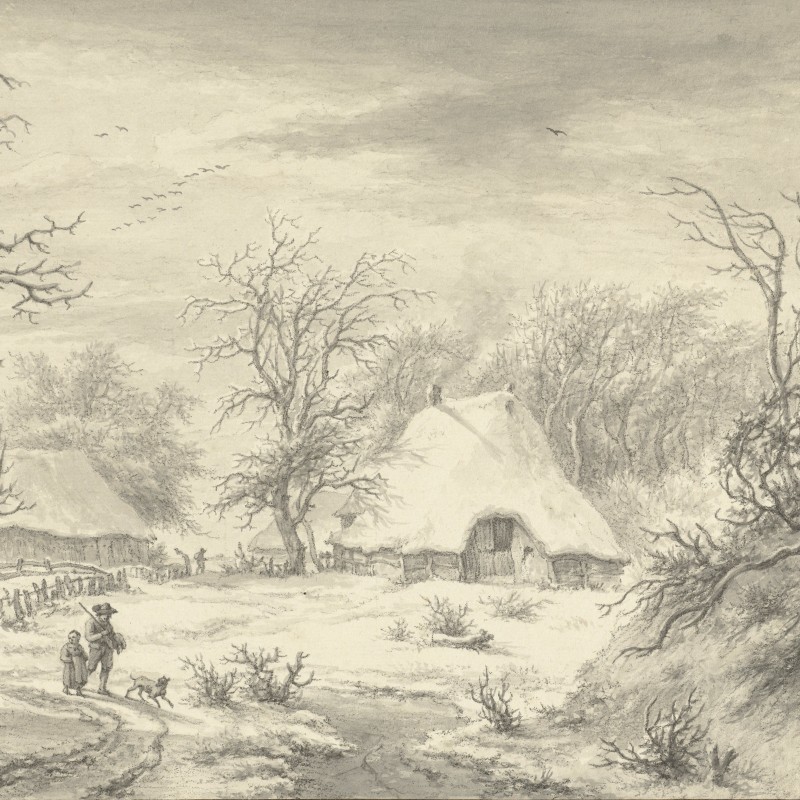
Regarding transport and accommodation, Kiechel explained that it was customary in Sweden to appoint certain people in each parish to serve as hosts for travellers. These parishes and, consequently, the hosts, were roughly two Swedish miles apart. The hosts were supposed to provide travellers with accommodation, food and drink for two ‘Rondstuckh’ per meal, which is worth about four Kreuzer.
According to the traveller, the length of a Swedish mile was comparable to a Swiss mile. As I have mentioned before, the definition of the length of a mile could vary considerably between countries or even provinces. For a traveller, there were no reliable ways to look up this information because there were no standardised conversion tables. Books containing such information, such as itineraries, cosmographies or atlases, were usually private efforts by individuals who might or might not be accurate and rarely disclosed their sources. Accordingly, and in contrast to Kiechel, the messenger Daniel Wintzenberger wrote in his itinerary that a Swedish mile was roughly the same length as a German mile (~7,420 m), whereas a Swiss mile was one and a half times as long (~11,000m).10
About the money mentioned above, a ‘Rondstuckh’ was presumably a Swedish coin, and Kreuzer was a general term for smaller coins used in southern Germany. Again, Kiechel used familiar coinage to estimate the value of coins in the country he visited.
Our traveller also wrote that the hosts were supposed to help travellers reach the next parish by providing horses and a sledge, if available. Again, this would cost a traveller two ‘Rondstuckh’. However, a person travelling in the service of the king and bearing the king’s coat of arms had to be supplied with food, drink, horses and a sledge by all peasants, without any payment. In contrast, foreign travellers were often charged double and received transport only if it suited the host. Kiechel noted that he experienced this more than once.
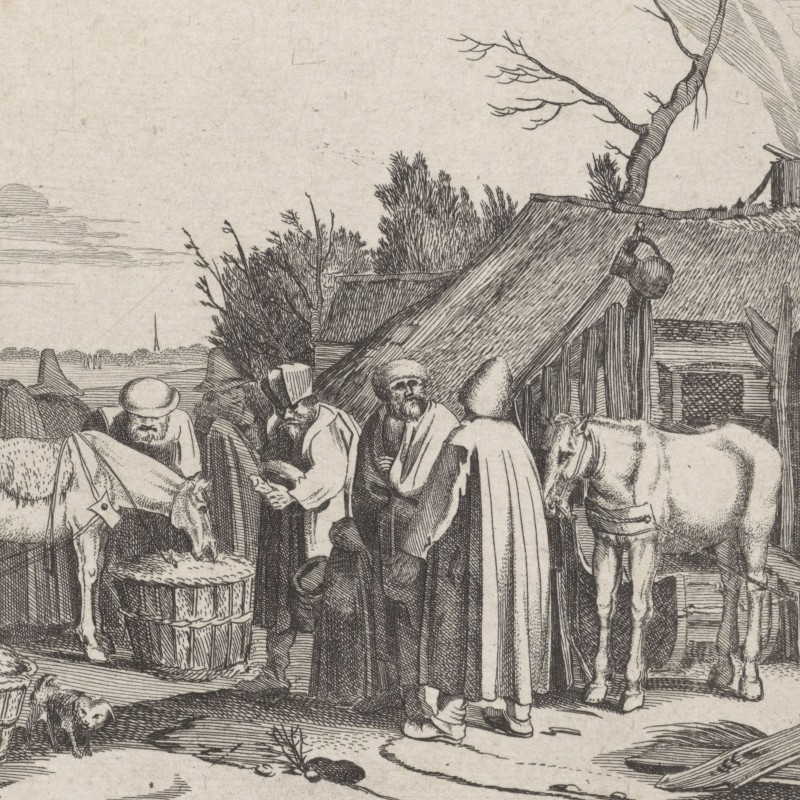
Samuel Kiechel’s experience with Swedish hospitality differs from that described by Olaus Magnus. According to Magnus, the Swedes were very hospitable, and guests and travellers were welcome in their homes. Guests were allowed to stay as long as they wished and were directed towards friends further along their journey. If need be, visitors were provided with horses. For all this, the guests did not have to pay, as this was considered a disgrace and akin to robbery.11
Olaus Magnus’ description reads overly positive, but he was Swedish, familiar with local customs and spoke the language. He would certainly have been treated differently from a foreign traveller. In addition, the purpose of Magnus’ book was to provide knowledge about Scandinavia and to interest readers in it. In a sense, his Historia was an advertisement, and the positive tone is therefore not surprising.
Stuck in the hamlet, Samuel Kiechel and his companions decided that their best option to get transport was to pretend to be in the service of the Swedish king. Our traveller does not comment on whether the impersonation as royal Swedish servants was successful. But he wrote that they eventually received three weak horses and two sledges after pleading for a long time. The travellers harnessed the two weakest horses to one sledge, and the third horse had to pull the other sledge alone.
Thin Ice
By the time the group finally left the hamlet, it was already late in the day, and the road was terrible. While crossing a wide ditch, the two horses pulling one of the sledges broke through the ice and stood up to their bellies in the water. The sledge tipped over and fell into the water along with one of Kiechel’s companions and their luggage. Our traveller was fortunate, as he was not on the sledge but walking alongside it.
It took the three men considerable time and effort to recover the horses, sledge and luggage from the water. Meanwhile, night fell, and they still had a long way to go. Samuel’s companion, who had fallen into the water, was not feeling well. He was wet, and it was very cold.
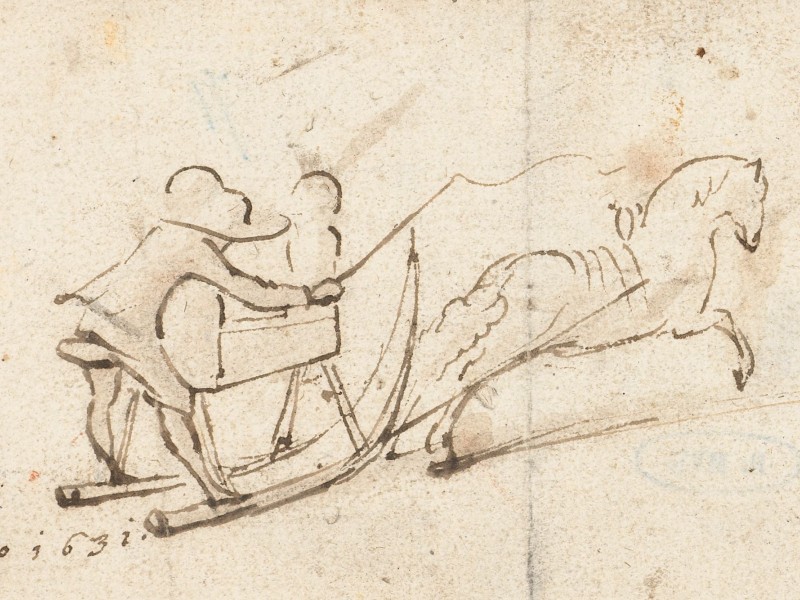
Eventually, the group reached a village called Onolzböckh in the Swedish province of Småland well after nightfall. There, the travellers stayed at the house of the local parish priest. Kiechel noted that travellers in Sweden seeking food, drink and accommodation are advised to ask the local reeve or parish priest. Although their houses were not inns, they did not turn people away. The priest was very welcoming, providing food, drink and a place to sleep. He also showed them a special, heated room where they could dry their wet belongings.
As one of the few moments in the journal when the traveller offers insight into himself, Samuel Kiechel wrote that he did not speak Swedish and therefore could not converse with the priest. But learning Latin had been part of his education. Kiechel decided to try to talk to the priest. But since he had not used Latin for ten years, he found it somewhat challenging to communicate in it.
Illustrations & References
All images are in order of appearance with links to sources on external websites:
- ter Borch, Gerard, Vier studies van een paard en arrenslee, 1631; Rijksmuseum Amsterdam.
- Ortelius, Abraham, Theatre of the World, Antwerp 1587, fol. 90v; Library of Congress.
- van Drielst, Egbert, Wintergezicht te Exloo, 1755-1818; Rijksmuseum Amsterdam.
- van Everdingen, Allaert, Swedish Landscape with a Waterfall, 1650 – 1675; Rijksmuseum Amsterdam.
- Saftleven, Cornelis, Stalinterieur met acht personen, 1651; Rijksmuseum Amsterdam.
- van Drielst, Egbert, Winterlandschap, 1806; Rijksmuseum Amsterdam.
- van Scheyndel, Gillis, Winter, ca. 1622; Rijksmuseum Amsterdam.
- ter Borch, Gerard, Vier studies van een paard en arrenslee, 1631; Rijksmuseum Amsterdam.
- Die Reisen des Samuel Kiechel aus drei Handschriften, K. D. Haszler (ed.), Stuttgart 1866, p. 81; Bayerische Staatsbibliothek. ↩︎
- Ibid. ↩︎
- Olai Magni historien, Der Mittnachtigen Länder …, Basel 1567, p. 306; Bayerische Staatsbibliothek. ↩︎
- Reisen des Samuel Kiechel, p. 82. ↩︎
- Ibid. ↩︎
- Ibid. ↩︎
- Ibid., pp. 82f ↩︎
- Magni historien, Der Mittnachtigen Länder, pp. 352f. ↩︎
- Reisen des Samuel Kiechel, pp. 60, 83. ↩︎
- Wintzenberger, Daniel, Ein Naw Reyse Büchlein von der Weitberümbten Churfürstlichen Sechsischen Handelstad Leiptzig, Dresden 1595, Inhalt dieses Reyse Büchleins [table of contents]: Erklerunge der Meilen. ↩︎
- Magni historien, Der Mittnachtigen Länder, pp. 436. ↩︎