
Journal of Samuel Kiechel
19 – 30 April 1586
From Copenhagen to Warnemünde
“During the night, the weather turned nasty with snow, hail and rain, so I grew very cold and feared my feet would suffer from frostbite; I was wet because I had to spend the night on deck of the ship and had nowhere to hide from the weather […] The next morning, I found that 34 other small ships had sought shelter under the cliffs during the night.”
Die Reisen des Samuel Kiechel aus drei Handschriften, K. D. Haszler (ed.), Stuttgart 1866, p. 88; Bayerische Staatsbibliothek.
Sailing South
On 19 April, Samuel Kichel was ready to leave Copenhagen. He had paid for passage on a barge bound for the German city of Wismar. The wind was favourable, and Kiechel watched as three Danish ships belonging to the king set sail. He learnt that the royal chancellor was on board one of them, en route to England. His ship was called the “Gedeon”, the king’s favourite, and it was very fast. As it set sail, its gunners fired a salute. The barge with Kiechel on board was close by, and our traveller wrote that a cannonball passed just over their heads, which he could both see and hear. The Danish ships were impressive and a beauty to behold.1
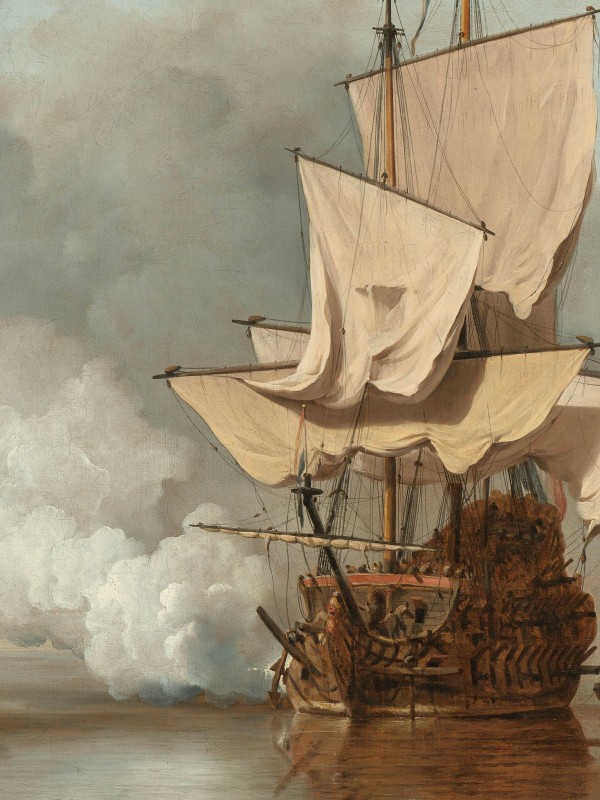
When the three Danish ships had left, Kiechel’s vessel set sail. With him were other passengers. Kiechel mentioned a journeyman glazier, a stable boy, a young apprentice who had run away from his master, a tailor with his horse and a horse trader with four horses.
The barge made good progress, and the wind grew stronger overnight so that the following morning the people on board could already see the coast of Pomerania. The vessel’s owner wanted to get closer to Wismar before entering the shallow coastal waters. He therefore steered away from the land again, and they kept sailing west for the next two days.
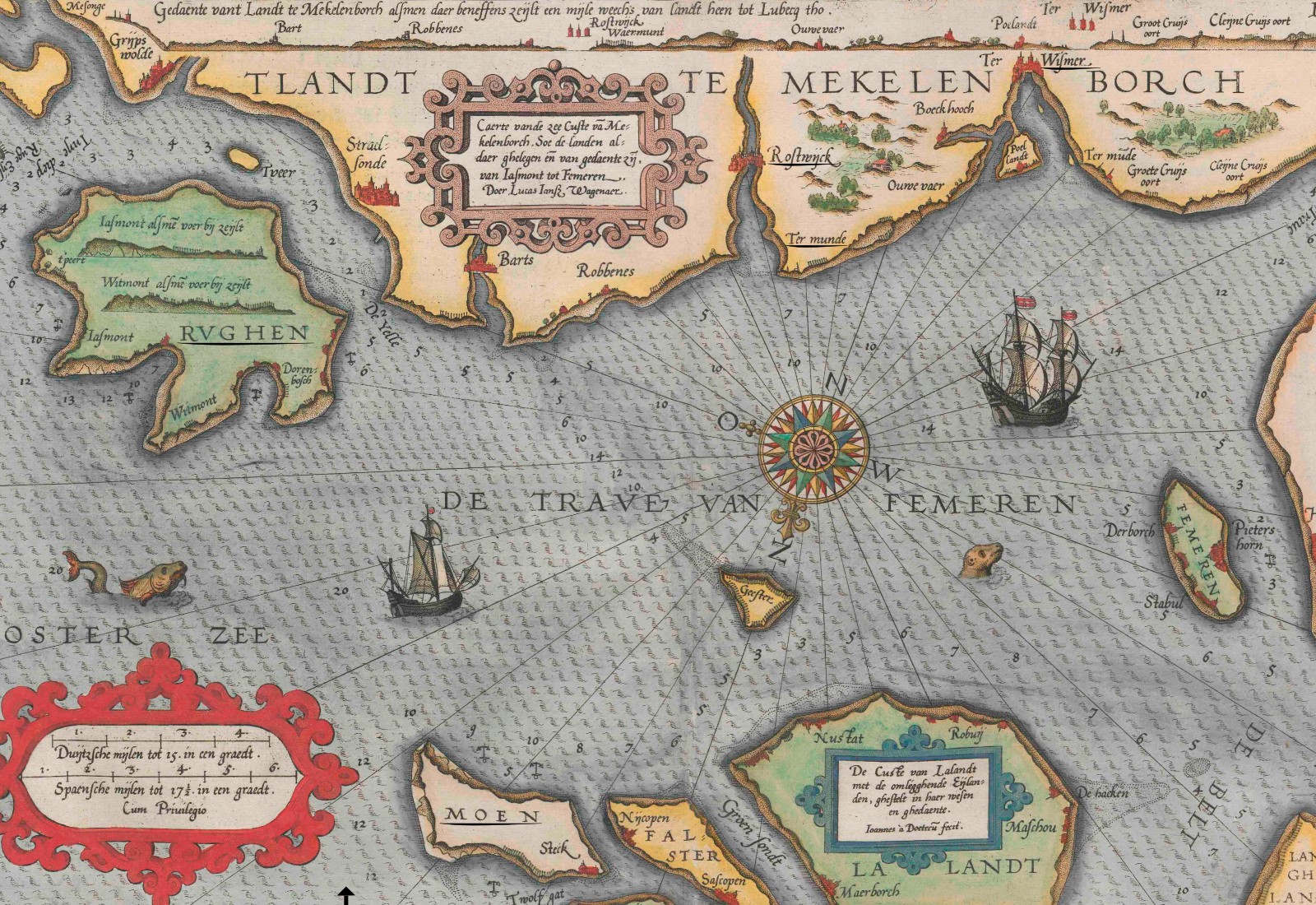
Naval chart of the Baltic Sea between Denmark and Germany (1585). The map is oriented southwards, with Kiechel’s ship coming from the bottom left (black arrow) and heading for Wismar (Wismer) in the top right corner. The islands of Møn (Moen), Falster and Rügen (Rvghen) are also shown. As an additional detail, the profile of the German coastline appears at the top of the map.
Wismar lies about 200 kilometres south-south-west of Copenhagen. However, to reach it, ships must sail around the Danish islands of Møn and Falster. This suggests that the coast Kiechel saw was likely the island of Rügen or the Darß peninsula. From there, the ship would sail west along the coast to Wismar.
However, the wind soon turned north-east, pushing the barge back towards Denmark until they were only twelve miles from Copenhagen. To avoid being pushed further back, the ship anchored beneath a chalk cliff. Kiechel wrote that the cliff was a large rock called “Keyserstul” (Emperor’s Chair) and that the land was called Møn. In the shadow of the cliffs, the ship was sheltered from the wind.2
The island of Møn is well known and a popular attraction today for its chalk cliffs (Møns Klint). The cliffs run along the east coast of the island. I could not identify a specific cliff named “Keyserstul”. Possibly, wind and weather have eroded this cliff at some point in the past. Alternatively, Kiechel may have misheard. The nearby island of Rügen on the German coast also features impressive chalk cliffs. One of those cliffs is called “Königsstuhl” (King’s Chair).
Reprovisioning
By the time the barge anchored below the chalk cliffs of Møn, Samuel Kiechel had already spent four days at sea and had run out of provisions. He wrote that he had brought only bread worth about two Kreuzer (a small German coin). Other passengers were also running low on provisions, so they asked the vessel’s owner to be brought ashore to buy food. The barge carried a small rowing boat for this purpose.
The owner agreed, and on the afternoon of 23 April, Kiechel and some other passengers were brought ashore. From the shore, they had to climb a steep, sandy hill. Kiechel wrote that he had drunk nothing for three days and, when he reached the top, felt thoroughly exhausted. From the top of the hill, the group walked for half an hour until they reached a small settlement.
The inhabitants of the hamlet were reluctant to sell bread to the passengers, so Kiechel and the others had to persuade them. By contrast, Samuel wrote that they had no difficulty buying eggs, bacon, ham, butter and milk.
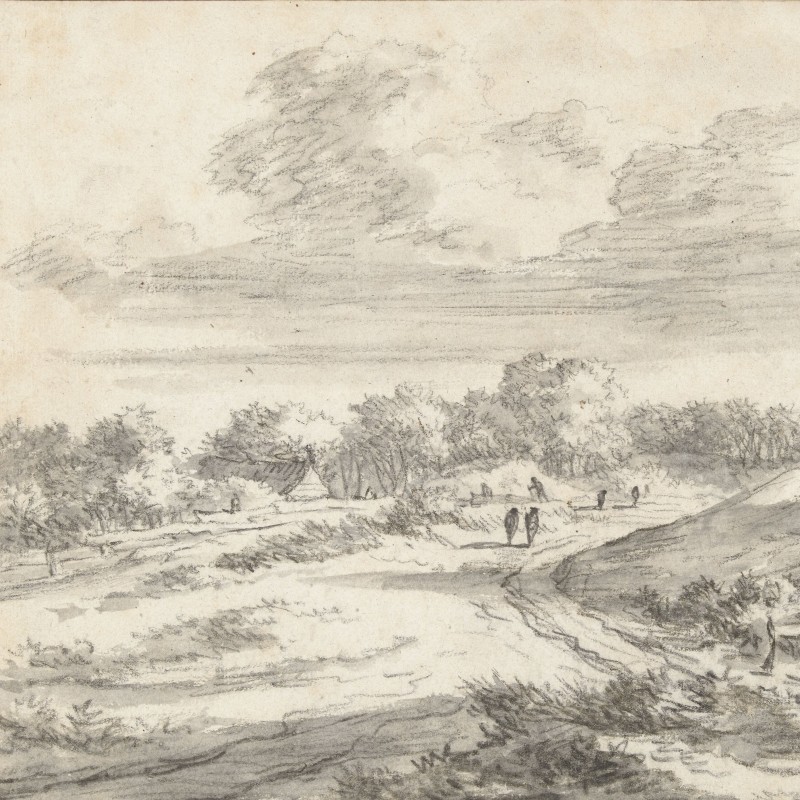
The difficulty in buying bread may have been that, compared with other foods on offer, it had to be baked regularly and did not keep very well. The inhabitants of the hamlet presumably made enough bread for their own consumption and no more, to avoid it going mouldy. The other foodstuffs were either preserved or readily available from the farm animals (eggs, milk). According to Kiechel, everyone bought as much food as needed. Our traveller wrote that he particularly enjoyed the fresh milk.
Afterwards, the group walked back to the boat. But when they reached the shore, Kiechel saw, to his horror, that the owner of their ship had set sail. During their absence, the wind had turned westward, making it too dangerous to anchor in this spot, as the ship would be driven into the cliffs. To allow his passengers to catch up, the sailors had set only the smallest sail. The boat they had arrived in was still on the shore, and everyone hurried towards it.
The passengers had to wade through the surf to reach the boat. When Kiechel saw everyone hurrying towards it, he did not want to be the last. He had bought some eggs and used his hat to carry them back. Now, in his hurry and to have his hands free while wading through the waves, Samuel threw his hat with the eggs into the boat. The eggs probably did not survive this treatment. The wind grew stronger, and the passengers had to row for half an hour to reach the ship.
Shelter From the Storm
When they were back on board, they sailed away from the cliffs. However, three miles out to sea, the wind shifted to the south-west and turned into a storm. The owner of the barge steered the vessel back to their anchorage below the cliffs. Kiechel wrote that he and the other passengers were glad to be back at anchor.
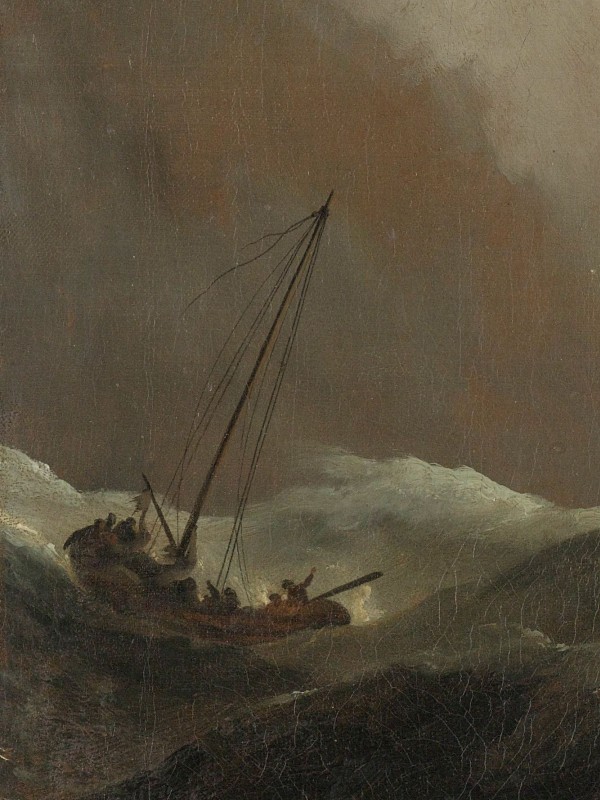
During the night, the terrible storm brought snow, hail and rain. Kiechel was cold and wet, as there was no shelter on the ship. He feared he would suffer frostbite on his feet. When the sun rose the following morning, our traveller was surprised to see how many ships had sought shelter below the cliffs during the night. He counted about 34 vessels. Among them was a ship that had sailed from Norway with herring to Gdańsk. This ship had run aground with full sails and was smashed to pieces. Fortunately, the people on board were able to save themselves. Kiechel wrote that the helmsman of the ship misjudged the distance from land. It was so dark during the night that he did not see the coastline until it was too late.3
Better to Travel on Foot
On 25 April, the wind had still not changed direction. Kiechel had run out of food again and asked the ship’s owner whether he would sell him some bread. The owner refused, saying he had only three days’ worth of food left for himself and his crew. Kiechel wrote that this supposed crew consisted of a single sailor, just a boy, who knew as much about sailing as our traveller.
Hungry and with no sign of a change in the wind, Samuel Kiechel decided not to wait any longer. He had spent eight days and nights on the ship and made little progress. Kiechel asked to be put ashore, where he would continue his journey on foot. This request was granted, and our traveller was glad to be off the ship. He wrote that the barge’s owner was a godless man who swore a lot. He cursed every ship he saw sailing past out at sea because he was stuck below the cliffs.
When Kiechel left the ship, another passenger, a tailor, decided to join him. The man had come aboard the barge in Copenhagen with a horse. He sold the animal to the horse trader, who was also travelling on the vessel, for three Reichsthaler before leaving the ship. Having this companion was advantageous to Kiechel, as the tailor spoke Danish.
After being brought ashore, the two men took their bags and set out. An hour later, they reached the village of Busene, where they had something to eat. Kiechel paid a peasant from the village a few coins to lead them to the town of Stege, where they arrived in the evening.
Stege was on the coast, and the two travellers spent the night in a fisherman’s house. The owner went fishing that night and returned the next morning with a large catch. Among the fish was a very large herring, which was served to Kiechel and his companion for breakfast. Our traveller noted that he would not disclose the size of the fish, presumably because he feared people would not believe him.
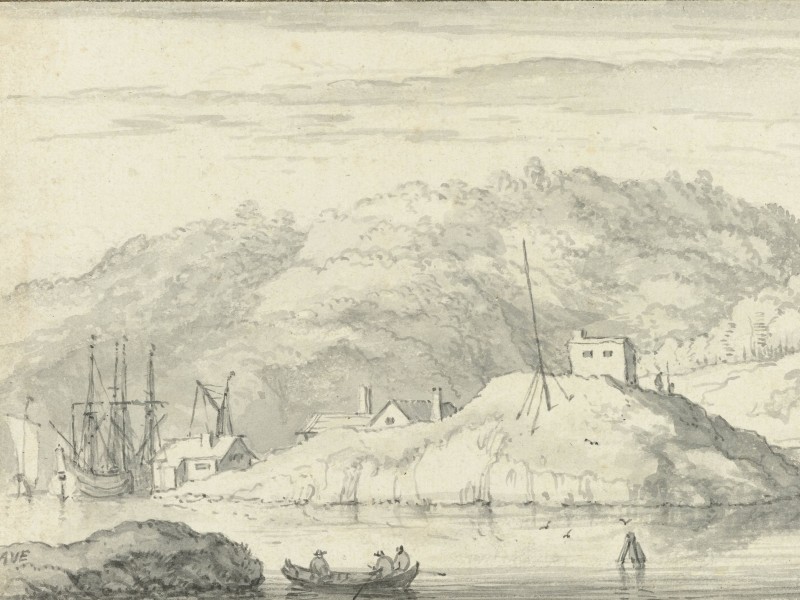
Samuel and his companion left Stege by boat at lunchtime. Also on board were two Scotsmen. Kiechel wrote that Scots travelled as pedlars around Denmark, Pomerania, Prussia and Lithuania. He compared them to the Savoyans in his home country.
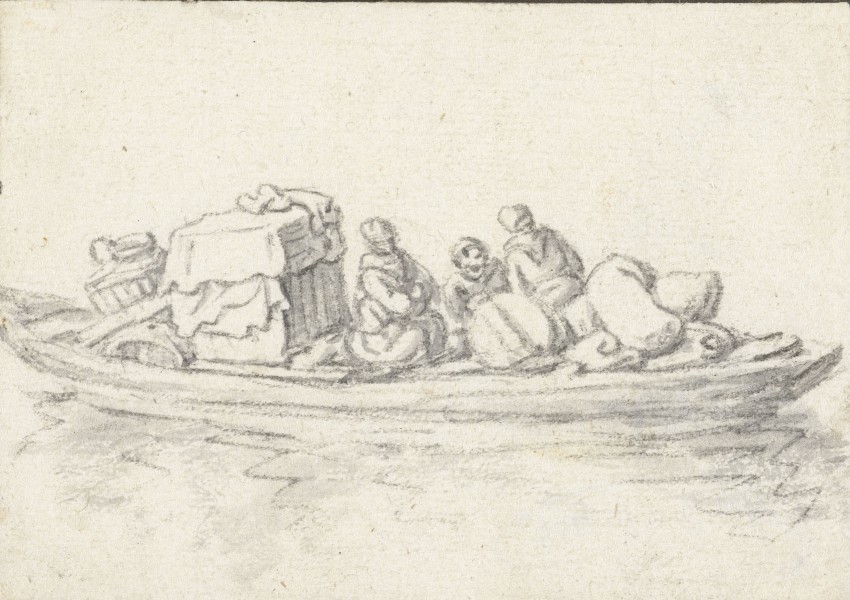
The boat sailed along an arm of the sea (Stege Bugt) to the town of Stubbekøbing on the island of Falster. According to Kiechel, the journey was quite unpleasant. The Scotsmen and the boat’s owner were drunk. The boat was as long as two men and heavily laden with textiles belonging to the Scotsmen. As the wind increased, the boat’s owner repeatedly lost hold of the rudder. The boat would then lean so far to one side that water could enter. Kiechel further wrote that the arm of the sea they were sailing on was called Grønsund and was dangerous because no one knew how deep it was.4
Nevertheless, the travellers arrived in Stubbekøbing, wet but safe, and spent the night there. They left the following morning (28 April) and reached Nykøbing at lunchtime.
Leaving Denmark
Kiechel learnt that he needed a passport to leave the country. He explained in his journal: It was customary for those wishing to leave Denmark via Nykøbing to obtain a passport in Copenhagen to be allowed passage from Gedser (at the southern tip of Falster) to Germany. But because Kiechel had intended to travel directly by sea from Copenhagen, he had not needed such a document.
Our traveller went to the steward (Vogt) of Nykøbing, explained what had happened, and said he had to leave the ship due to hunger. The steward was sympathetic and ordered his scribe to draft a passport for Kiechel, allowing him to leave Denmark. With the permit in hand, Samuel and his companion left Nykøbing the same day and arrived in the village of Gedser that evening. Gedser lay right by the sea, and from there the passage to Germany was the shortest.
Unfortunately, the travellers could not continue straight away. As before, the wind was against them, so they had to wait in Gedser for a day. Finally, on the morning of 30 April, Kiechel left Denmark aboard a barge. The wind had turned, but it took the boatmen some effort to get their vessel out of the harbour. On board the barge were a messenger, a student, a horse trader with nine horses and the two boatmen.
The wind was steady until lunchtime but calmed in the afternoon. The barge had two oars, and two men had to row, taking turns every hour. But this was to no avail, and the vessel drifted around until late in the night.
When they finally arrived in Warnemünde, the bells were ringing at midnight. According to Kiechel, Warnemünde belonged to the city of Rostock and was opposite the sea from Denmark.
Samuel Kiechel and his companion were very hungry. They had not eaten anything throughout the day. The innkeeper in Warnemünde did not want to open for the late arrivals. It took the travellers some time to persuade him to let them in and give them some bread and beer.5
Illustrations & References
All images are in order of appearance with links to sources on external websites:
- Nooms, Reinier, Zeilschepen in een zeestorm, 1651 – 1652; Rijksmuseum Amsterdam.
- van de Velde, Willem, The Cannon Shot, c. 1680; Rijksmuseum Amsterdam.
- Waghenaer, Lucas Jansz., Teerste [-tweede] deel vande Spieghel der zeevaerdt, Leiden 1585, pt. 2, fol. 17f; Utrecht University Repository.
- van Haarlem, Jan Vermeer, Dune Landscape with Figures along a Road, with a Cottage in the Distance, c. 1650 – c. 1665; Rijksmuseum Amsterdam.
- van de Velde, Willem, The Gust, c. 1680; Rijksmuseum Amsterdam.
- van Everdingen, Allaert, Gezicht op de haven van Risör in NoorwegenAllaert van Everdingen, 1644; Rijksmuseum Amsterdam.
- Saftleven, Herman, Drie personen in een schuit beladen met huisraad, 1619 – 1685; Rijksmuseum Amsterdam.
- van Borssom, Anthonie, Moonlit Landscape, 1640 – 1677; Rijksmuseum Amsterdam.