
Journal of Samuel Kiechel
25 December 1585 – 01 January 1586
From Cologne to Münster
“Half an hour after leaving the city, we met a poor woman from Lünen, our next stop. Without hesitation, she warned us to be cautious because 17 bandits were waiting near the town. They had already robbed two pedlars and even taken their clothes.“
Die Reisen des Samuel Kiechel aus drei Handschriften, K. D. Haszler (ed.), Stuttgart 1866, p. 45; Bayerische Staatsbibliothek.
From the Rhine River to Dortmund
After resting for a few days within the safety of the sturdy walls of Cologne, our traveller, Samuel Kiechel, decided to resume his journey. He had found new companions, a group of merchants heading to Münster in Westphalia. It was winter, and his fellow travellers had told him that walking was safer than riding, so Kiechel had sold his horse. Besides the cold weather, the journey ahead was perilous because of bandits and roving bands of mercenaries.
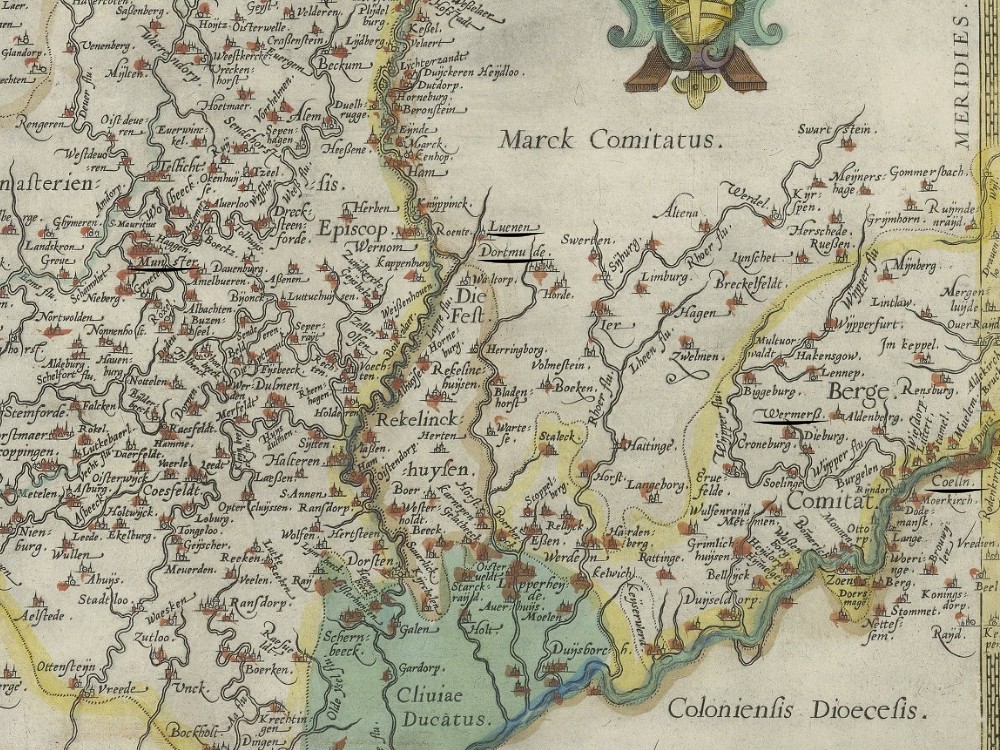
Route from Cologne via Dortmund to Münster (the map is oriented eastward)
On 25 December, Samuel Kiechel and his new companions left Cologne. They crossed the frozen Rhine River to Deutz on the opposite bank. From there, the group trudged along a rough path that was covered with a thick layer of snow. No track had been carved into the snow by previous travellers. Progress was slow and tiring.
Most villages they passed were either destroyed or deserted. The travellers struggled to find someone willing to sell them food for lunch. Late in the evening, they arrived at a hamlet called Wermelskirchen. According to Kiechel, the place was in the Duchy of Jülich. It had an inn where they spent the night.
The destruction and devastation witnessed by the travellers resulted from the Cologne War. This conflict was not fought between large armies along a clear frontline. Instead, the Cologne War was a prolonged regional struggle involving small mercenary groups engaged in skirmishes, raids and assaults on minor towns. The mercenaries typically operated for profit, often sacking the towns they besieged without regard for civilian lives. Major cities, like Cologne, remained secure behind their thick walls. In contrast, villages lacked fortifications and did not have enough population to defend themselves. As Samuel Kiechel observed, those settlements either were plundered and destroyed or the inhabitants chose to abandon their homes.
In the inn in Wermelskirchen, Kiechel and his companions met a pastor who joined the group. The travellers continued their journey the following morning. The path had not improved, and the countryside remained unsafe. Due to those circumstances, the group walked only three miles to Gevelsberg. After spending the night there, they continued the next day (27 December) and arrived in Dortmund in the evening.
The road from Cologne to Dortmund passed through the Bergisches Land, a region of low mountain ranges, hills, forests and meadows. The route Kiechel took via Wermelskirchen and Gevelsberg was a major thoroughfare through this area. A map from 1635 shows the road beginning at Mülheim on the Rhine River, along with the surrounding landscape. Due to its frequent use by armies and mercenaries, it is not surprising that settlements along this road often suffered attacks.
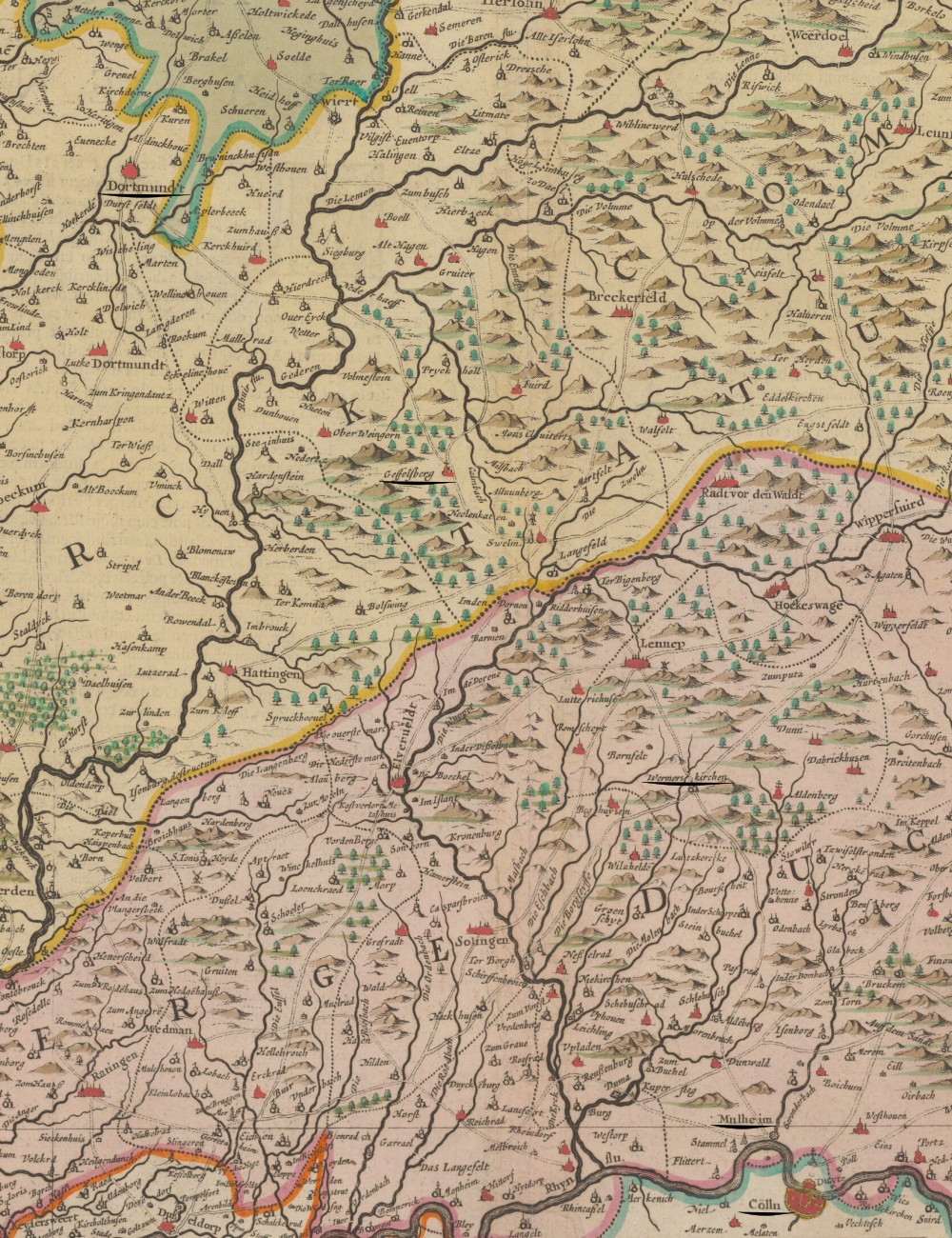
Map of the Bergisches Land, 1635
Dortmund
Samuel Kiechel’s destination, Dortmund, is located in the Ruhr Area, the largest and most densely populated urban region in modern Germany. The industrialisation of the nineteenth century significantly accelerated urban growth, but in the sixteenth century, it was still mainly agricultural. By passing through the Bergisches Land, Kiechel’s route skirted the edges of this area.
According to our traveller, Dortmund was a small, imperial city. A fair was scheduled for the day after Kiechel’s arrival. However, the countryside around Dortmund was unsafe. Mercenaries from both sides in the Cologne War patrolled the land, viewing every merchant as a lucrative target and every stranger as a threat.
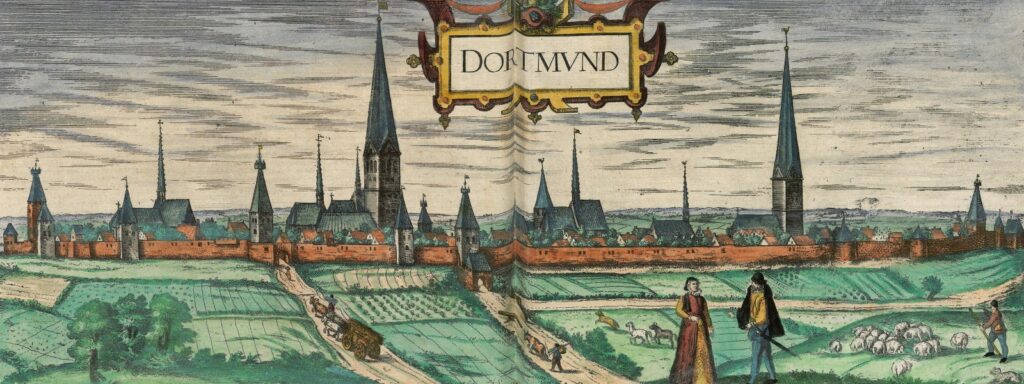
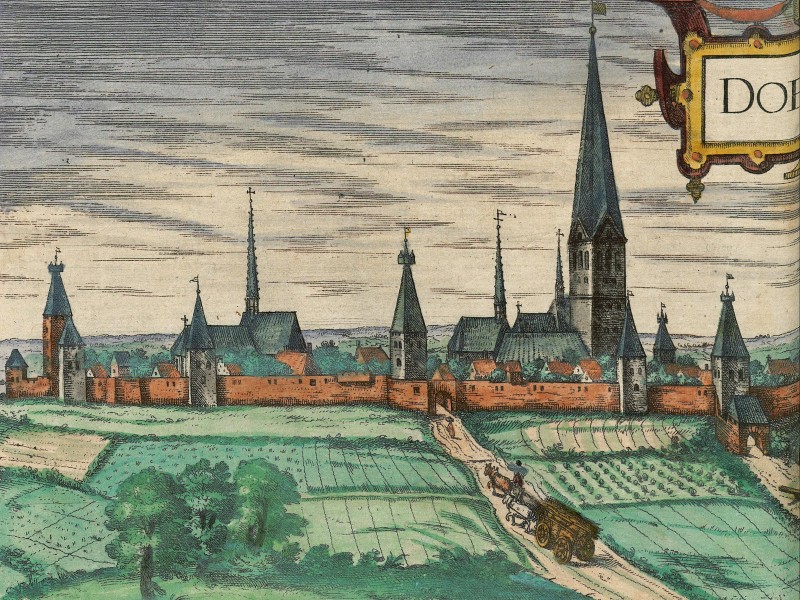
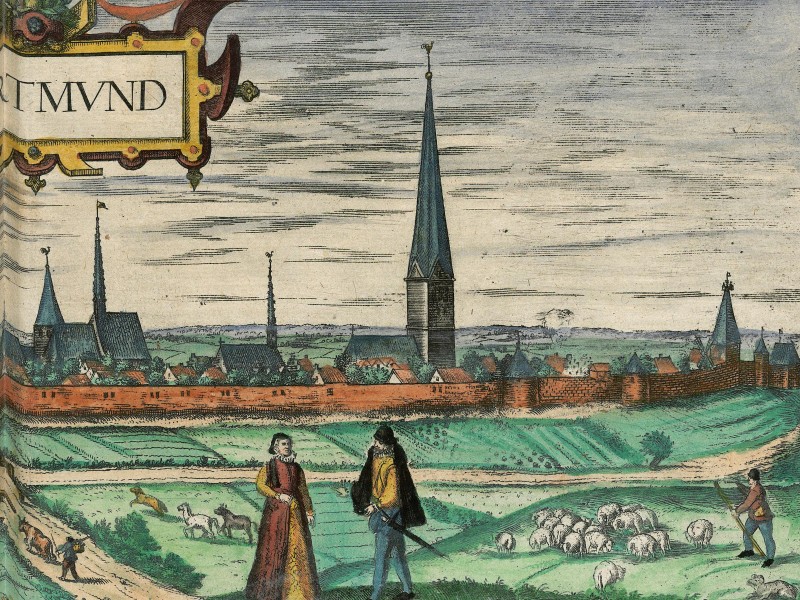
A view of Dortmund is found in volume four of the Civitates Orbis Terrarum and supports Kiechel’s sparse observations. The city is not particularly large but is fortified, with two large churches dominating the skyline. Unlike Kiechel’s description, the surrounding area appears peaceful, featuring fields and rural scenes — a shepherd with his flock, a cart transporting wood to Dortmund.
Dortmund was located along a major trade route linking the Lower Rhine in the west to the Elbe River in the east. However, in the late sixteenth century, the city suffered from the repercussions of the Eighty Years’ War in the Netherlands and regional conflicts. With the countryside unsafe and merchants threatened by bandits and mercenaries, Dortmund’s prosperity declined. Samuel Kiechel’s journal documents the experience of travelling through this region.
The Dangers Around Dortmund
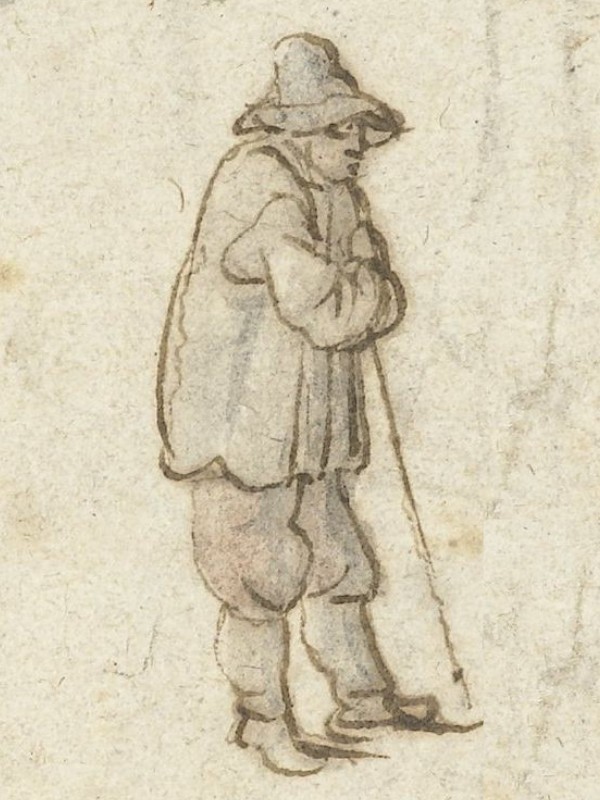
The travellers left Dortmund on 28 December. As soon as the group left the gate, they noticed a tall, strong man following them. The man carried only a staff. Kiechel and his companions stopped and asked him where he was headed. The man told them he was travelling to Lünen. Since this was the next destination for the group, Kiechel offered the man a few coins if he would carry his bag. He agreed, and they continued together.
Half an hour later, the travellers encountered a poor woman coming from Lünen. Without being asked, she advised them to be cautious. Seventeen bandits were lying in wait near Lünen. The bandits had already ambushed two traders heading to the fair in Dortmund. They robbed them and even took their clothes. Hearing this, Kiechel and his companions were shocked and worried. But the man they had met outside Dortmund encouraged the travellers to continue on their journey.
They walked on and met another woman who also warned them about the bandits near Lünen. Now, the travellers felt afraid to carry on and stopped at the next roadside tavern to reconsider their options. Inside, the locals told them that the bandits had been at this place the night before. They had been eating and drinking and left early in the morning.
Not far from the tavern was a small village. Two or three of the travellers went there to ask the Schultheiß (the village head) for advice. He offered the travellers a guide to lead them on a different, slightly longer route to Lünen.
Back at the tavern, the travellers told the man they had met outside Dortmund that they would take a different route. They asked him to come along, but he refused and became stubborn. Kiechel and his companions decided that he was a spy for the bandits and would have led them into an ambush. An argument broke out between the travellers and the man. Unfortunately, the tavernkeeper and his servants joined in and sided with him. When they threatened the travellers with pitchforks and shovels, the group quickly left.
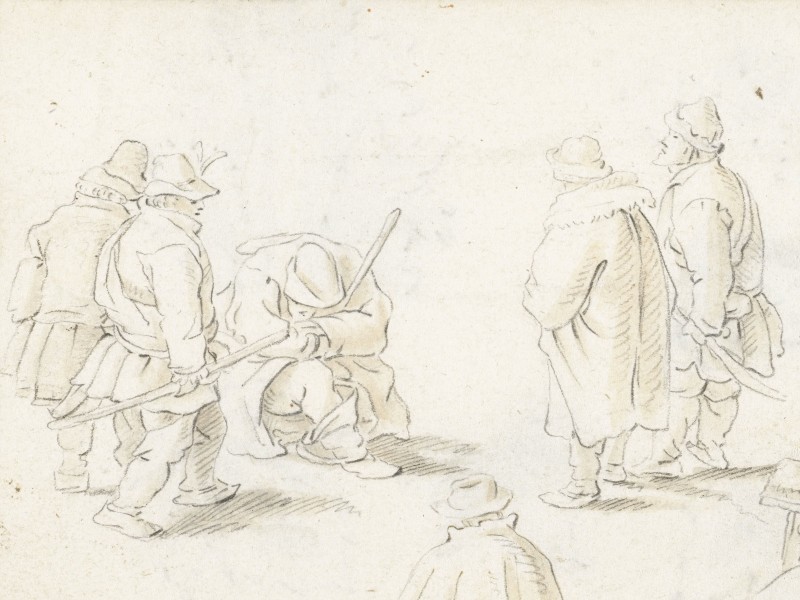
Reading Samuel Kiechel’s journal, to our traveller, the line between mercenaries, bandits and peasants in a dangerous region seems to have been ambiguous. It was not unusual for people in desperate situations to make a living by collaborating with criminals, openly or secretly. Samuel Kiechel expressed this suspicion earlier while still crossing the Low Countries. With word of mouth being the main way of sharing local news, it was easy for personal opinions, stereotypes and exaggerated stories to foster suspicion, mistrust and fear, which could then grow into outright hostility.
Kiechel’s description of his stopover in the roadside tavern suggests that the man they had met outside Dortmund was indeed spying for the bandits who were supposed to wait around Lünen. He might have been tasked with leading the travellers straight into an ambush. Kiechel mentioned that the same group of bandits had spent the previous night in this inn, eating and drinking without interference from the tavernkeeper. In the about-to-turn-violent argument with the travellers, the tavernkeeper and his servants supported the man. So, maybe both he and the lone man from Dortmund were involved with the criminals.
On the other hand, facing seventeen armed bandits, the tavernkeeper might not have had a choice but to serve them. The man who had joined the group outside Dortmund might have been upset by being accused by Kiechel and his companions of being a spy. The innkeeper and his staff then supported him because they had heard such accusations before and were tired of being lumped together with bandits.
Whatever the truth was behind this encounter, Samuel Kiechel and his companions were glad to get away from the place. They followed their new guide along a different but safe route. It turned out to be a long detour on a rough path. The track was covered in deep snow, making progress exhausting.
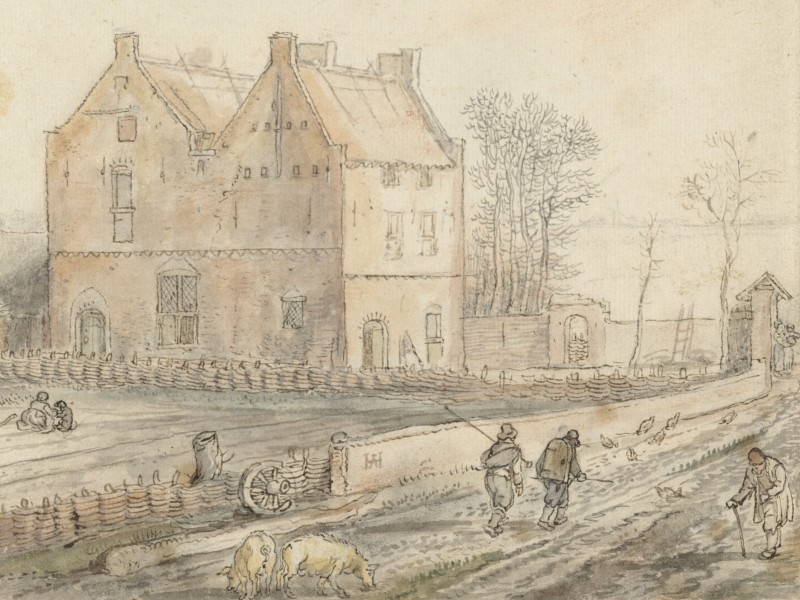
They arrived in Lünen after lunchtime, even though the town was only a mile from Dortmund. The group took a break. After the tiresome trek through the snow, the travellers were hungry. In the afternoon, they continued and walked to Wehren (Werne?), where they spent the night. The following day, 29 December, the travellers walked to Münster. On their way, they were unable to buy any food, and in Münster, they had to search for a long time before finding an inn.
In Münster
Kiechel described Münster as a small but heavily fortified city in Westphalia. It was the seat of a bishopric and had a monastery. Münster was well-constructed, and many houses featured arcades, similar to those in Padua or Bologna. The arcades enabled people to cross from one street to another.
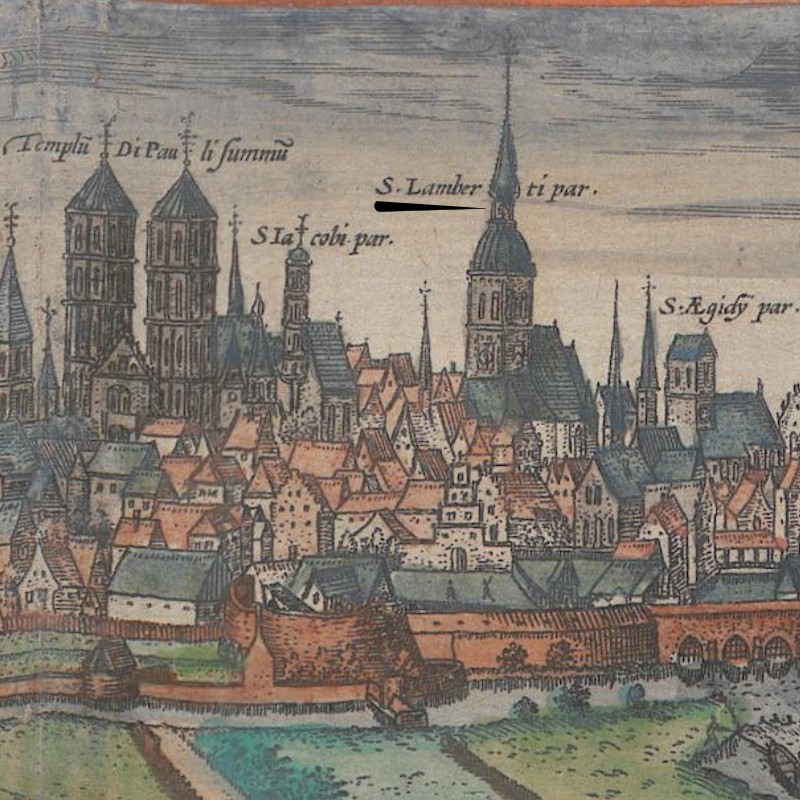
An image of Münster is in the first volume of the Civitates. The view presents the city as fortified and wealthy.
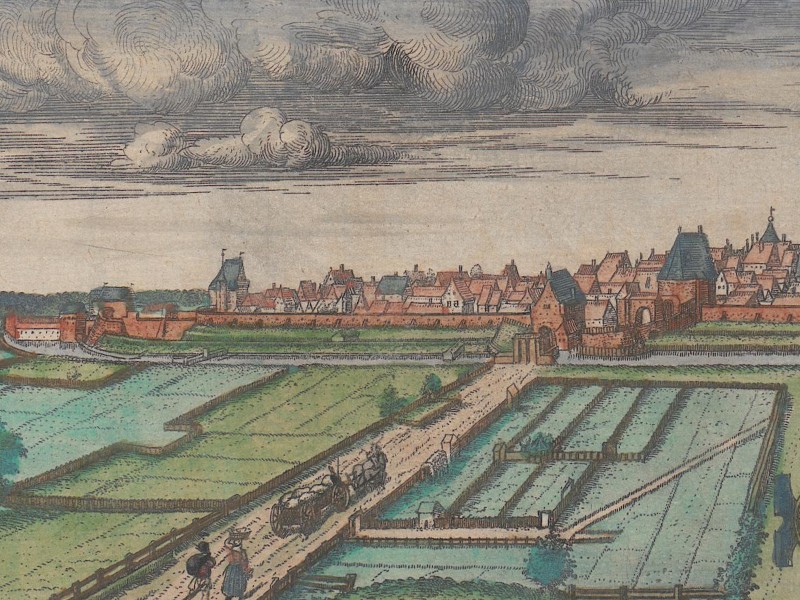
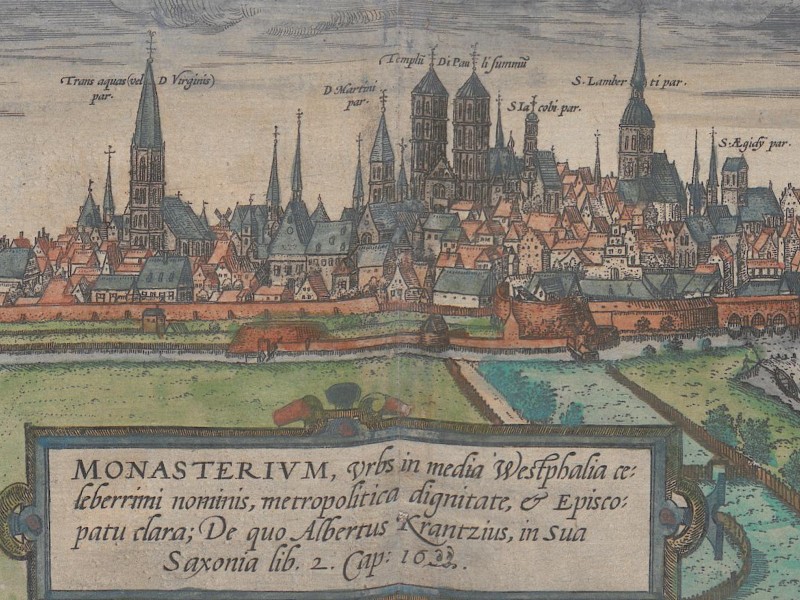
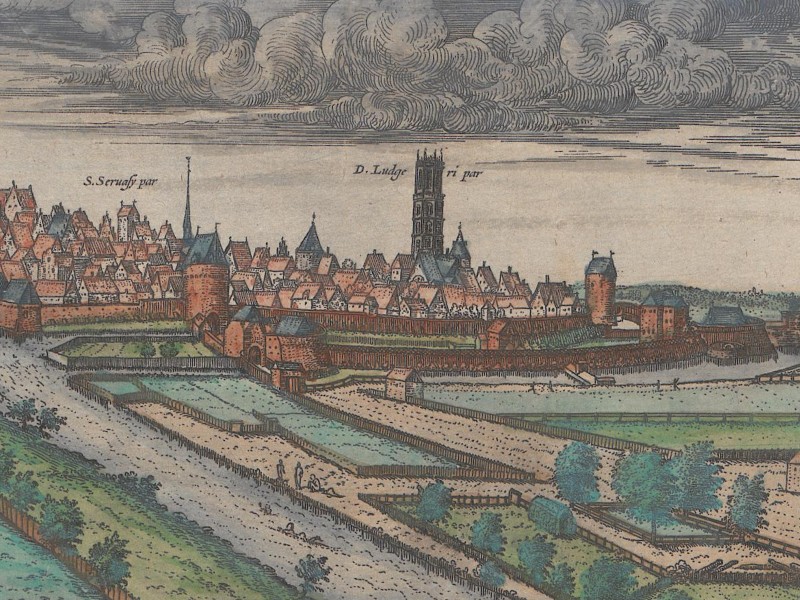
Münster, 1572
Münster is an ancient city that originated from a monastery founded there in 793. In the early eighth century, the Diocese of Münster was established, and a settlement grew around the monastery. This settlement expanded and gained city rights in 1170. It became an important regional economic and political centre and a member of the Hanseatic League. As the seat of a diocese, Münster’s citizens often clashed with their bishop. Like other cities in the Empire, the push for civic independence conflicted with regional lords’ efforts to uphold their power and privileges.
When the Protestant Reformation spread across the Empire in the sixteenth century, it took a particularly violent and unique path in Münster: Samuel Kiechel reported seeing three iron cages set into the tower of the church in the market square. The middle cage was positioned slightly higher than the other two. Kiechel learnt that this cage contained the remains of Johan von Leyden, a Dutch tailor. Von Leyden was an Anabaptist and had declared himself king during Münster’s siege. Eventually, the city surrendered due to famine. Von Leyden and his supporters were executed, and their bodies were displayed in the cages as a warning. Kiechel observed that some bones and part of von Leyden’s skull remained, but nothing from the other two bodies.
The event Kiechel described was the Münster Rebellion (1534-1535). The Protestant Reformation did not simply divide the church into Catholic and Protestant factions. Instead, various branches of Protestantism emerged, including Calvinism and Anabaptism.
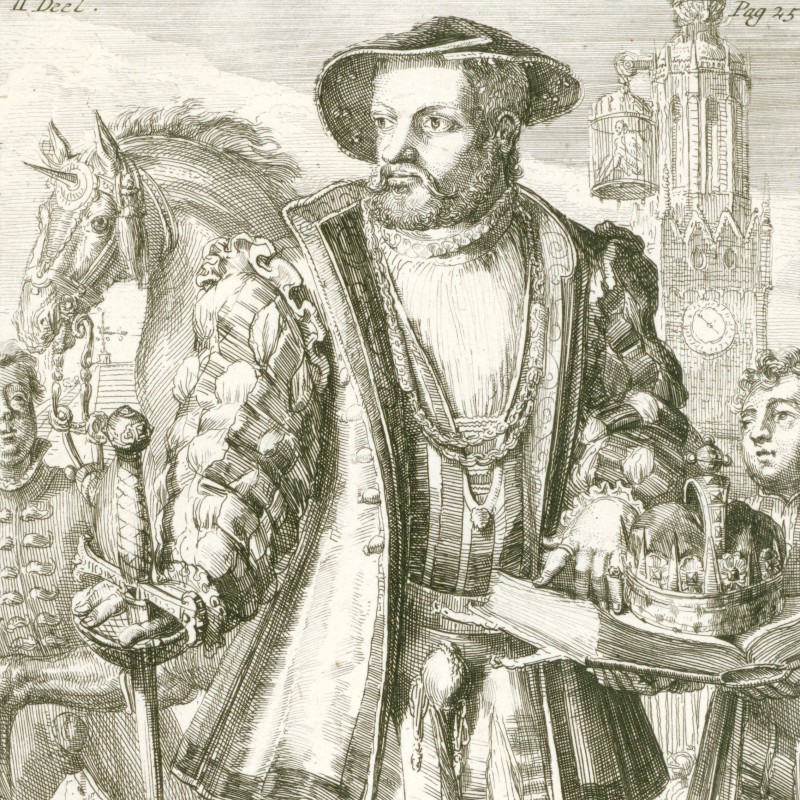
Johan van Leiden (1509-1536); In the background on the right are the Tower of St. Lambert’s Church and the iron cage.
The Anabaptists were particularly successful among Münster’s Protestants. They managed to drive out and suppress all other confessional strands. Many Anabaptists were Dutch migrants. One of these was Johan von Leiden (1509-1536), who arrived in the city in 1533 and quickly became a leader of the movement. In the same year, radicalised Anabaptists took control of Münster, expelling the bishop and establishing a theocratic regime. Citizens of other faiths were given the choice to convert or leave.
In response, the Bishop of Münster assembled an army and laid siege to the city in 1534. During the siege, von Leiden — by then the sole leader of the Anabaptists — proclaimed himself king of the Kingdom of New Jerusalem. Despite the hardships of the siege, he established a luxurious court and introduced polygyny. Executions of potential enemies or traitors were common, often carried out by von Leiden himself.
As Kiechel noted, after a lengthy siege, Münster surrendered due to famine. When the bishop retook the city, many Anabaptists were killed. Von Leiden and his two deputies were tortured and executed. Their bodies were placed in iron cages and hung from the tower of St. Lambert’s Church as a warning. The church and the three cages remain there today.
St. Lambert’s Church in Münster
Kiechel remained in Münster until 1 January. He needed to find new companions to continue his journey. Furthermore, our traveller wanted to buy a horse but could not find one for sale. Instead, he decided to hire a farm hand to carry his bag and guide him to his next destination, Osnabrück.
Illustrations & References
All images are in order of appearance with links to sources on external websites:
- Avercamp, Hendrick, Landscape with Houses and Two Windmills along a Road, with Three Fishermen in the Foreground, before 1620; Rijksmuseum Amsterdam.
- Ortelius, Abraham, Theatrum Orbis Terrarum, 1606, fol. 54v; Folger Shakespeare Library.
- Anonymous, Berge Ducatus Marck Comitatus, 1635; Landesarchiv NRW, Signature: RW Karten / RW Karten, Nr. 10001.
- Dortmund, in: Braun, Georg, Hogenberg Frans: Civitates Orbis Terrarum (4), Cologne 1594, fol. 20v; Heidelberg University.
- Anonymous, Studieblad met boerenwagens, vee, landlieden en ruiters, 1600-1700; Rijksmuseum Amsterdam.
- Saftleven, Herman, Zeven mannen, staand, zittend en lopend, 1619 – 1685; Rijksmuseum Amsterdam.
- Avercamp, Hendrick, View of a Country House with Sowers in the Field, c. 1610 – c. 1615; Rijksmuseum Amsterdam.
- Münster, in: Braun, Georg, Hogenberg Frans: Civitates Orbis Terrarum (1), Cologne 1593, fol. 22v; Heidelberg University.
- de Hooghe, Romeyn, Iohannes Bucholdi á Leyda, before 1701; Rijksmuseum Amsterdam.