
Journal of Samuel Kiechel
9 – 22 August 1586
From Pleskau to Narva
“The river divides Europe from Asia, and this town is still in Europe and is called German Narva. It has a castle on the riverbank; on the other side of the water, an arquebus shot away is another fortified castle, Ivangorod or Russian Narva.”
Die Reisen des Samuel Kiechel aus drei Handschriften, K. D. Haszler (ed.), Stuttgart 1866, p. 123; Bayerische Staatsbibliothek.
Return to Dorpat
Samuel Kiechel’s plan to travel deeper into Russia and visit Moscow was off the table because of the many difficulties such a journey would entail. Instead, he decided to return to Livonia. On 9 August, he left Pleskau (Pskov) on a large cargo boat travelling down the Velikaya River towards Lake Peipus. His destination was Narva. The boat was heavily laden and carried the boatmen, three sailors, and two merchants from Lübeck who owned most of the cargo. The merchants became Kiechel’s companions for the return journey. He must have met them at the German trading post in Pleskau.
When the boat arrived at the mouth of the river, it had to stop. The guards at the watchtower there questioned the passengers. Afterwards, the boatmen hoisted the sail, and the boat left the shore.1
Kiechel had heard that the journey to Narva took two or three weeks, but with a favourable wind it was possible to reach the city in two days or less. As noted earlier, the long duration was due to tolls. Merchants had to pay a toll on their cargo to three lords at three different locations: the Tsar in Pleskau, the Swedish King in Narva, and the Polish King in Dorpat (Tartu). The journey up the Embach River (Emajõgi) to Dorpat was a significant detour that could take many days, depending on the weather.2
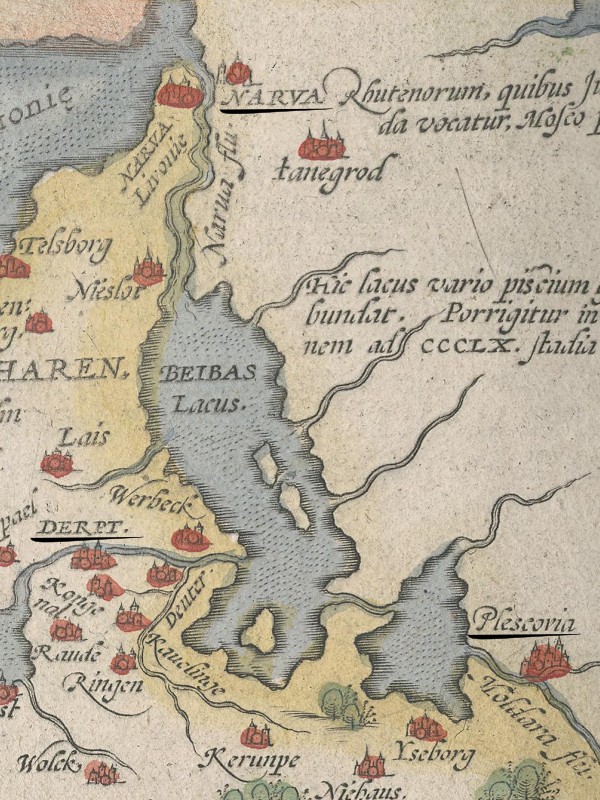
Map of northeastern Livonia with Lake Peipus (Beibas Lacus), Pleskau (Plescovia), Dorpat (Derpt), and Narva, 1587
In contrast to Kiechel’s previous experience, this time his boat crossed Lake Peipus quickly, and they arrived at the mouth of the Embach after nightfall the same day. They spent the night there. The following morning, the wind had turned, and they could not sail up the river, so the boatmen had to pull the boat from the shore with a rope. However, Kiechel noted that the Embach changed direction frequently, and there were many stretches where they could use the sail.
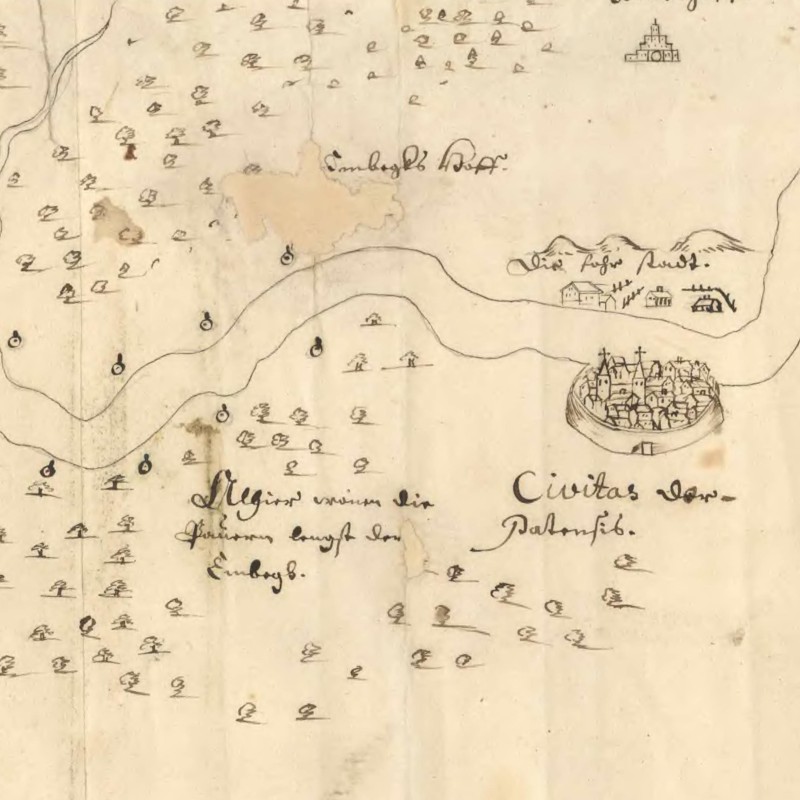
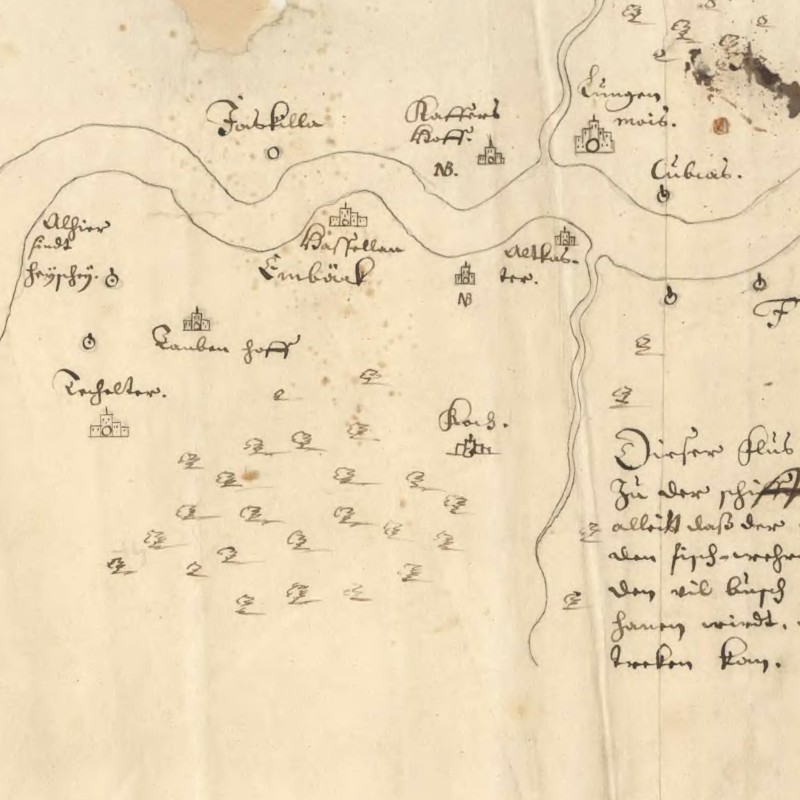
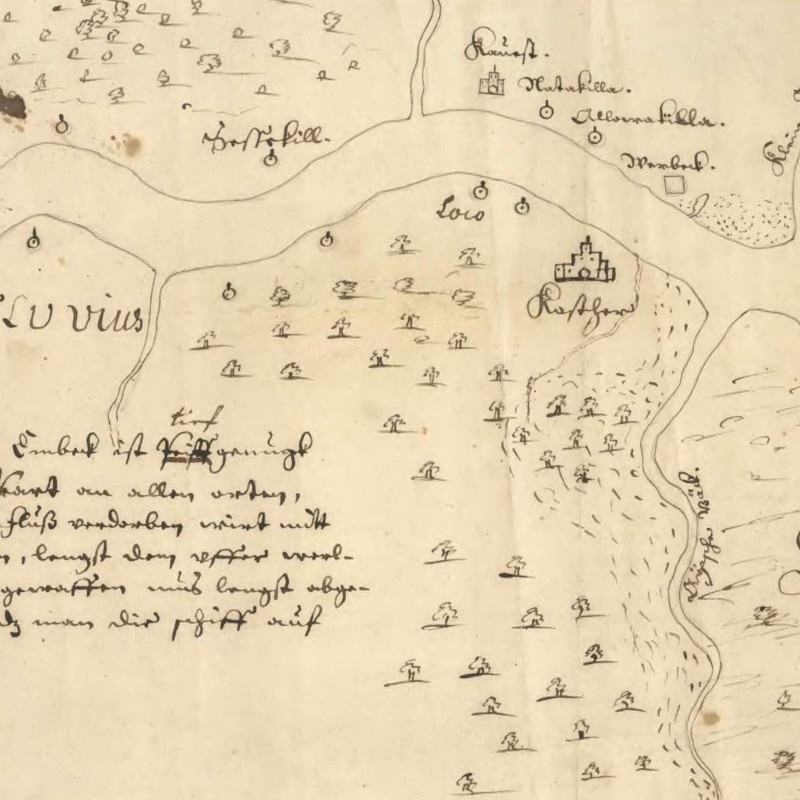
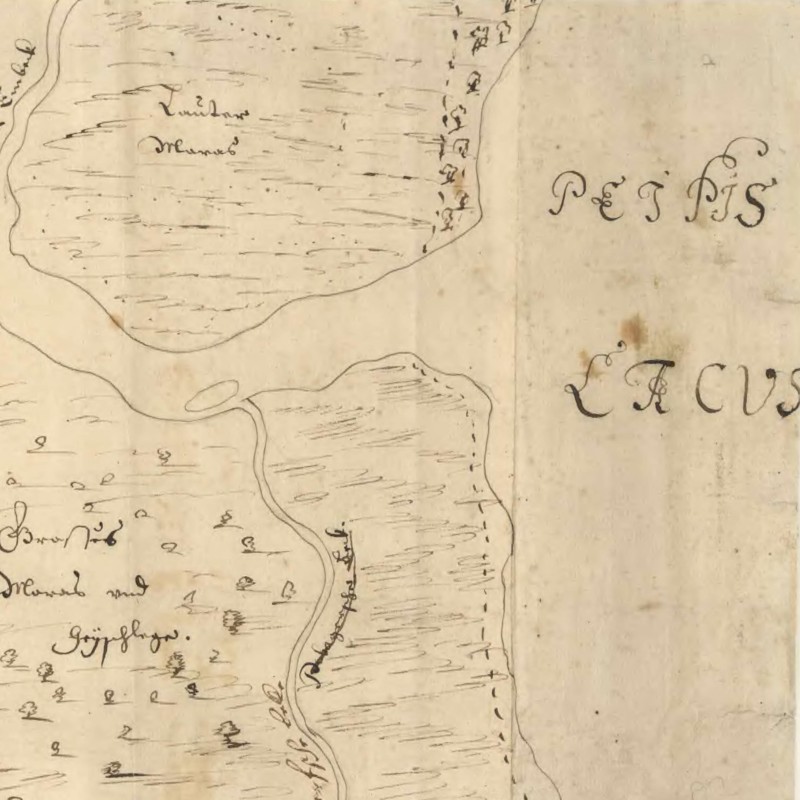
Seventeenth-century map of the Embach River (Emajõgi) from Dorpat on the left to its mouth at Lake Peipus.
One mile from Dorpat, Samuel Kiechel and the two German merchants decided to disembark and walk to the city. It was already late in the afternoon, and staying on the boat would have taken too long. By the time the boat arrived, the city gate would have been closed. Samuel spent 11 August in Dorpat while his two companions paid the toll on their merchandise. He used the time to buy provisions for the journey ahead. After his previous experience, he was likely more careful to bring enough food and not eat it all on the first evening. He had heard that travellers often had to wait many days to cross Lake Peipus northwards, and there were no places to replenish along the route.3
Across Lake Peipus for the Third Time
The boat carrying the travellers left Dorpat the next day and arrived that evening at a farmstead called Sassen. They spent the night on board. The following morning, they reached Lake Peipus again but had to stop and wait for the rest of the day and the next because of the wind. Lake Peipus was full of fish, Kiechel wrote, and they were sold for little money. But the travellers could not cook on the boat, and the shore was swampy and overgrown. The grass was very high, yet no one was using it. Samuel noted that it was a pity that so much good grass went to waste.
On 15 August, the wind turned and the boat set sail. They sailed out onto the lake, but the wind grew stronger, and the boatmen had to be careful. According to Kiechel, if a storm surprised them, Lake Peipus would become more dangerous than the open sea.
In the afternoon, the travellers arrived at the mouth of the only river that led out of the lake — twelve miles from the mouth of the Embach. The river was the Narva, and the surrounding area was under the rule of the King of Sweden. Because the water was shallow, it was difficult to enter the river. Often, boats ran aground and had to be dragged off the shallows with much difficulty. Kiechel’s boat ran aground a few times, and the boatmen had to jump into the water and push.
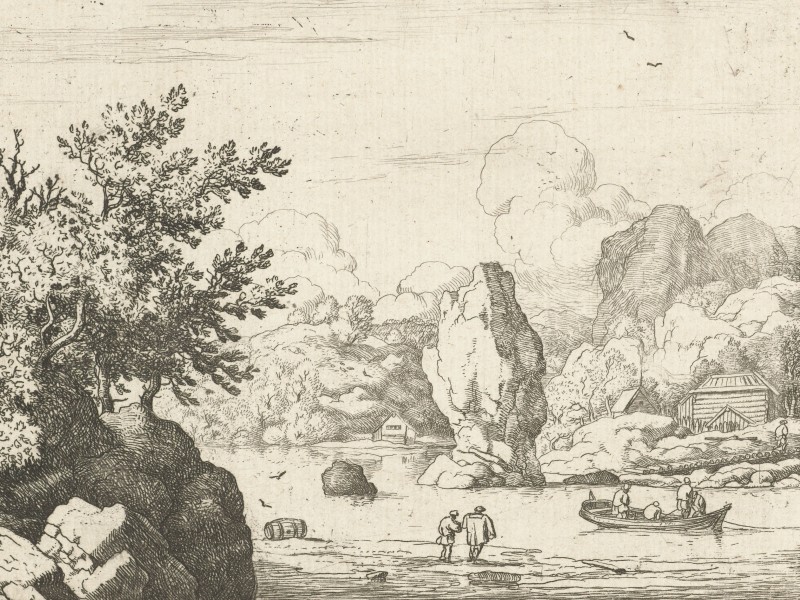
After they entered the Narva River, they followed it until the evening. The next day, Kiechel and his companions changed transport. According to our traveller, the river was difficult for larger boats because local people used it for fishing. They caught eels in the river and, for this purpose, blocked it here and there. The eels they caught were very large and as thick as an arm, the likes of which Kiechel had not seen anywhere else.
The travellers paid for two small boats to carry them further down the river. Each boat was made from a single large log. Kiechel shared his boat with one of the merchants. When they were about one mile from the city of Narva, the wind picked up, and the river became unruly. Kiechel wished he were back on land and could walk the rest of the way. But there was no place to land on the riverbank.
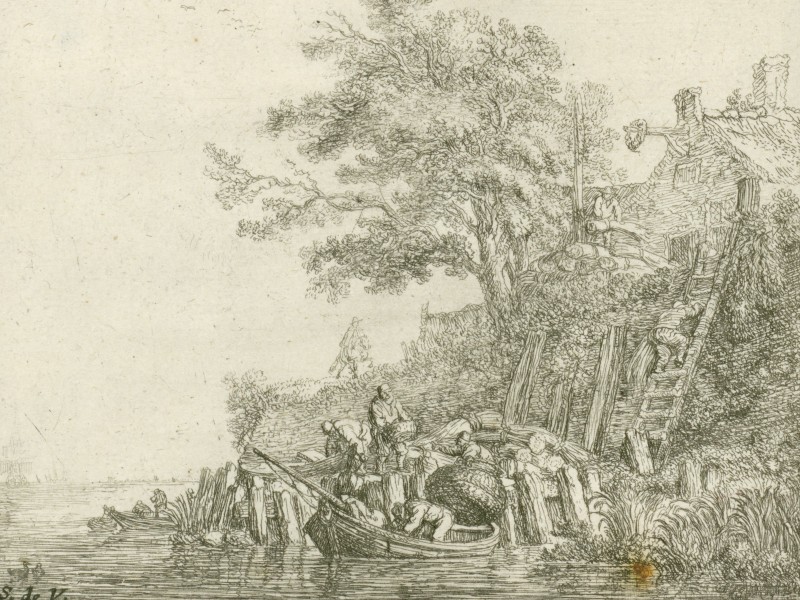
Eventually they arrived at a hamlet half an hour from Narva. The boats could not travel any further. Close to the city was a waterfall (Narva juga), and the noise of the rushing water could be heard from far away. All cargo arriving by boat from Lake Peipus had to be unloaded there and transported over land to Narva.4
Visiting Narva
Samuel Kiechel and his companions arrived at the gate of Narva but had to wait an hour before they were allowed to enter. The city was heavily guarded by Swedish soldiers. The local innkeeper had to come to the gate and vouch for the travellers.
Kiechel wrote that Narva was not large but heavily fortified under the rule of the King of Sweden. All the trade now conducted in Pleskau had once taken place in Narva. The city was well situated and easily accessible by sea. Ships could anchor a gunshot away.
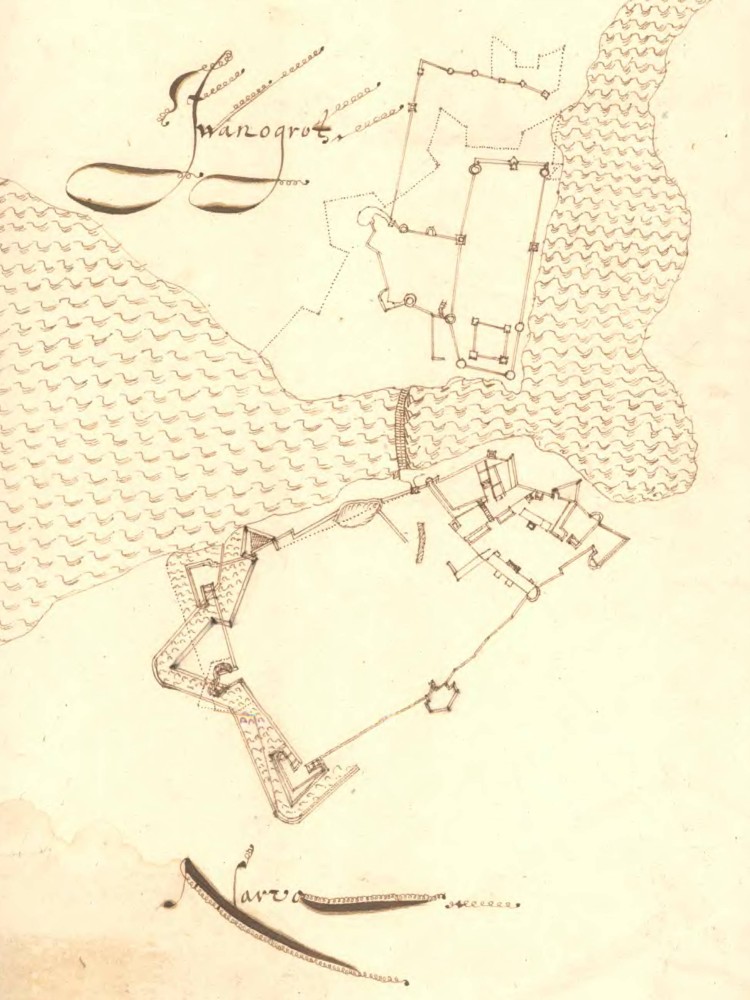
The Narva River, with Ivangorod above the river (east) and Narva below (west), 1600
The Narva River, Kiechel continued, was the border between Europe and Asia. The city of Narva was on the European side and was called German Narva. It had a fortified castle close to the riverbank. On the opposite side was a castle called Ivangorod, or Russian Narva. This place was in Asia. The King of Sweden had taken Ivangorod, and, according to Kiechel, he needed to occupy it because it threatened the city. Ivangorod was too close, and its elevated position let soldiers on its battlements aim their guns across the city. Samuel learnt that Ivangorod was protected by three strong walls facing Narva. It was now garrisoned by many Swedish soldiers and stocked with guns and ammunition, so the Muscovites would have great difficulty retaking it.
Kiechel further wrote that Narva was poorly built and partly destroyed when the Muscovites first captured it at the beginning of the war. Many Germans lived in the city, and church services were held in German and Swedish.5
About Narva
The Kingdom of Denmark conquered and occupied Northern Livonia (today’s Estonia) in the thirteenth century. The Danes built the first fortification on the Narva River. At this strategically valuable location, the east-west trade route along the Gulf of Finland intersected with the north-south route via the Narva River and Lake Peipus. Over time, a settlement grew around the castle, and in the mid-fourteenth century Narva received city rights. In 1346, the Danish Duchy of Estonia was sold to the Livonian branch of the Teutonic Order after Denmark faced internal trouble and could neither defeat a rebellion in Estonia nor prevent the Order from occupying towns and castles in the province.6
Although Narva was ideally placed to participate in the Hanseatic League’s trade with Russia, the city never became a member. Riga, Dorpat (Tartu) and Reval (Tallinn) dominated the east-west routes, and Reval, in particular, feared competition on the Gulf of Finland and blocked Narva’s attempts to gain membership. Narva still prospered, but its population remained significantly lower than those of the other three major Livonian cities, as it attracted fewer merchants and craftsmen. In the early sixteenth century, Narva had a population of around 800, compared with Reval’s 7,000.7
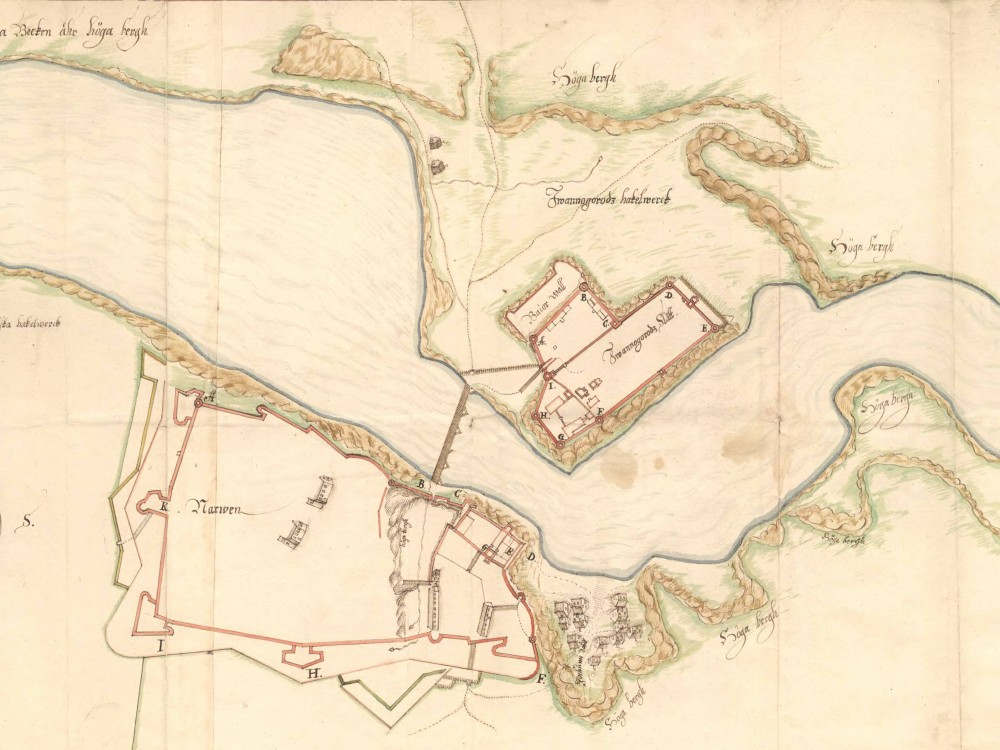
Narva and Ivangorod, 1659
In the late fifteenth century, the political situation in northeastern Europe began to shift. After annexing the independent city of Novgorod in 1478, Ivan III, Grand Duke of Muscovy, pushed westward. He ordered the construction of Ivangorod Castle in 1492. Ivangorod lay on the opposite bank of the river from Narva. A successful campaign by the Teutonic Order halted Russian advances, but Ivangorod remained a threat.8
When the Livonian War broke out in 1558, Russian troops quickly captured Narva. As Samuel Kiechel wrote, Ivangorod provided the ideal location from which to bombard the city into submission. As with Dorpat, early in the war Ivan IV (the Terrible) was quite lenient towards cities that surrendered quickly. The city’s inhabitants retained many of their privileges. Narva also became an important trade centre. Ivan wanted access to the Baltic Sea, and with Narva in his possession, he rerouted Russian trade through it. Russian merchants had no fleet to export their goods, but Dutch, English and German ships arrived, as Narva was now the only major port with access to Russian commodities.9
It might seem strange to modern readers that German ships continued to trade with Russia while Germans in Livonia were at war with it. But wars were not yet fought between opponents defined by nationality. Inhabitants of northern German cities might have sympathised with the Livonians’ plight but felt no loyalty or responsibility. Even the Emperor did not intervene. With Riga, Reval and Dorpat in trouble, merchants sought ways to keep their trade (and profits) going. The Hanseatic League was in decline, and individual cities like Lübeck prioritised their own prosperity and survival. They supported Livonian cities when possible, but not at the cost of their own trade.
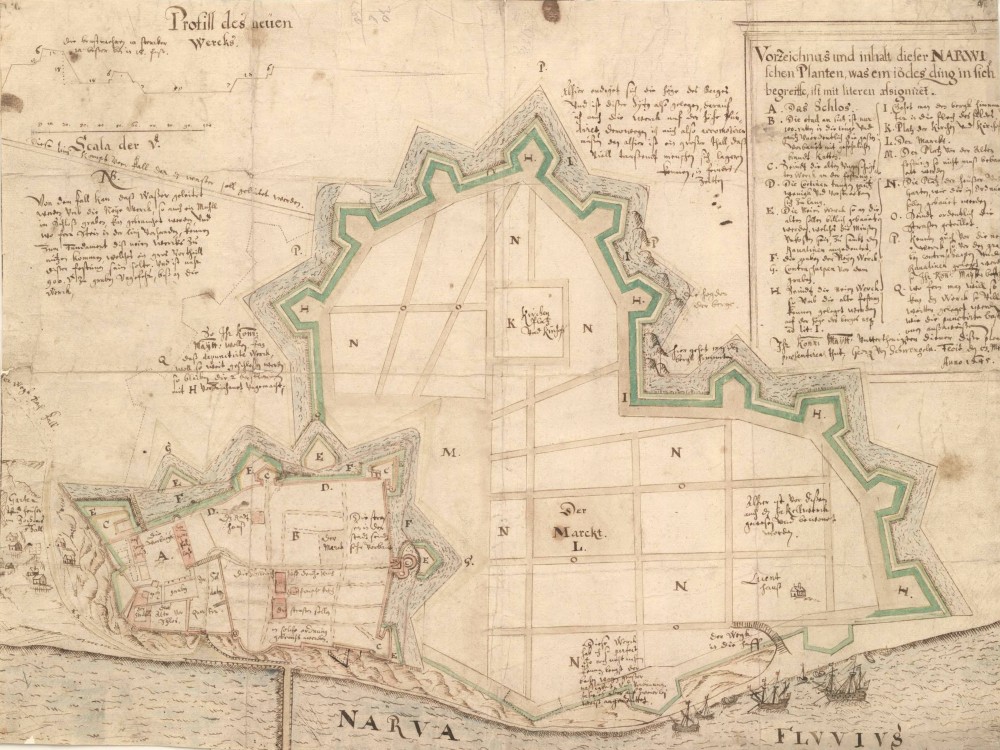
Narva, 1645
Towards the end of the Livonian War, the Swedes captured Narva (1581) and advanced further into Russia. In the Truce of Plussa (1583), Sweden kept Ivangorod and parts of Ingria, the area southeast of the Gulf of Finland from the Narva River to the Neva. This was the situation in the city when Samuel Kiechel visited it. As he wrote, Swedish soldiers garrisoned Narva and Ivangorod Castle, which was heavily fortified.
Salmon
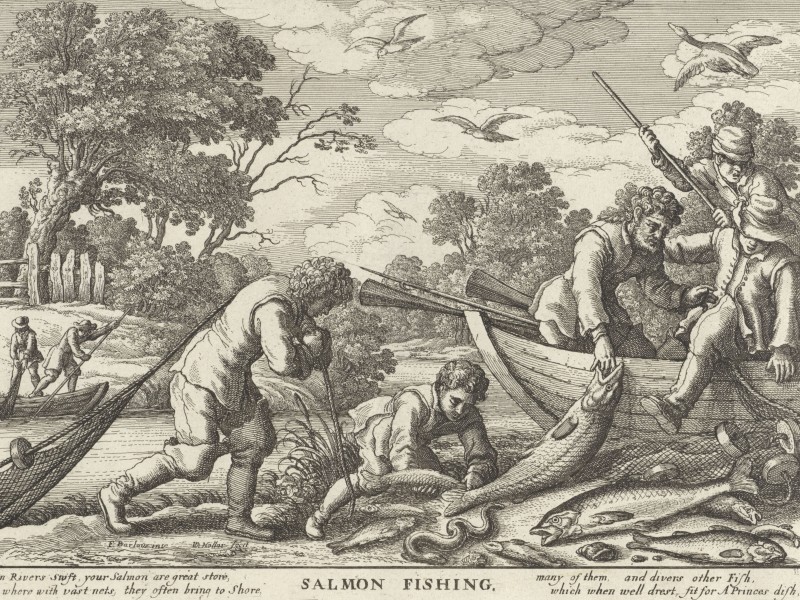
Half an hour from Narva, below the waterfall, salmon were caught. Kiechel wrote that salmon swam up the river from the Baltic Sea into the freshwater pools below the waterfall. The fishermen, mostly Muscovites, set fish traps and sometimes found four, five or six salmon caught in them overnight. The salmon were sold for little money, and one fish of about twenty pounds was available for half a Guilder or half a Reichsthaler (large silver coins). The fishermen also sold smoked salmon, which tasted very good and kept well on a journey. Kiechel wrote that he bought a smoked salmon and ate the last piece near Vienna.
The fishermen also caught large numbers of lampreys. They were long and thick, like small eels. They put the lampreys in small barrels, pickled them with vinegar and spices, and exported them. Kiechel heard they were mostly sold to Nuremberg.10
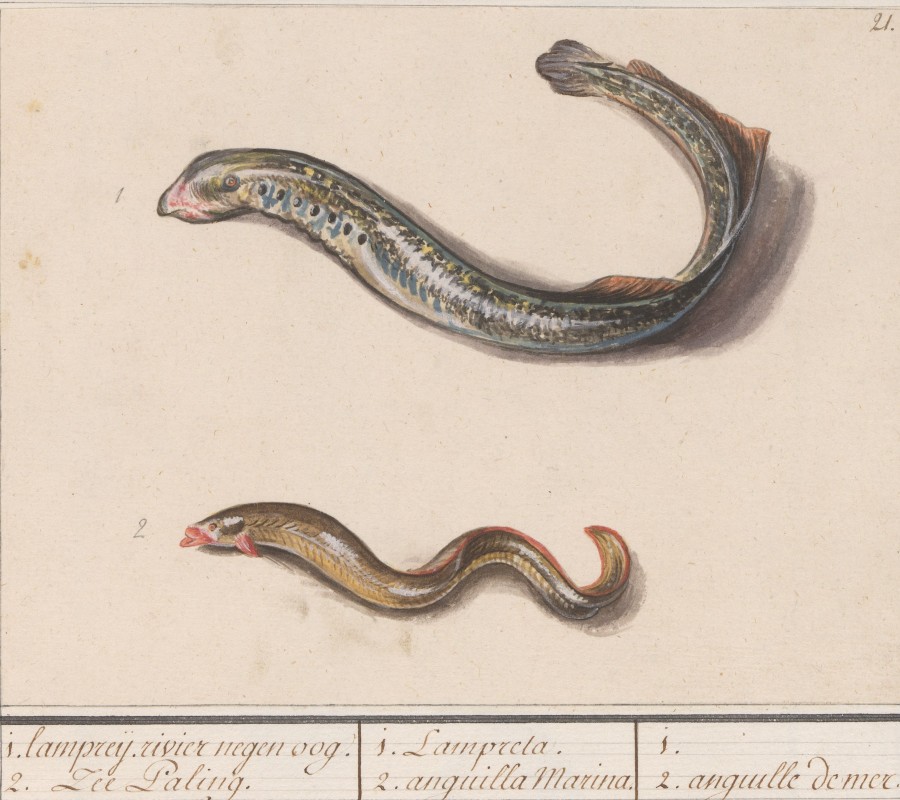
Departure
Samuel Kiechel stayed in Narva for six days, all the time looking for companions to continue his journey. His next destination was Reval (Tallinn). Eventually, he met a Swedish messenger who was about to leave Narva. For a few coins, he was willing to allow Kiechel to accompany him. The journey to Reval would be an uncomfortable and somewhat frightening experience for our traveller.
Illustrations & References
All images are in order of appearance with links to sources on external websites:
- Anonymous, Östersjöprovinserna, Narva, 1659; Swedish National Archives, Stockholm.
- Ortelius, Abraham, Theatre of the World, Antwerp 1587, fol. 88v; Library of Congress.
- Anonymous, Ryssland, floder och kanaler. Flodvägen från Pecnan till Peipus, 17th ct.; Riksarkivet Stockholm.
- van Everdingen, Allaert, Landschap met twee personen op het strand, 1631 – 1675; Rijksmuseum Amsterdam.
- de Vlieger, Simon, Mannen laden graanschoven in een boot, 1610 – 1653; Rijksmuseum Amsterdam.
- Anonymous, Östersjöprovinserna, Narva, 1600; Swedish National Archives, Stockholm.
- Anonymous, Östersjöprovinserna, Narva, Vorzeichnus und inhalt dieser Narwischen Planten, 1645; Swedish National Archives, Stockholm.
- Hollar, Wenceslaus, Salmon Fishing, 1671; Rijksmuseum Amsterdam.
- de Boodt, Anselmus Boëtius, Rivierprik en zeepaling, 1596 – 1610; Rijksmuseum Amsterdam.
- Die Reisen des Samuel Kiechel aus drei Handschriften, K. D. Haszler (ed.), Stuttgart 1866, p. 120; Bayerische Staatsbibliothek. ↩︎
- Ibid. ↩︎
- Ibid., pp. 120f. ↩︎
- Ibid., pp. 121-123. ↩︎
- Ibid., pp. 123f. ↩︎
- Angermann, Norbert, Brüggemann, Karsten, Geschichte der Baltischen Länder, Ditzingen, 2018, pp. 33-40. ↩︎
- Ibid., p. 52. ↩︎
- Ibid., p.46. ↩︎
- Ibid., pp. 101-103. ↩︎
- Reisen des Samuel Kiechel, p. 124. ↩︎