
Journal of Samuel Kiechel
31 March – 5 April 1586
In Kalmar
“On 4 April, a nobleman, to whom I had a letter of recommendation, admitted me to the hall, where I watched his royal majesty sit at a table and eat. He sat at the head of a long table; to his left sat the queen, and to his right his son, Duke Sigismund.”
Die Reisen des Samuel Kiechel aus drei Handschriften, K. D. Haszler (ed.), Stuttgart 1866, p. 79; Bayerische Staatsbibliothek.
Arrival in Kalmar
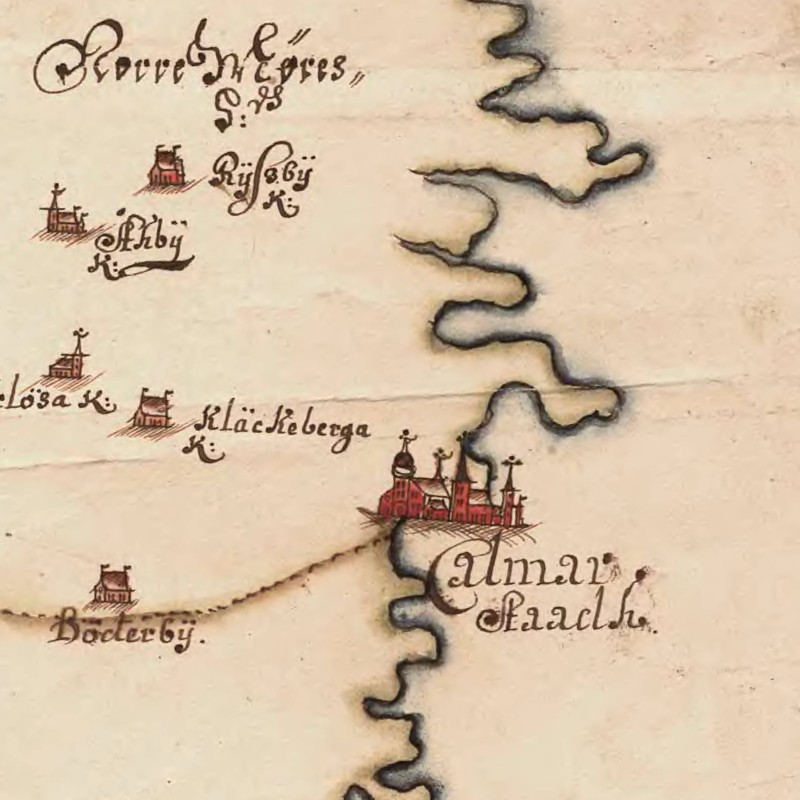
Kalmar and surroundings, ca. 17th century
On his return journey from Stockholm, Samuel Kiechel and his companions had left Söderköping and headed south along the coast. After a rough ride through waterlogged countryside, they reached Kalmar seven days later.
Upon entering the city, Kiechel had difficulty finding a stable for his horse. He had to leave the animal in the street until evening while he looked for a place for it. Due to the cold, the horse’s excrement froze to its body. Eventually, our traveller met a bricklayer who was willing to rent out the kitchen of his house as a stable.
Stabling a horse in the kitchen sounds strange and not particularly hygienic today. However, it was not uncommon in the Middle Ages and the early modern period to keep animals in the house, particularly in winter. Kiechel wrote about this in his description of Swedish farmsteads. In addition, the houses of the common people did not yet have clearly defined rooms that served a particular purpose. The man who offered his kitchen as a stable to Kiechel was a bricklayer, and his house likely had no more than one or two large rooms where the inhabitants cooked, ate, slept and spent their spare time. If he kept animals, they were in the house too, and stabling a traveller’s horse brought welcome extra income.
With his horse looked after, Kiechel noted that he could finally take off his boots for the first time in eight days.
Kalmar and Öland
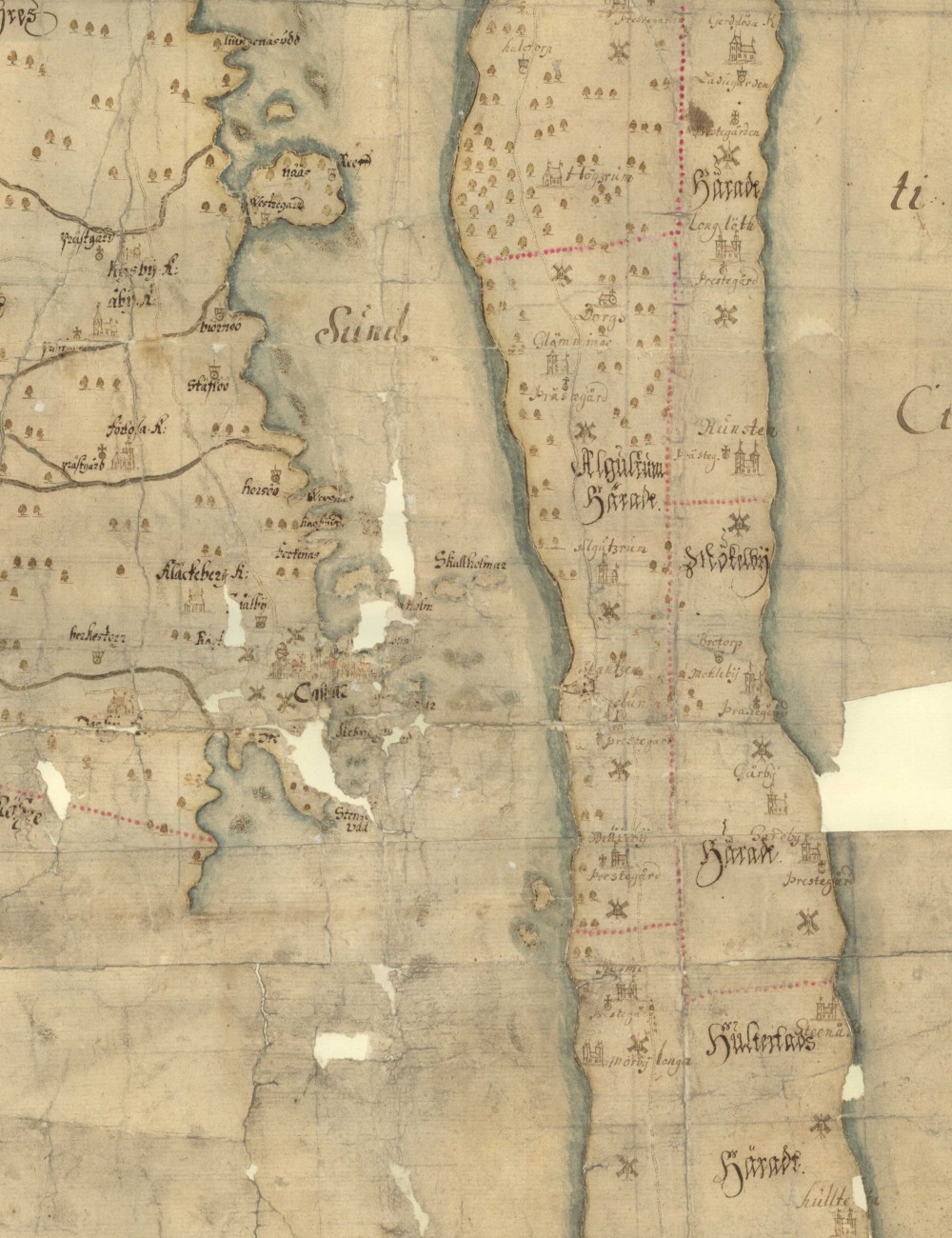
Map of the area around Kalmar, including the Kalmar Sound and a part of Öland, 1648
Kiechel described Kalmar as a noble town in the province of Småland, small but well fortified, and even more defensible because of its location in a flat, open landscape right beside the sea. The town had a castle with strong walls and many guns.
Our traveller further wrote: Opposite the town is a small stretch of land that is surrounded by the Baltic Sea. It is half a mile wide but eighteen miles long. This island, called Öland, has many villages and parish churches. Many horses are bred on Öland and then sold on the mainland. The horses are small but sturdy and worth their price.
Kalmar is in southeastern Sweden and is one of the country’s oldest and most important places. There, the Kalmar Union, the personal union between the three Scandinavian kingdoms, was agreed upon in 1379.
Olaus Magnus, the author of the Historia de Gentibus Septentrionalibus (1555), wrote that Kalmar was the oldest city in eastern Sweden and was well known as the place where the Swedish nobility held regular diets (deliberative assemblies). During the Swedish rebellion against Denmark, Kalmar and its castle were heavily contested because of their central location, which provided access to and control over major sea lanes in the Baltic.1
After the Union ended in 1523, the city became Sweden’s southern stronghold near the border. The neighbouring provinces of Blekinge and Scania remained under Danish rule, and tensions between the two countries continued to simmer.
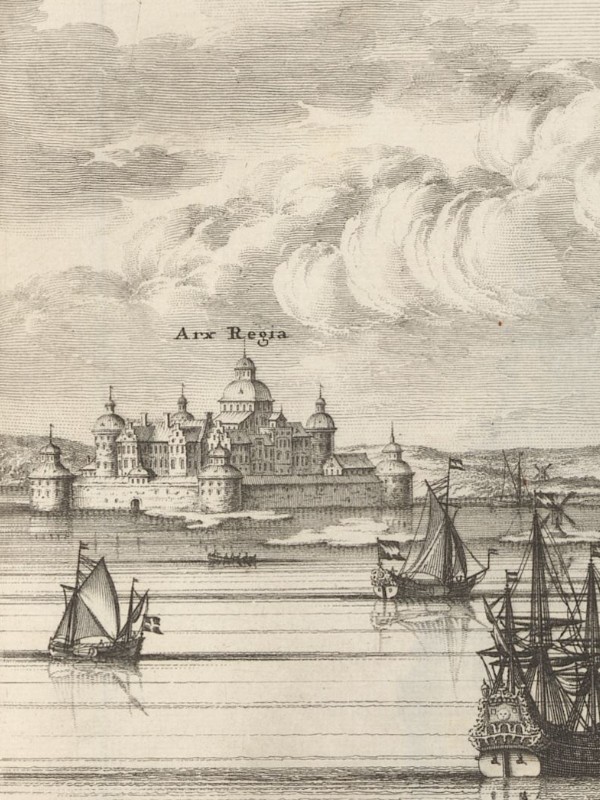
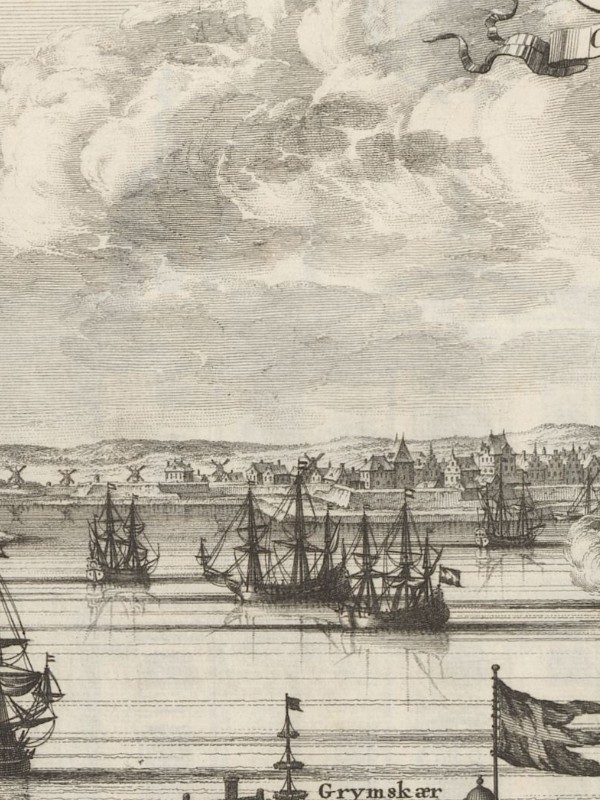
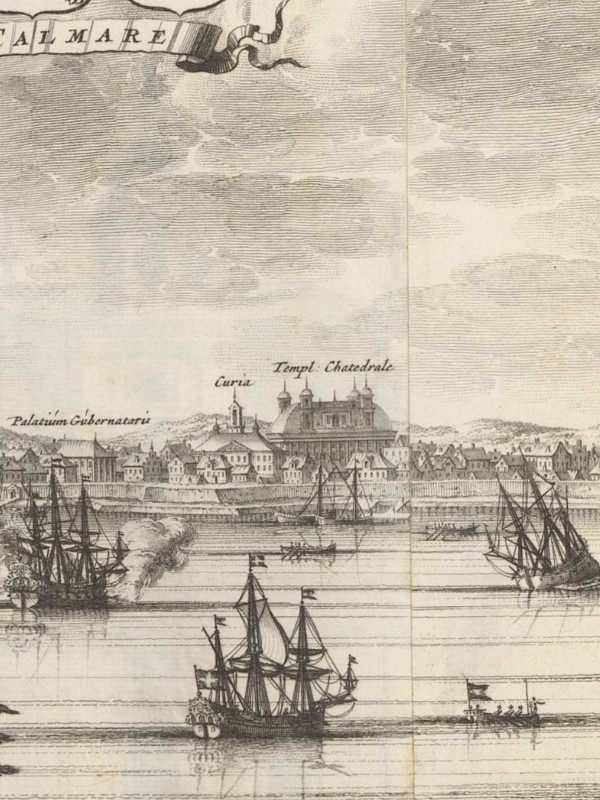
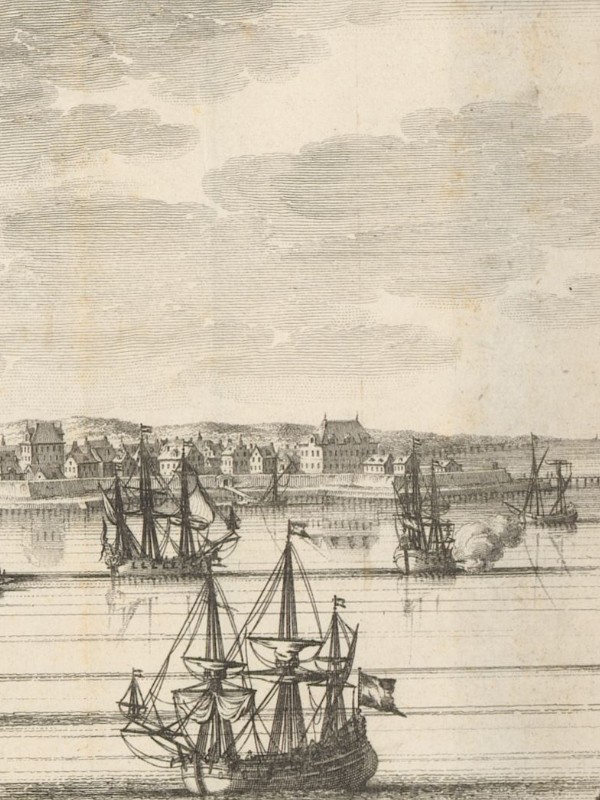
Kalmar, 1693
This 1693 view of Kalmar is quite detailed. It shows the city and the castle, with the Kalmar Sound in the foreground. However, it does not resemble the place Kiechel visited in 1586. There are no images of Kalmar from the late sixteenth century, and, unfortunately, it had changed in the intervening time. The medieval town centre of Kalmar had been built close to the castle. During the Kalmar War (1611-1613) between Denmark-Norway and Sweden, it was largely destroyed. The royal council decided against rebuilding Kalmar at its old location and instead opted to construct the new city centre on the nearby island of Kvarnholmen.
Kalmar was an important trading port. Medieval and early modern sea trade in the Baltic Sea, particularly the lucrative routes from the Hanseatic cities on the German coast to Russia and Livonia, followed the Swedish coast. Olaus Magnus wrote that German, Spanish, French and English merchants regularly visited the city.2
Kalmar, located on the Kalmar Sound, the narrow strait separating the mainland from the island of Öland, provided safe anchorage for merchant vessels. A naval chart in Lucas Jansz. Waghenaer’s Thresoor der Zeevaert (Treasure of Navigation, 1592) depicts the coast around Kalmar in detail, showing water depths, shoals, sandbanks and safe anchorages.
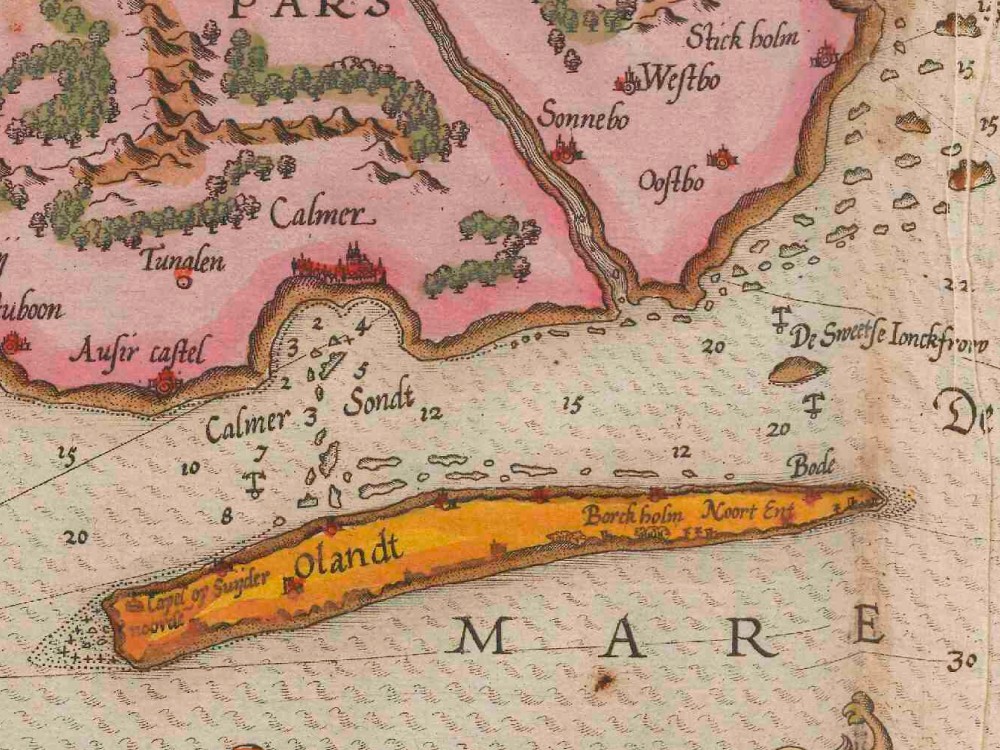
Naval chart of the coast around Kalmar and Öland, 1592
The island of Öland is, as Samuel Kiechel noted, long and very narrow. It stretches like a protective wall along the southeastern coast of Sweden. A map of the island from 1646 shows that Kiechel’s comment about the many villages and parish churches on Öland was justified. In the sixteenth century, large parts of the island were used as royal hunting grounds.
The Swedish Royal Family and Poland-Lithuania
Kiechel spent the Easter days in Kalmar. On Easter Sunday, he went to the castle for Mass. The service was held in a large hall and conducted in Swedish. The king and queen attended but sat in a separate part of the hall, so Kiechel could not see them. In a large room opposite the hall, King John’s son, the young Duke Sigismund, held Mass. Kiechel went to this room in the afternoon for Vespers. Music was played there. Kiechel noted that Duke Sigismund had six Jesuits with him.3
Duke Sigismund (Sigismund III Vasa, 1566-1632) held Mass in a separate room because he was a Catholic, while his father and stepmother were Protestants. The King of Sweden at the time of Kiechel’s visit was John III (1537-1592). John married his first wife, Catherine Jagiellon (1526-1583), in 1562. Catherine was the daughter of Sigismund I, King of Poland and Grand Duke of Lithuania. She was a Catholic, while John was a Protestant. However, John’s religious position was somewhat ambiguous, with tendencies towards Catholicism. His ultimate aim seems to have been to mediate a settlement between the two traditions, in the hope of establishing a unified religion in Sweden.
John and Catherine had two daughters and a son, the above-mentioned Duke Sigismund. Sigismund was raised in the Catholic tradition of his mother. While the religious question was still not fully settled in Sweden, being a Catholic was a precondition for becoming King of Poland-Lithuania.
Poland and Lithuania had been in a personal union since 1386 (Union of Krewo). Unlike the Kalmar Union between the Scandinavian Kingdoms, the Union of Krewo was fairly stable and successful. It was ruled for almost two hundred years by the Jagiellonian dynasty. The last Jagiellonian King of Poland and Grand Duke of Lithuania was Sigismund II Augustus (1529-1572), Catherine’s brother. Because he had no male heir and feared that his domain would fall apart after his death, Sigismund II pushed for a closer union. In the Treaty of Lublin (1569), the Polish-Lithuanian Commonwealth was established. The Commonwealth was no longer dependent on a ruling dynasty but was an elective monarchy, with the nobility of both countries choosing their next king.
John and Catherine’s son, Sigismund, was elected King of Poland and Duke of Lithuania in 1587, one year after Samuel Kiechel visited Kalmar. Five years later, in 1592, he succeeded his father as King of Sweden.
The resulting Swedish-Polish personal union was short-lived. Sigismund was raised as a staunch Catholic, but the vast majority of the Swedish population were Protestant. Despite guarantees of religious freedom, Sigismund soon began to renege on his promises. A civil war broke out, and Sigismund’s uncle, Charles, the leader of the Protestant opposition, was elected regent by the parliament in 1595. This was the same Duke Charles Kiechel had seen at the fair in Strängnäs.
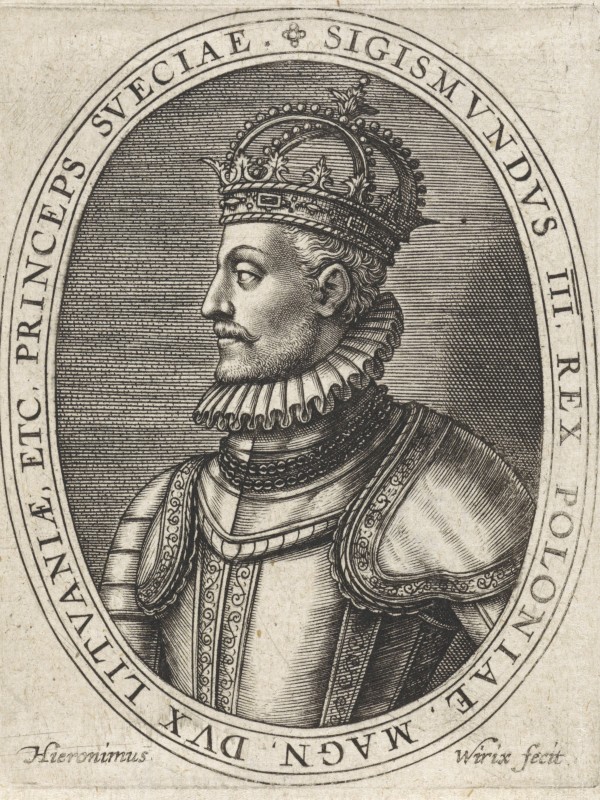
Sigismund III Vasa, King of Poland and Grand Duke of Lithuania
Sigismund lost the civil war, was deposed as King of Sweden, and was exiled in 1599. He returned to Poland but refused to relinquish his claim to the Swedish throne. Tensions between Sweden and Poland-Lithuania remained high, leading to multiple wars in the following decades.
Watching the Royal Family
On 4 April, Samuel Kiechel went to the castle again. Our traveller had a letter of recommendation and was admitted to a hall where he saw the king and his family seated at the table, eating. Although he did not say where he obtained the letter, he had travelled with the Master of the Royal Mint from Söderköping to Kalmar, and it is reasonable to assume that this man was the likely source.
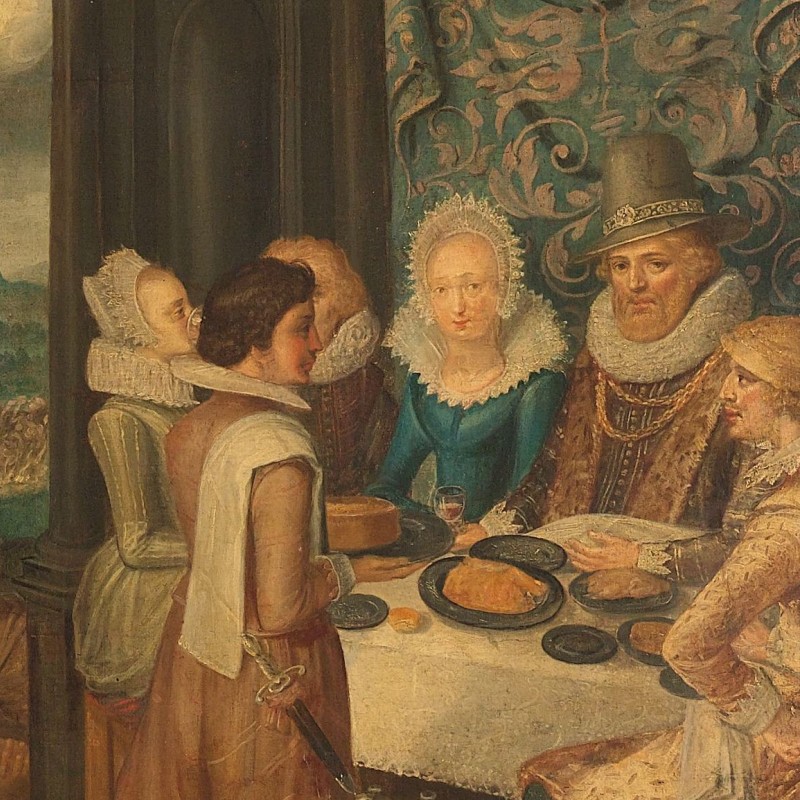
Kiechel described the scene in the hall in his journal: The king sat at the head of the table. On his left sat the queen, and on his right sat his son Sigismund. Beside Sigismund sat first the king’s daughter and then his sister. King John’s sister was the wife of Duke Magnus. Beside her sat a beautiful young boy of about twelve or thirteen years.4
The king’s daughter was probably Anna Vasa. Duke Magnus was Magnus of Saxe-Lauenburg, who was married to John’s sister Sophia. At the time of Kiechel’s visit to Sweden, the relationship between Duke Magnus and the Swedish royal family had broken down due to Magnus’ violent temper and mistreatment of his wife. He was exiled from Sweden in 1578. The young boy at the table was Gustav, son of Sophia and Magnus.
Samuel Kiechel continued his description: On the other side of the table, beside the queen, sat two unmarried women who were the queen’s sisters. All three women were very beautiful. Samuel further mentioned that John III had married his wife for her beauty rather than her social rank, which was below what was expected of a queen.5
King John’s first wife, Catherine Jagiellon, had died in 1583. Two years later, John married his second wife, Gunilla Bielke. As Kiechel noted, the king’s decision was based on the beauty of his new bride. Bielke was the daughter of a Swedish nobleman and did not come from one of Europe’s royal families. Due to this difference in rank, the marriage was considered a mismatch by many, including John’s family.
As a final note, our traveller commented on the king’s beard. He wrote that it was beautiful, yellowish and long, reaching his chest. Kiechel had not seen such a beard on any other person, and it suited the king very well.6
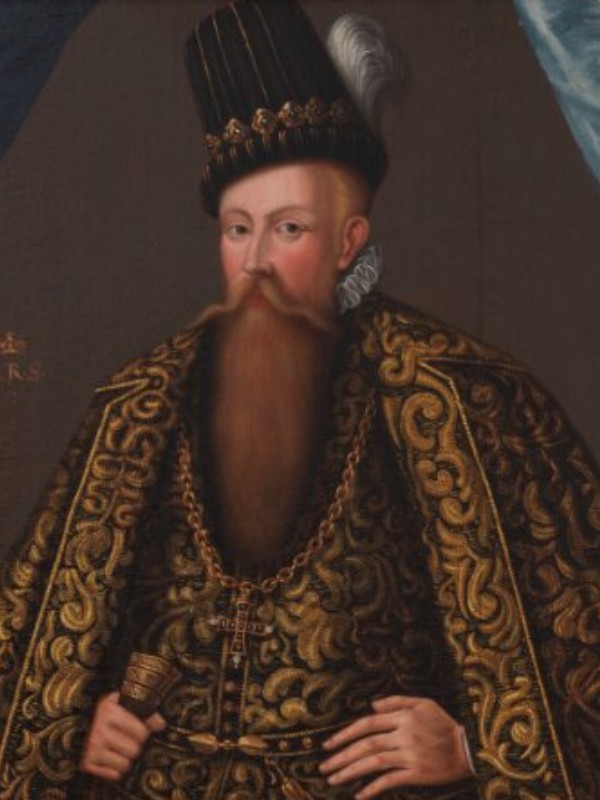
John III, King of Sweden
The whole scene of Samuel Kiechel watching the Swedish royal family eat sounds strange to our modern ears. From the description, it appears as if the family was treated as an attraction to be watched by visitors. However, it’s unlikely that a steady stream of people was led past the table to watch them eat. As Kiechel wrote, he needed a letter of recommendation, which was presumably difficult to obtain. Furthermore, while representation and being seen were part of successful early modern kingship, having a foreigner standing beside the table, watching the monarch eat, was not. Our traveller probably watched the scene from a doorway, gallery or another unobtrusive place in the background.
To Malmö
While in Kalmar, Samuel Kiechel sought a way to leave Sweden. Copenhagen was still forty miles away, and he was not in the mood to go there again. But the only alternative, leaving Sweden by ship, would have meant waiting another month in Kalmar for the sea ice to melt fully. Instead of waiting, Kiechel decided to return to the Danish capital. His companion, the Dane whom he had met in Stockholm, was willing to come along, and together they left on 5 April.
Illustrations & References
All images are in order of appearance with links to sources on external websites:
- Anonymous, Småland och Öland, generalkartor; Riksarkivet Stockholm.
- Anonymous, Östra kalmar län och öland, 1648; Lantmäteriet (Swedish mapping, cadastral and land registration authority).
- Swidde, Willem, Calmare, 1693; Rijksmuseum Amsterdam.
- Waghenaer, Lucas Jansz., Thresoor der zeevaert, Amsterdam 1596, fol. 126v; Utrecht University Repository.
- Wierix, Hieronymus, Portret van Sigismund III, koning van Polen en Zweden, 1563-1619; Rijksmuseum Amsterdam.
- van Rijck, Pieter Cornelisz., Kitchen Scene with the Parable of the Rich Man and Poor Lazarus, 1610 – 1620; Rijksmuseum Amsterdam.
- van Uther, Johan Baptista, Johan III, 1537-92, konung av Sverige, 1562-1592; Nationalmuseum Stockholm.
- Olai Magni historien, Der Mittnachtigen Länder …, Basel 1567, p. 237; Bayerische Staatsbibliothek. ↩︎
- Ibid. ↩︎
- Die Reisen des Samuel Kiechel aus drei Handschriften, K. D. Haszler (ed.), Stuttgart 1866, p. 79; Bayerische Staatsbibliothek. ↩︎
- Reisen des Samuel Kiechel, pp. 79. ↩︎
- Ibid. ↩︎
- Ibid., p. 80. ↩︎