
Journal of Samuel Kiechel
1 – 2 August 1585
From Delft to Dordrecht
“Delft is a small, heavily fortified, well-built and pleasant city. It has a beautiful market square, and the people brew superb beer. Not long ago, a Spaniard shot and killed the Prince of Orange. At each gate of the city, a quarter of the assassin’s body was hung.“
Die Reisen des Samuel Kiechel aus drei Handschriften, K. D. Haszler (ed.), Stuttgart 1866, p. 17; Bayerische Staatsbibliothek.
In Delft
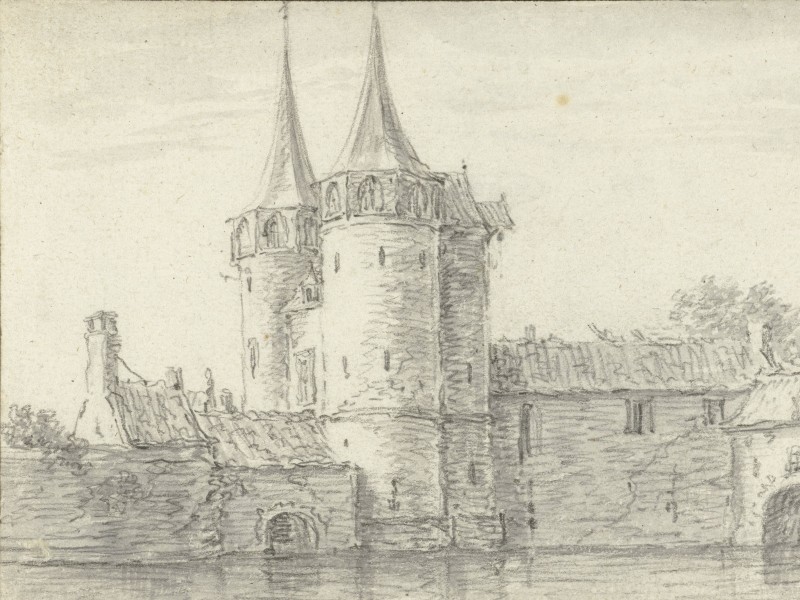
Eastern Gate of Delft
The cart with Samuel Kiechel and other passengers arrived in Delft in the evening. Security in the city was strict, requiring the traveller to state his name at both the gate and in the inn. The names of all new arrivals were recorded, and in the evening, the two lists were brought to the city’s governor for comparison. According to Kiechel, this was a standard security measure in all cities of the region.
Our traveller described Delft as a small, fortified, well-constructed and pleasant city with a beautiful market.
In a bird’s-eye view of Delft from the northeast, the New Church (“Die niewe kerck”), Old Church (“Die oude kerck”), and the town hall dominate the city. The town hall and the New Church are located in the market square, while the Old Church is slightly to the right. These three buildings appear markedly larger than their surroundings.
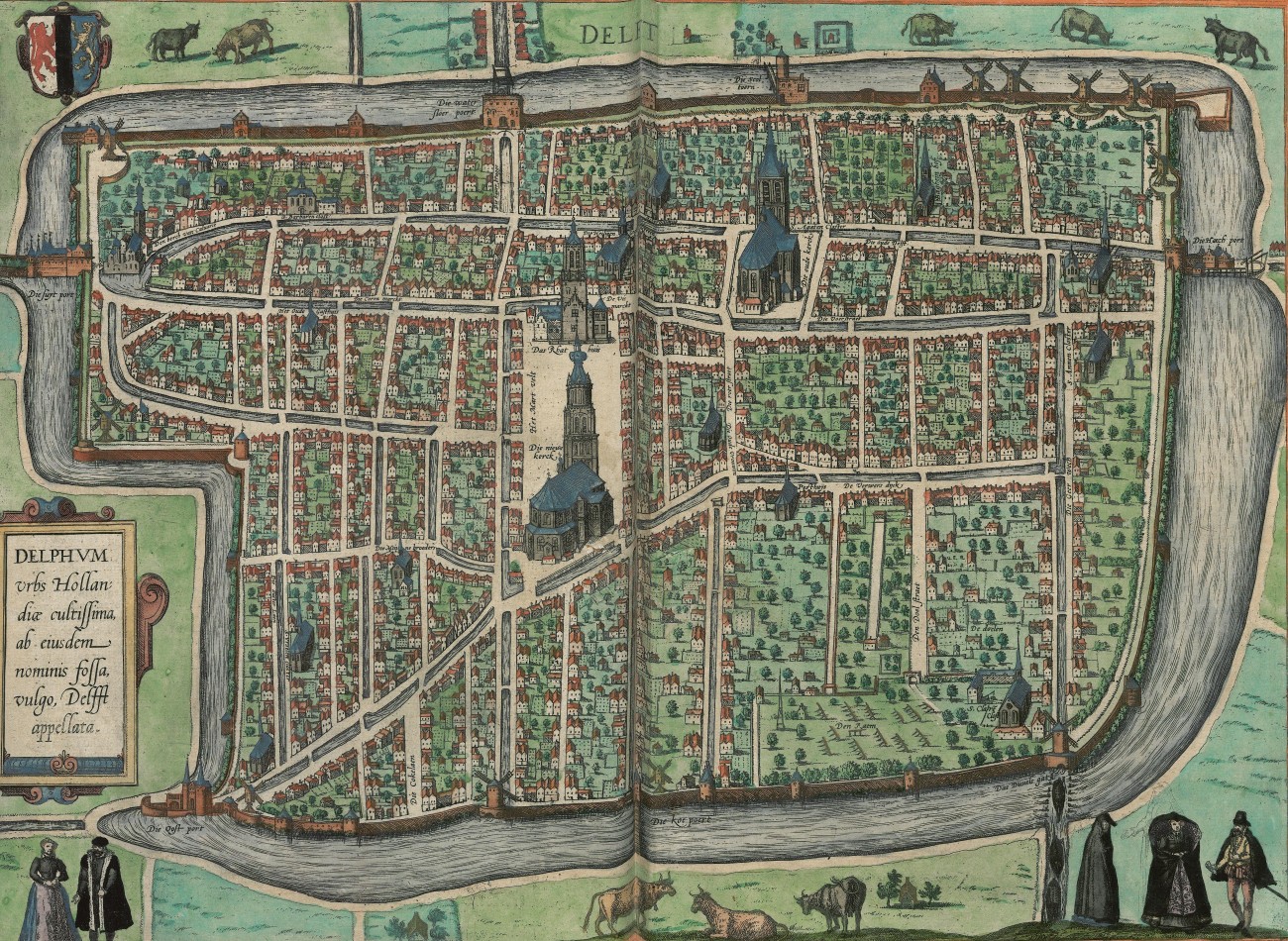
Delft, 1581 (1536)
This view is a reproduction of an older woodcut. The open areas on the lower right of the image are remnants of a fire that devastated the city in 1536, and the image dates from around that time.
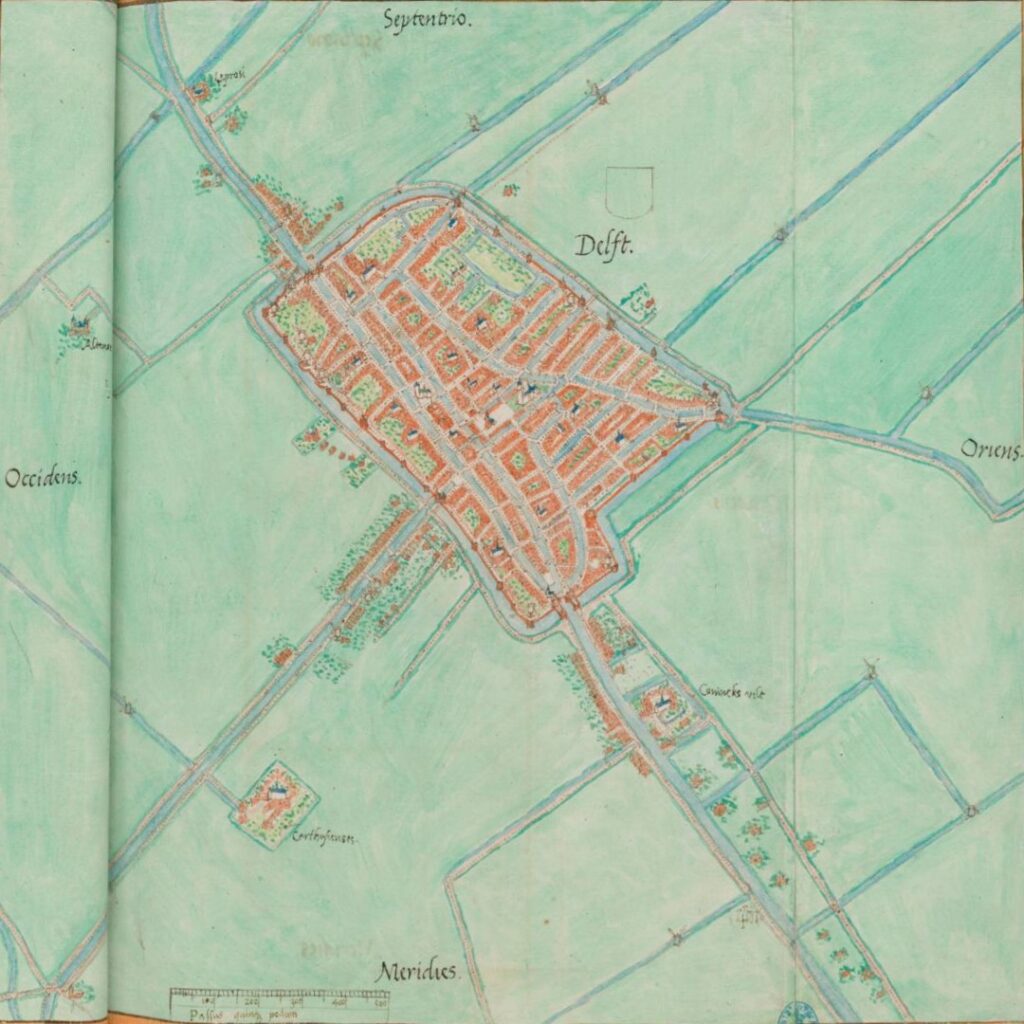
Delft, 1545
Another view of Delft was created by Jacob van Deventer around 1545. In the artist’s distinctive style, it shows a top-down perspective of the city, similar to a modern map. Van Deventer focused on the city’s streets and canals, with the houses only lightly indicated. A large part of the surrounding landscape is also included in the view. Samuel Kiechel had arrived via the road from the northwest. He would depart from the city along the canal to the southeast.
A better impression of early modern Delft is conveyed in two widely known paintings by Johannes Vermeer. He created The Little Street and View of Delft roughly seventy-five years after Kiechel visited the city. Delft would have changed in the intervening years, but the paintings still capture a sense of life in the city.
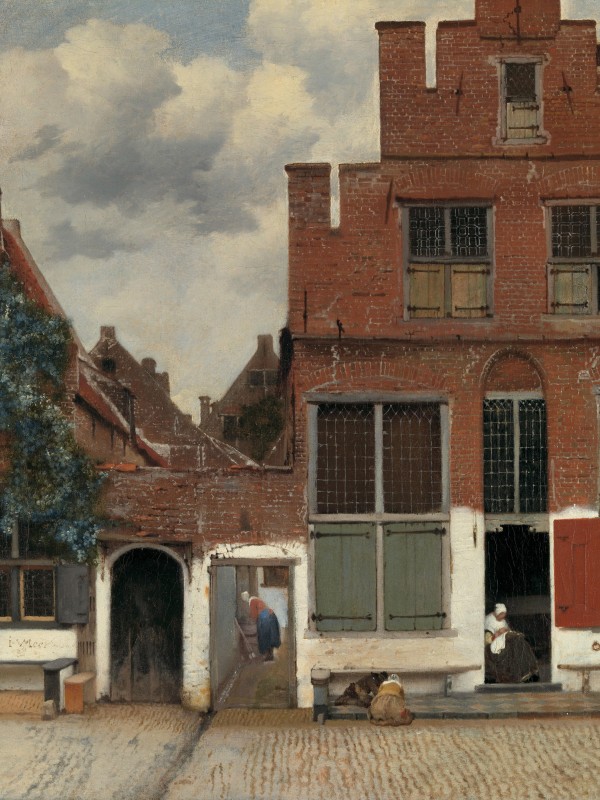
Vermeer’s The Little Street in Delft
The Murder of William of Orange
Delft had been the scene of a political assassination just a year before Kiechel’s visit. Our traveller reports that a Spaniard had shot the Prince of Orange. The murderer was captured and executed. Parts of his body were displayed at the four gates of Delft, where Kiechel saw the remains.
The victim of this assassination was William of Orange (1533-1584), also known as William the Silent. William grew up at the imperial court in Brussels. He was initially loyal to Emperor Charles V and later to Charles’s son, Philip II. Philip appointed him governor (stadtholder) of Holland, Zeeland, and Utrecht in 1559. However, over time, William began to share the concerns of the Dutch nobility, who were gradually excluded from local government in favour of Spanish noblemen.
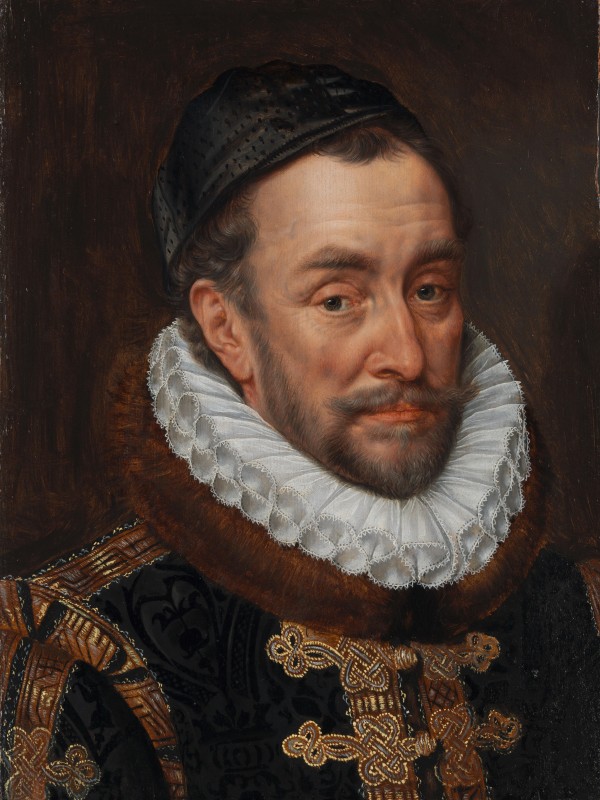
William of Orange (1533-1584)
Initially, Dutch protests aimed to restore the balance of power. However, they soon became entangled with religious matters. Although many Dutch noblemen were Catholic, they were opposed to the violent persecution of Protestants by the Spanish. Soon, religious questions became the main force behind the Dutch Revolt (Eighty Years’ War). William emerged as the leader of the rebellion against the Spanish. In 1579, Philip II outlawed William, and an assassination attempt was made in Antwerp in 1582. Following this attempt, William moved his residence to the former Sint Agathaklooster (St. Agatha monastery) in Delft, subsequently renamed Prinsenhof.
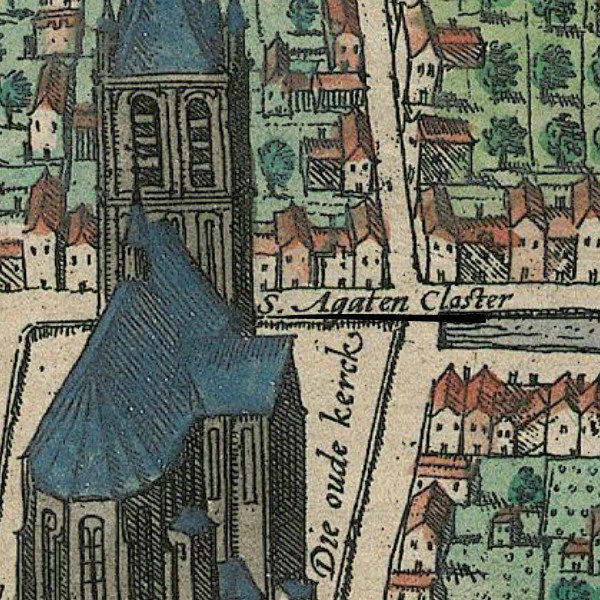
The Oude Kerk and St. Agatha monastery
On the map, “S. Agaten Closter” is marked next to a few unremarkable houses just behind the Oude Kerk (Old Church). Because the view was originally created in 1536, long before the Dutch Revolt, the monastery is not highlighted as a prominent location.
William was killed on 10 July 1584. His assassin was Balthasar Gérard, a devout Catholic and admirer of Philip II of Spain. Philip had placed a bounty on William of Orange’s head. Gérard managed to gain access to the Prinsenhof and shot William. After the assassination, he tried to escape but was caught, tortured and finally executed. Following the successful assassination, Philip did not pay out the promised bounty in money. Instead, Gérard’s parents received three country estates in the Franche-Comté and were elevated to the peerage. These three estates had initially belonged to William’s family.
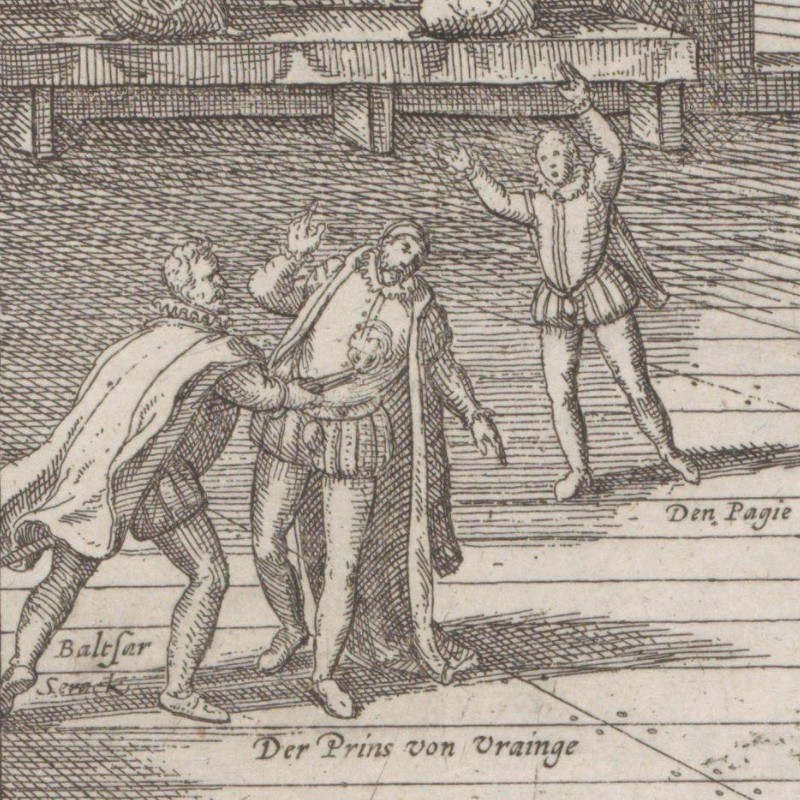
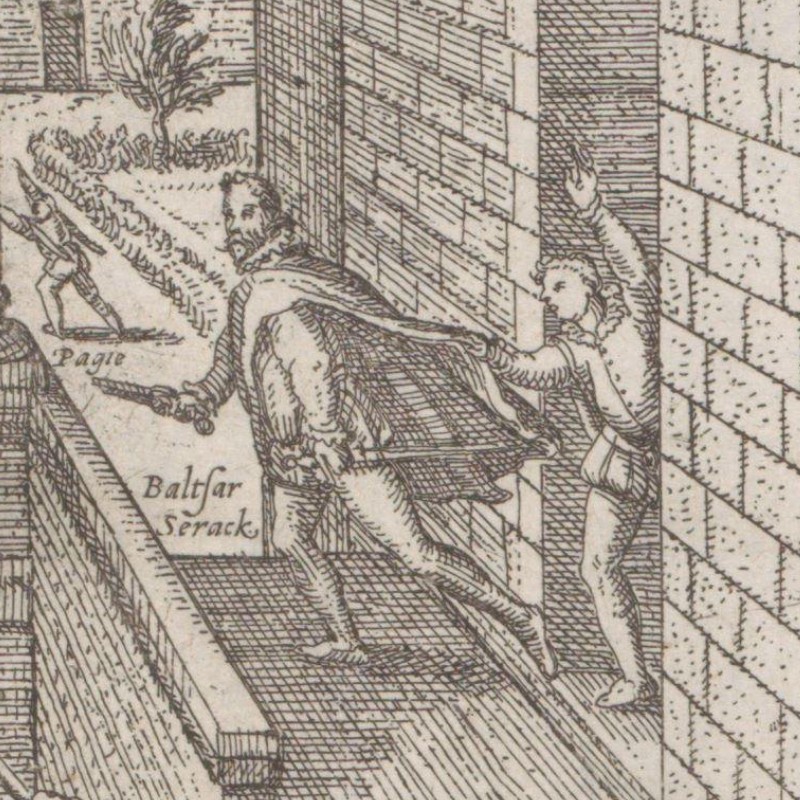
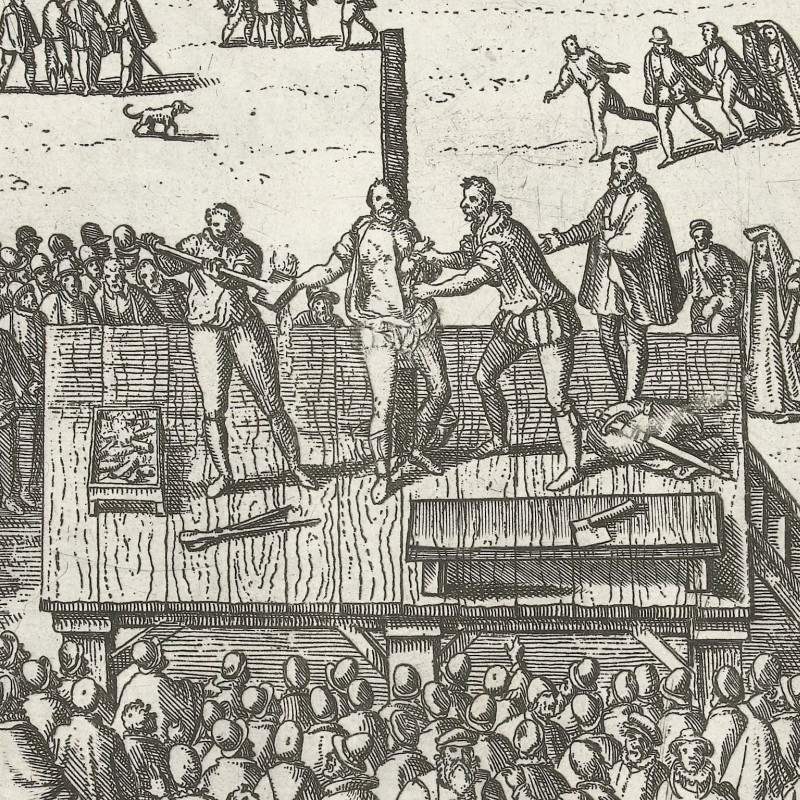
The assassination of William the Silent, the capture of the murderer and his execution.
Following William’s death, his eldest son, Philip William (1554-1618), inherited the title of Prince of Orange. However, he was unable to assume the role of stadtholder (governor) of Holland and Zeeland. Abducted by the Spanish in 1568 at the age of thirteen, Philip William remained a political prisoner. Although permitted to study and maintain his own household in Spain, the Spanish authorities deliberately isolated him from all matters concerning the Netherlands. The office of stadtholder for these two provinces was highly influential and could not be held by someone under Spanish control. Consequently, Philip William’s half-brother, Maurice of Nassau (1567-1625), was elected stadtholder in 1585.
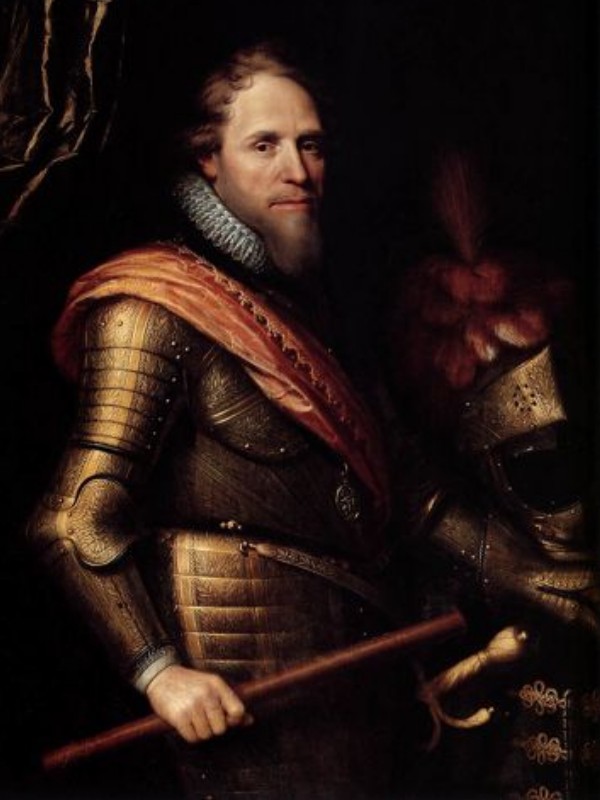
Maurice of Nassau (1567-1625)
Each of the seven provinces that made up the Dutch Republic maintained its own sovereignty. The States General, a legislative assembly composed of representatives from each province, oversaw military matters and foreign relations. Nevertheless, major decisions required unanimous consent. Throughout the existence of the Dutch Republic, ongoing disputes continued between the provinces and their stadtholders.
Although only eighteen at the time, Maurice of Nassau proved to be a successful leader of the Republic. He initiated reforms to reorganise and professionalise the army and achieved military success by retaking strategically important fortresses and cities from the Spanish. He was elected stadtholder of Utrecht, Guelders and Overijssel in 1590, and of Groningen in 1620. Ultimately, Maurice controlled six of the seven Dutch provinces, leaving him to rule uncontested until his death in 1625.
By Boat to Dordrecht
Samuel Kiechel stayed in Delft for one night and left the city the next day with two merchants. The three men made the short journey to Rotterdam and arrived there in time for breakfast. Kiechel noted that Rotterdam was poorly built and mainly inhabited by fishermen.
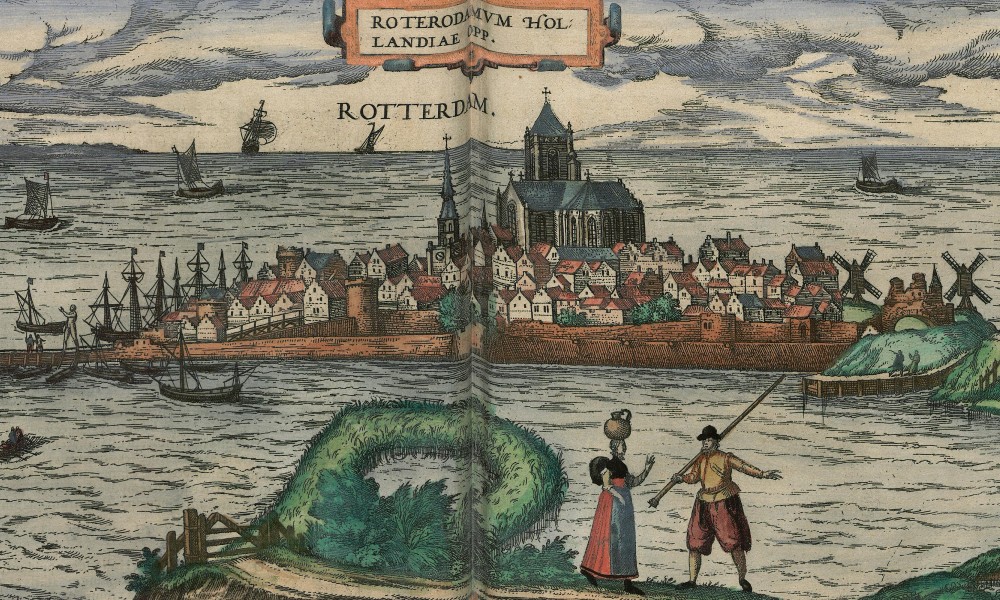
Rotterdam, 1581
The representations of Rotterdam in the Civitates Orbis Terrarum include a profile view in volume three and a bird’s-eye view in volume four. The profile view depicts the city as a peninsula stretching into the sea. However, since Rotterdam is neither a peninsula nor situated at the coast, this illustration is probably a copy of an older woodcut and isn’t entirely accurate.
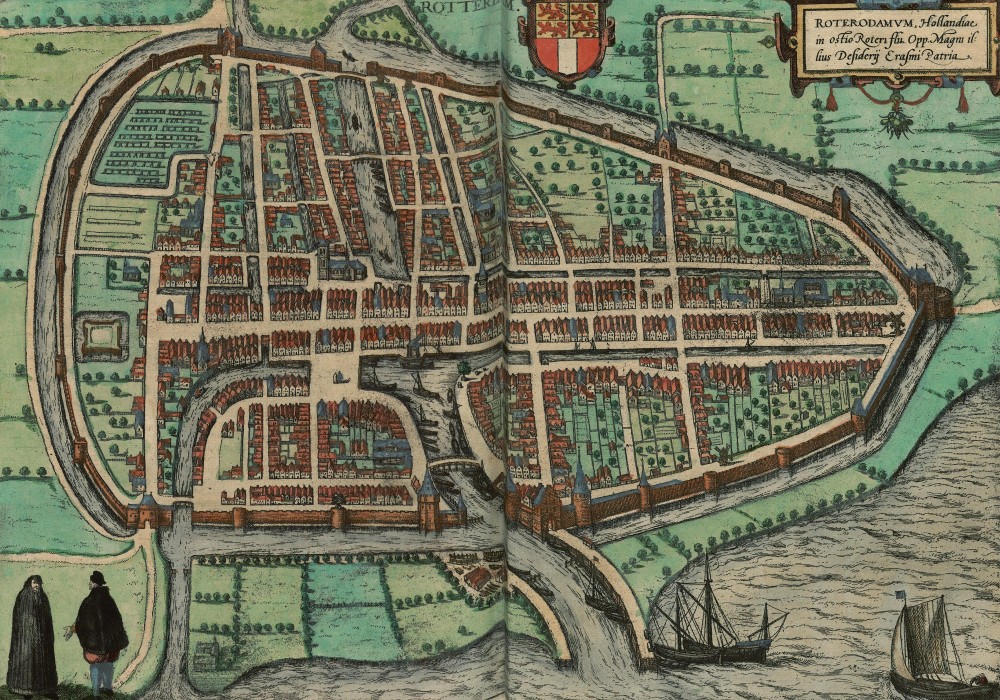
Rotterdam, 1588
The bird’s-eye view of Rotterdam shows a fortified city with walls and a moat. The moat is filled with water from a river (Nieuwe Maas). Rotterdam appears quite large, with broad, open areas within its walls that haven’t yet been built on. Both images portray the city as a trading port.
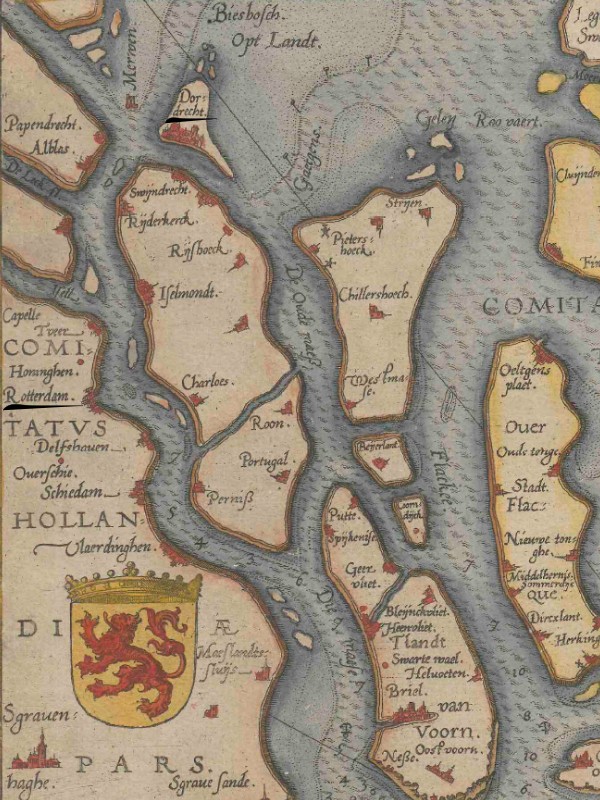
The Meuse delta with Rotterdam on the left and Dordrecht at the top of the map.
In Rotterdam, Kiechel and the two merchants hired a boat to travel to Dordrecht. A woman and two girls also accompanied them. At first, the wind was gentle, but it grew stronger once they had moved some distance from the port. The boat began to lean to one side, sitting deeper in the water, and everyone on board got wet.
One of the naval charts from the Spieghel der zeevaerdt depicts the Rhine-Meuse-Scheldt delta and its numerous islands. The chart is oriented toward the southeast, with Rotterdam on its left. Dordrecht appears in the upper left corner of the map on an island surrounded by the tidal wetlands of the Biesbosch. The boat Kiechel used would have sailed along the Nieuwe Maas and then into the Noord River towards Dordrecht.
In Dordrecht
The Dutch artist and cartographer Jacob van Deventer created a remarkable map of Dordrecht. The map is divided into two sections: one showing the city from a high vantage point, emphasising much of the surrounding countryside. Dordrecht is situated on an island. To the south are the tidal wetlands of the Biesbosch, while to the north, the Lower Merwede, which flows from the east (right), splits into the Noord River and the Oude Maas. The other section of maps concentrates on the city itself. Typical of van Deventer and contrasting with other city views of the period, he omits all embellishments, instead focusing on an accurate depiction of the street layout and canals.
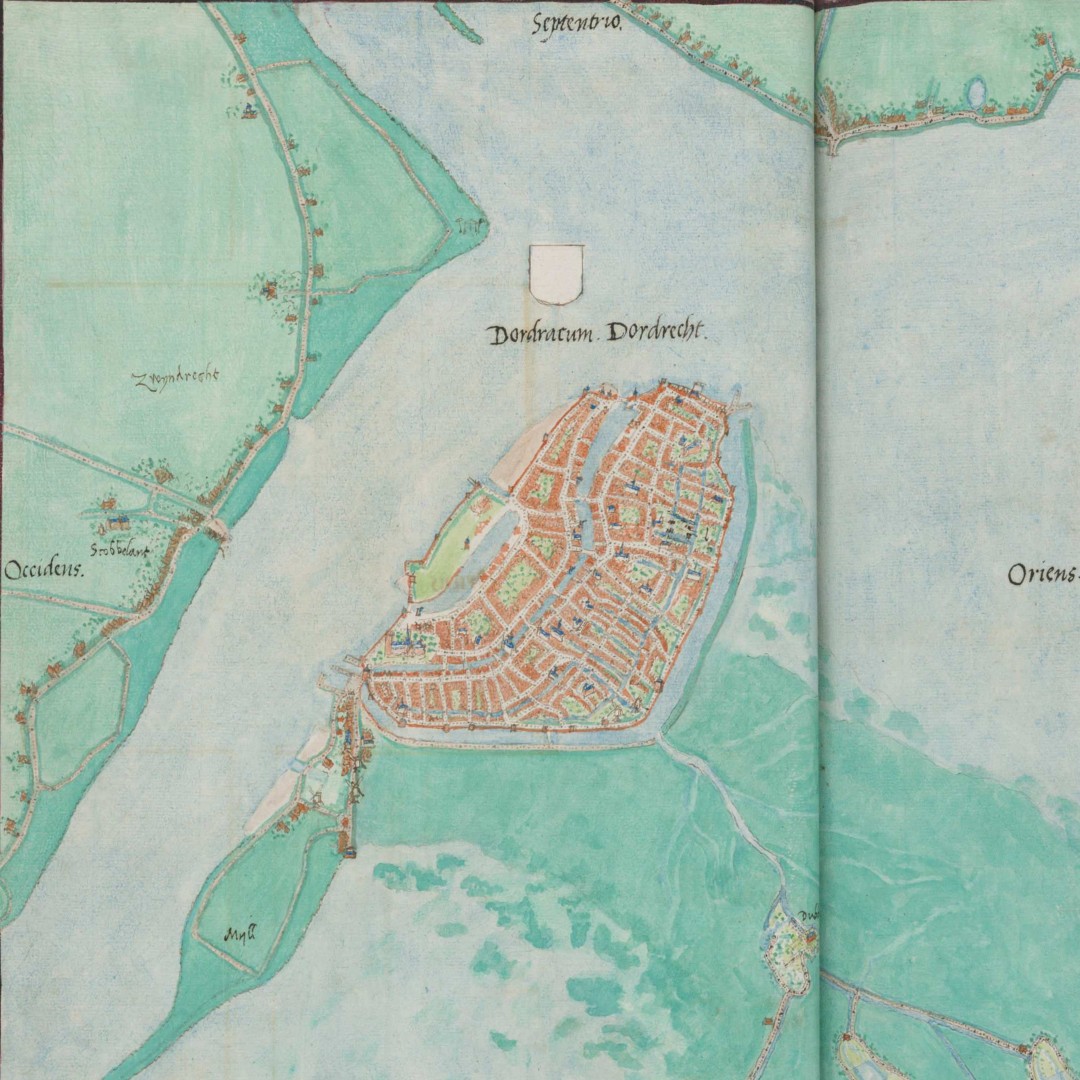
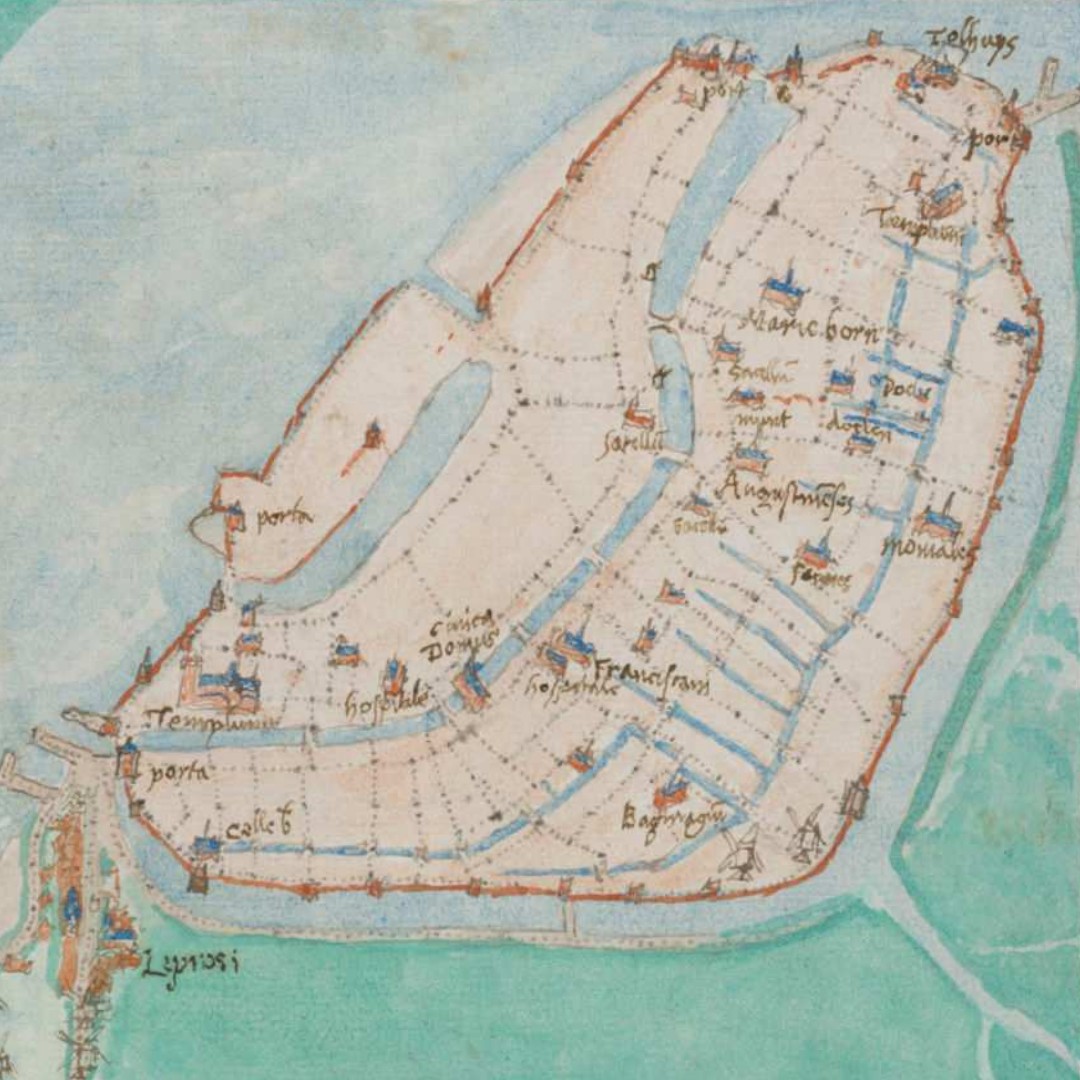
Dordrecht was not always an island. In 1421, a storm in the North Sea breached the dykes, causing large areas of Zeeland and southern Holland to flood during what became known as the St. Elizabeth’s Flood. The disaster considerably reshaped the Rhine-Meuse delta. The land south of Dordrecht flooded and turned into tidal wetlands. Although some parts of this land have been reclaimed over the centuries, the Biesbosch is now a Dutch national park.
Arrival in Dordrecht
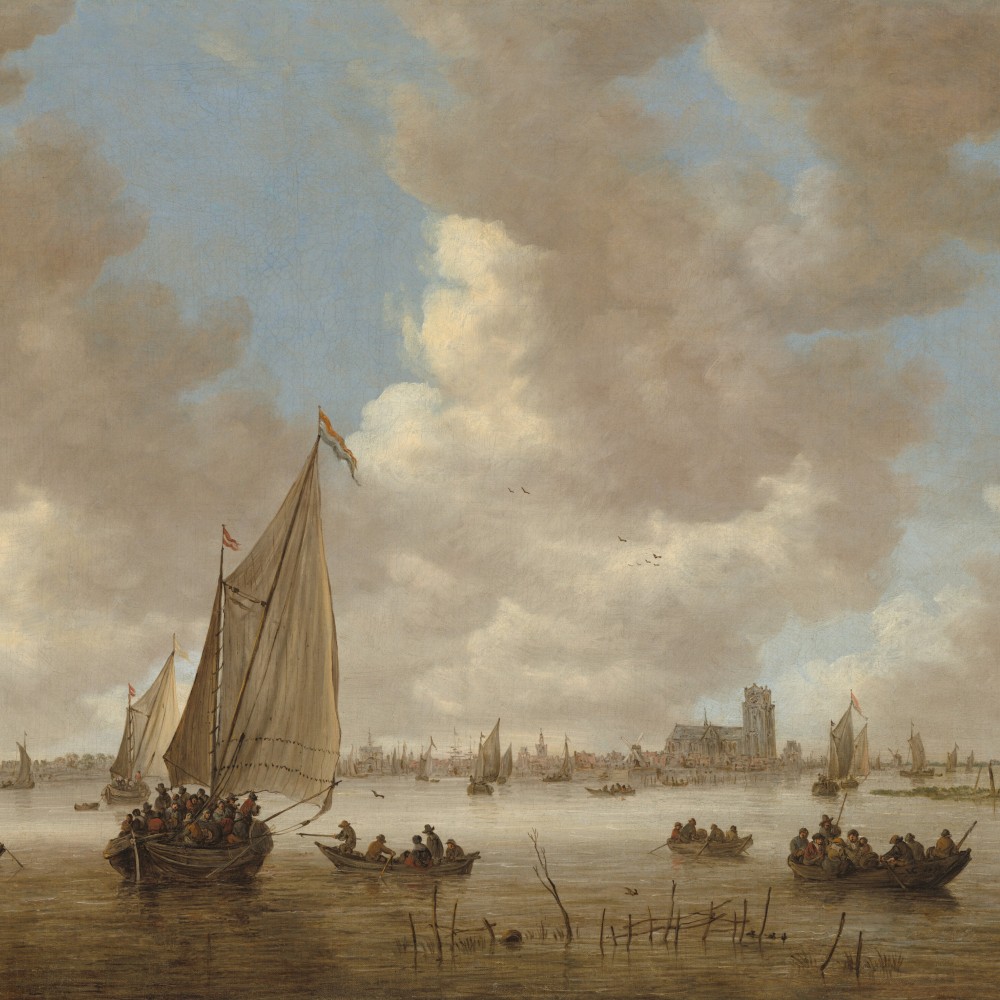
The boat carrying Samuel Kiechel and the other passengers arrived in the evening. This painting by Jan van Goyen depicts Dordrecht from the north. The boats in the foreground have come up the Noord River, like Kiechel’s, and now need to cross the Oude Maas to reach the city. The river is busy with small ships and boats. Of Dordrecht, we only see the Grote Kerk rising above the city. Although van Goyen painted this view in 1650, the atmosphere and impressions were probably quite similar when our traveller arrived.
Kiechel wrote that Dordrecht is on an island surrounded by water. If someone is to be executed, they must be transported across the water because the site of execution is on the other side. If someone goes for a walk and reaches a gate, they must turn back since it is impossible to proceed further due to the water. The traveller also mentioned that fish are inexpensive, particularly salmon, which is caught there.
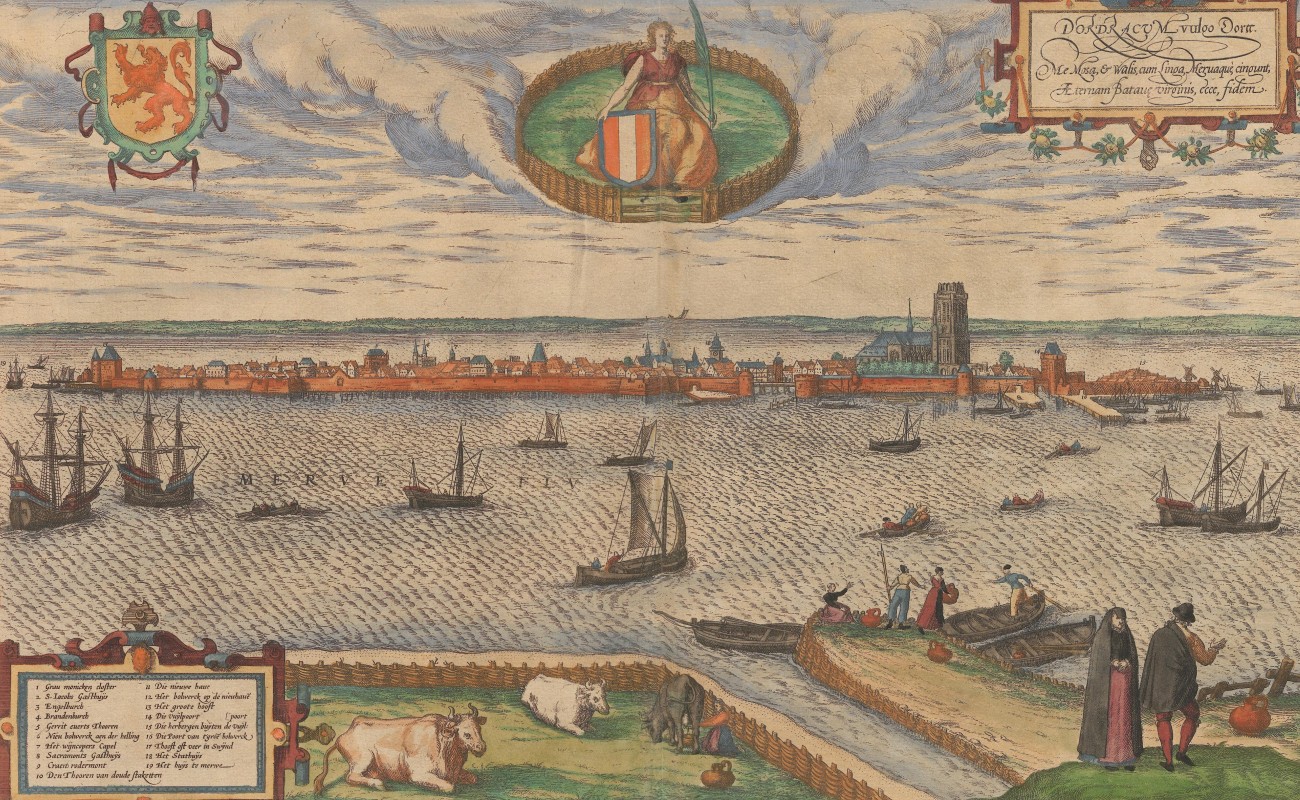
Dordrecht from the north, 1575
Two views of Dordrecht appear in the Civitates Orbis Terrarum. The first shows the city in profile, with the Lower Merwede and Oude Maas in the foreground. A wall surrounds Dordrecht. In the lower-left corner of this view, a legend names nineteen buildings, including three inns.
The second depiction offers a bird’s-eye view. In the upper right corner of the map are the tidal wetlands of the Biesbosch. A broad canal runs through the city, and large open spaces remain within Dordrecht’s walls. These appear to be gardens and orchards. Various ships on the river suggest commercial activity. In both views, the Grote Kerk stands out as the only large, prominent structure in the city.
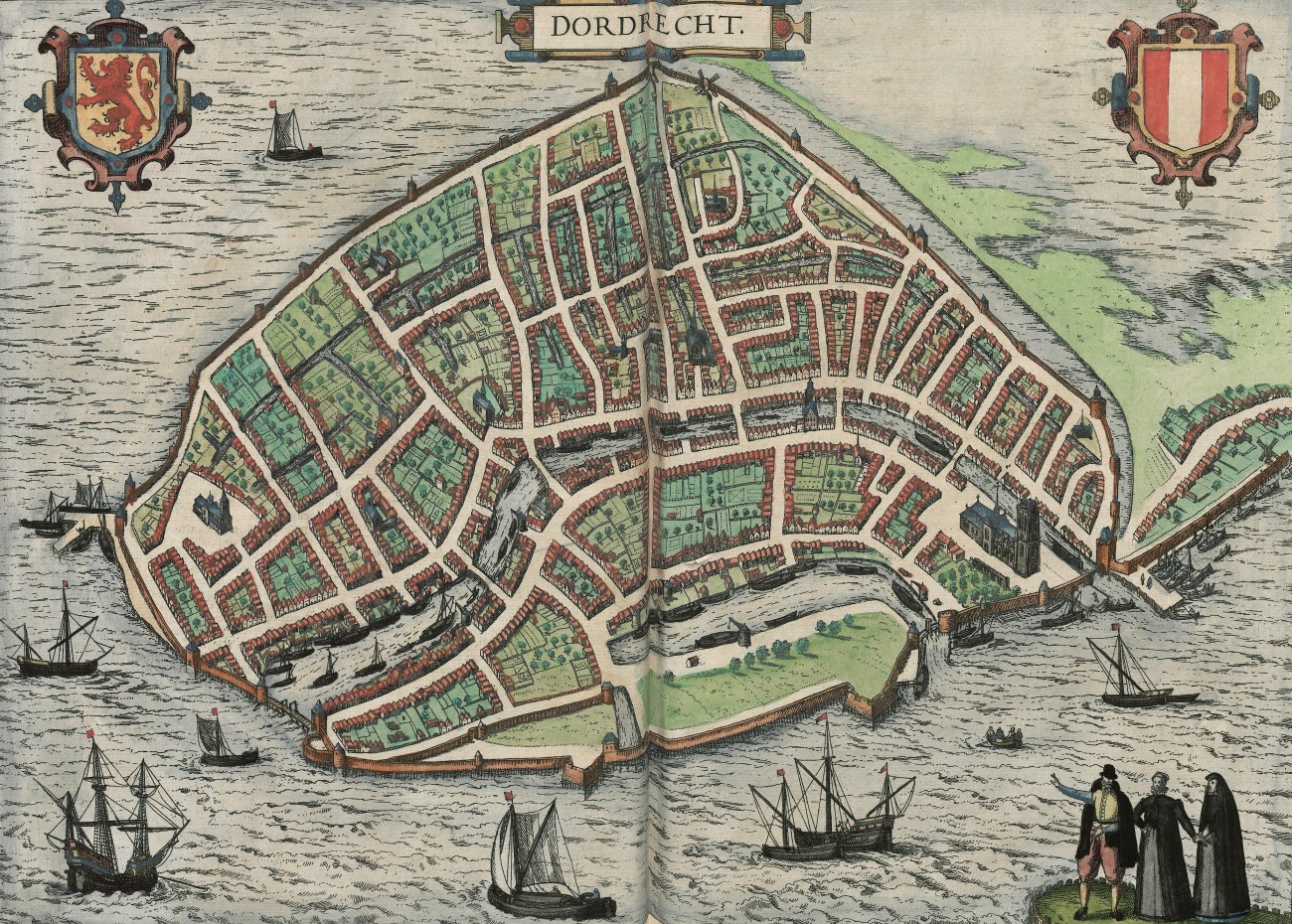
Dordrecht from the north, 1581
The final image I wish to highlight is an exceptionally lifelike depiction of Dordrecht by the Flemish artist Anton van den Wijngaerde (1525-1571), drawn in 1545. This view is available in the digital collection of the Ashmolean Museum, Oxford. He shows the city in profile, with some of its surrounding landscape visible. Van den Wijngaerde worked in the service of King Philip II of Spain and produced panoramic views of various European cities. Although most of these cities were in Spain, the artist also created remarkable views of Dutch towns and an impressive panorama of London. His work was based on observations from different viewpoints and preliminary sketches. The results of his careful observations were always highly realistic, often including scenes of local life.1
Illustrations & References
All images are in order of appearance with links to sources on external websites:
- Hogenberg, Frans, Moord op Willem van Oranje, 1584, c. 1591; Rijksmuseum Amsterdam.
- van Goyen, Jan, Oostpoort in Delft, 1606 – 1656; Rijksmuseum Amsterdam.
- Delft, in: Braun, Georg, Hogenberg, Frans, Civitates Orbis Terrarum (3), Cologne 1593, fol. 29v; Heidelberg University.
- Delft, in: Deventer, Jacob van, Planos de ciudades de los Países Bajos. Parte III [Manuscrito], 1545, p. 37; Biblioteca Nacional de España.
- Vermeer, Johannes, View of Houses in Delft, Known as ‘The Little Street’, 1658; Rijksmuseum Amsterdam.
- Key, Adriaen Thomasz., Portrait of William I, Prince of Orange, c. 1579; Rijksmuseum Amsterdam.
- Hogenberg, Frans, Moord op Willem van Oranje, 1584, c. 1591; Rijksmuseum Amsterdam.
- Hogenberg, Frans, Executie van Bathasar Gerards, 1584, Rijksmuseum Amsterdam.
- Mierevelt, Michiel van, Maurits van Oranje-Nassau, 1607; RKD – Netherlands Institute for Art History.
- Rotterdam, in: Braun, Georg, Hogenberg, Frans, Civitates Orbis Terrarum (3), Cologne 1593, fol. 31v; Heidelberg University.
- Rotterdam, in: Braun, Georg, Hogenberg, Frans, Civitates Orbis Terrarum (4), Cologne 1594, fol. 13v; Heidelberg University.
- Waghenaer, Lucas Jansz., Teerste [-tweede] deel vande Spieghel der zeevaerdt, Leiden 1585, fol. 3v; Utrecht University Repository.
- van Goyen, Jan, View of Dordrecht from the North, 1650; National Gallery of Art, Washington D. C.
- Dordrecht, in: Braun, Georg, Hogenberg, Frans, Civitates Orbis Terrarum (2), Cologne 1575, fol. 24v; Heidelberg University.
- Dordrecht, in: Braun, Georg, Hogenberg, Frans, Civitates Orbis Terrarum (3), Cologne 1593, fol. 28v; Heidelberg University.
- Deventer, Jacob van, Planos de ciudades de los Países Bajos. Parte III [Manuscrito], 1545, p. 16); Biblioteca Nacional de España.
- Rutte, Reinout, Antoon Van Den Wijngaerde’s Drawings of Cities in the Low Countries. Cleverly Constructed City Views for Philip II, Bulletin KNOB 119/1 (2020), pp. 1-24. ↩︎