
Journal of Samuel Kiechel
19 – 22 July 1586
In Riga
“Shortly before I visited Riga, an incident occurred because of the new calendar. The Jesuits in the city made a contract with the six most noble members of the council […] who promised to sell the Cathedral to the Jesuits for 36.000 Thaler behind the backs of the people and the council.”
Die Reisen des Samuel Kiechel aus drei Handschriften, K. D. Haszler (ed.), Stuttgart 1866, p. 107; Bayerische Staatsbibliothek.
About Riga
After crossing Lithuania with Tatar guides, the traveller Samuel Kiechel arrived in Riga. He wrote: Riga is the main city of Livonia. It is not particularly large, but a well-built, beautiful and pleasant place. High, beautiful walls fortify it, and it is under the protection of the King of Poland. The king has a palace in Riga, built partly within the city and partly outside the walls beside the river.1
Furthermore, Kiechel noted: Riga is located on the Düna River (Daugava). The river is impressive and wider than the Rhine at Cologne. It originates in Russia and flows into the Baltic Sea two miles downstream of Riga. Ships can sail all the way up the river to the city to load and unload their cargo. Many goods arrive on the river from Russia.2
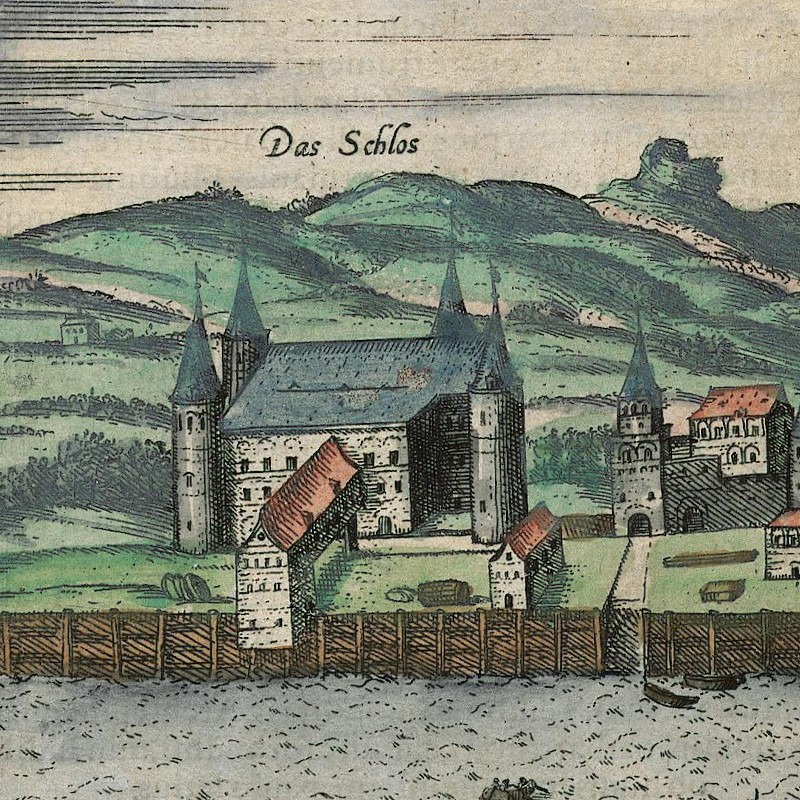
The palace in Riga, 1581
Riga is a bishopric, Kiechel continues, and the current bishop is a nobleman from Lithuania. He is from the Radziwiłł family, and the current pope, Sixtus V, made him a cardinal. This Lithuanian nobleman had then travelled to Rome to receive his hat and other insignia.3
Kiechel’s description of the Bishopric of Riga seems somewhat difficult. Riga had been an Archdiocese until 1563, when the city converted to Protestantism. There had not been another Catholic bishop in this seat. The noble family Kiechel mentioned was the Radziwiłł (Radvila) family, one of the most powerful and influential Lithuanian dynasties. Georg Radziwiłł (Jurgis Radvila) had been a cardinal at the time and had been appointed as governor of Livonia, but not as bishop of Riga.
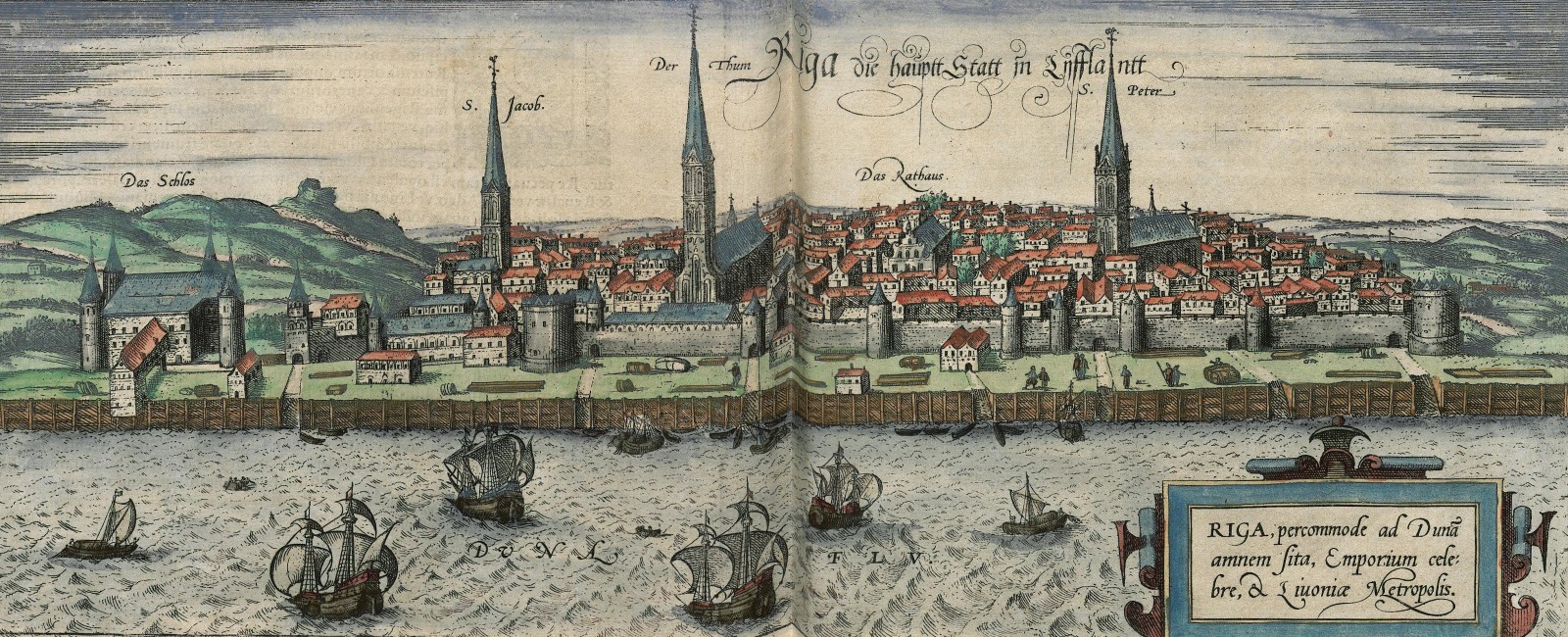
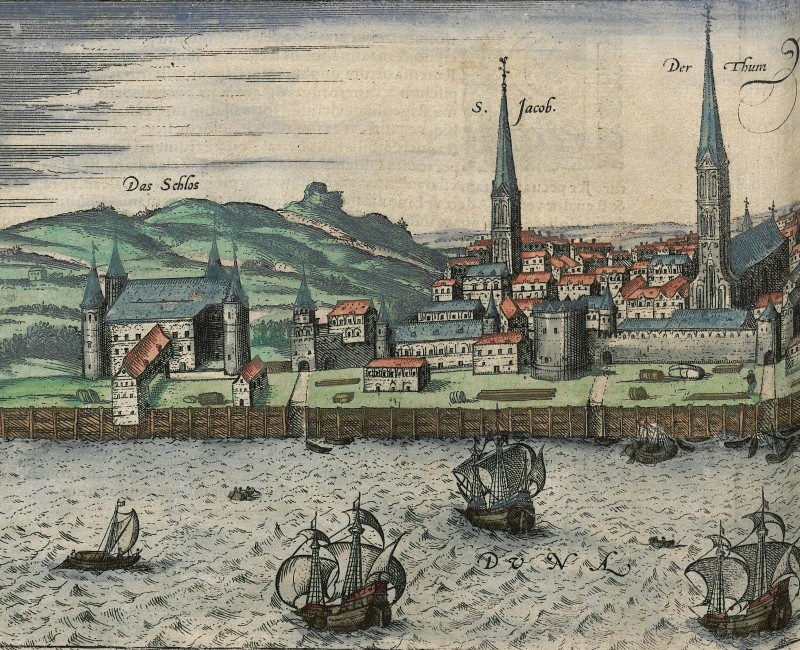
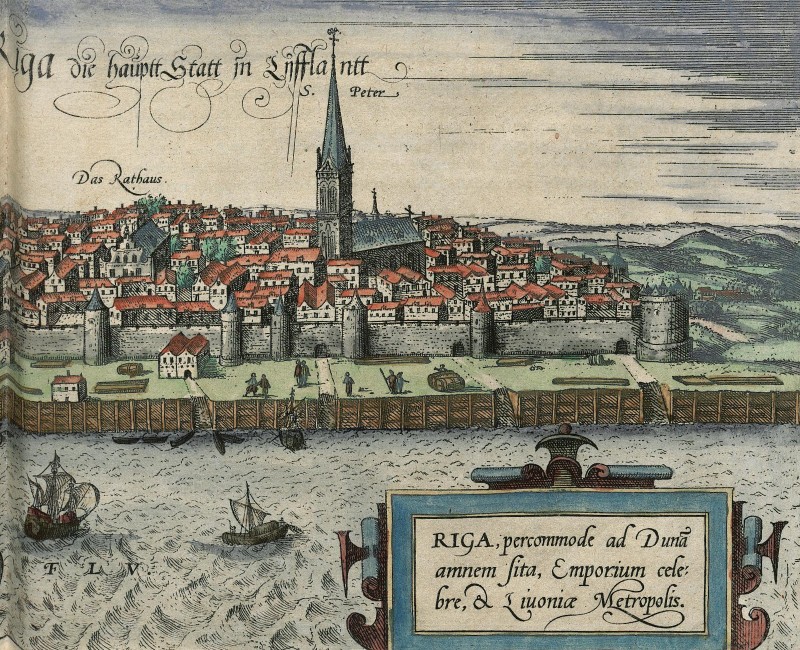
A view of Riga is in volume three of the Civitates Orbis Terrarum. The city is seen from the south-west. The river with some large and small ships is in the foreground. Various buildings are identified by name. The palace is on the left side of the image and, like Kiechel described, at the edge of the city and close to the river. Riga Cathedral is in the centre, and the town hall is to the right of it. Between the palace and the Cathedral is St. James’ Church, the former Catholic Cathedral.
With its location on the large Daugava River, the area around Riga had attracted traders and settlers for centuries. As Kiechel noted, the river has its source in Russia. It connects to the network of Russian rivers and was used by the Vikings as a trade route and to travel to Byzantium. German merchants regularly visited the area in the twelfth century. Riga was founded in 1201 by German merchants and missionaries. The city became the seat of an archdiocese to convert Livonia to Catholicism. Riga became a member of the Hanseatic League and, together with Reval (Tallinn), dominated the lucrative trade with Novgorod in Russia.
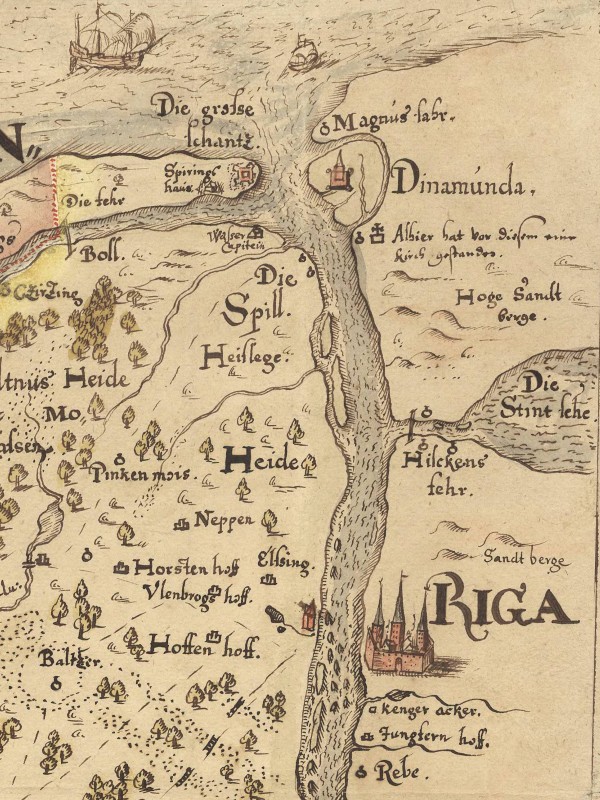
Riga and the Daugava River, 1634
Throughout its history, Riga had an uneasy relationship with its archbishops and the Teutonic Order, which had expanded from Prussia to Livonia in 1237. As in the Holy Roman Empire, the inhabitants of Riga sought autonomy from any territorial lords.
In 1522, the city became Protestant, leading to further tensions with the archbishop. By the sixteenth century, Livonia had become a confederation of four bishoprics (Riga, Dorpat, Ösel-Wiek and Courland), the Livonian Branch of the Teutonic Order, and wealthy, powerful cities such as Riga, Reval and Dorpat (Tartu). No part of the confederation was strong enough to dominate the others. This led to decades of economic stability and little conflict, but when the Livonian War (1558-1583) broke out in 1558, the armies of Ivan the Terrible faced little opposition. The war dragged on for more than twenty years, and in 1581, the council of Riga decided to accept the protection of the Polish King Stephan Báthory.
Religious Tensions in Riga
Shortly before Samuel Kiechel arrived in Riga, religious tensions had erupted in Riga. Kiechel wrote that they had something to do with the new calendar. He had heard that the Jesuits, who had a presence in the city, had made a secret pact with some of the most influential people in Riga: the three mayors of the city, the city’s syndic*, the bailiff, the superintendent (senior position in the Protestant church) and the rector of the schools. They agreed to go behind the backs of Riga’s council and the citizenry to sell the cathedral to the Jesuits for 36.000 Thaler.4
The rector of the schools of Riga accidentally revealed the secret agreement. One of the three mayors, the syndic and the bailiff were immediately arrested. The other two mayors fled the city. One of them fled to the King of Poland for protection and support. The rector had also fled the city.5
But the superintendent hid in his home for a long time. The people broke into his house and eventually found him hiding inside a baking oven. In his hurry to climb in, he had lost one of his shoes. He was dragged out of the house and through the streets to the market square. On the way, he was beaten, and the people called for him to be crucified. He begged for mercy and promised to tell all he knew about the sale of the church. He was spared and imprisoned.6
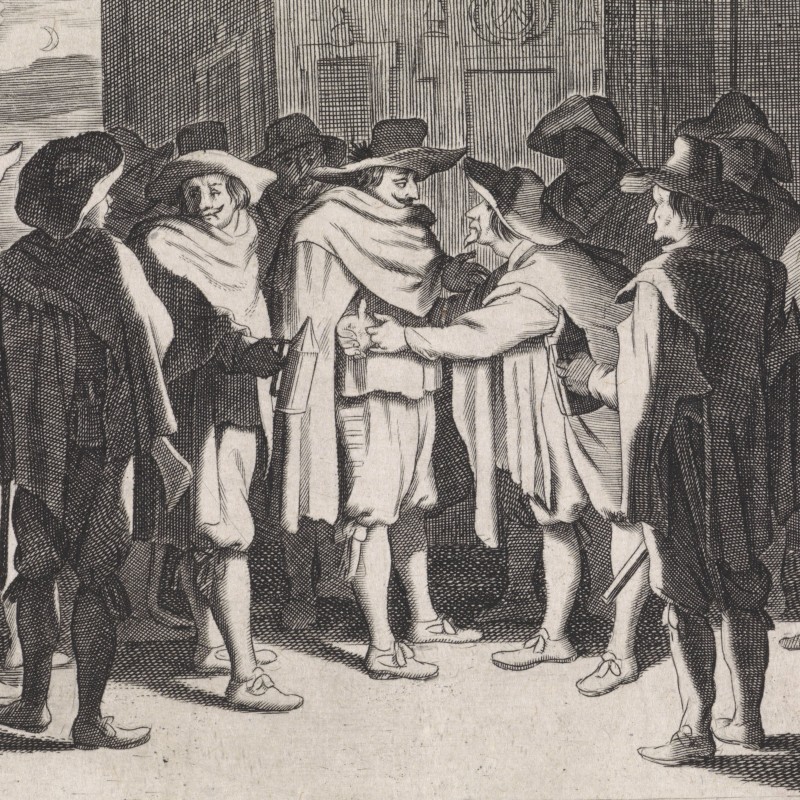
Meanwhile, the people sent a delegation of two citizens to the town hall. They told the members of the city council not to do or decide anything in the matter without telling the citizenry. Many hundreds of people had assembled in the square in front of the town hall, and the council members were presumably quite fearful now.7
The conspirators who had been caught were not tortured. They were questioned and quickly confessed everything. They were sentenced to death first by the citizenry and then by the city council. The syndic and the bailiff were brought out of the town hall and onto the market square. There, they were publicly beheaded. The superintendent was spared because of his advanced age.8
However, the mayor, who had been captured, had many friends among the wealthy and influential citizens of Riga. He was not executed and was still in prison at the time Kiechel visited the city. Kiechel noted a strange atmosphere in the city. This mayor had so many friends that the citizens did not know if their neighbours were sympathetic towards him. They could not show their sympathies, and so, mistrust ruled.9
The whole affair was not over by the time Kiechel visited. Our traveller heard that the King of Poland did not approve of the city’s handling of the issue. The council ordered the citizens to stock up on grain, and the number of guards at the walls and gates was increased. Apparently, there was the expectation that the king would come with an army, and the city should be ready for a siege.10
The Calendar Riots
Samuel Kiechel’s report about the events in Riga is somewhat chaotic and impossible to reconstruct in every detail. This is, in part, also the case because I have found little literature on the events of the Calendar Riots.11 Our traveller had presumably heard about it from people in Riga. As is common with word of mouth, everyone told a slightly different story depending on their knowledge and involvement, prejudices and position on the issue. In addition, Kiechel was wholly unfamiliar with the situation in Riga as he tried to make sense of what he had been told. As a Protestant from southern Germany, he certainly had his own point of view regarding the religious tensions of the late sixteenth century.
Kiechel correctly identified the main issue behind the tumult in the city: the Calendar Reform of 1582. Since 1581, Riga had been part of the Polish-Lithuanian Commonwealth. It had retained many of its privileges and freedoms, but as a subject of the Catholic Polish King, Protestant Riga was obliged to adopt the new calendar in 1584. In addition, the King bought St. James’ Church from the city and gave it to the Jesuits, who now moved into the city.
As in other non-Catholic parts of Europe, the new Gregorian Calendar was seen less as a necessary correction to the now wildly inaccurate Julian Calendar. Because it was announced by papal bull, it was considered a propaganda instrument and a ploy to reinstate papal supremacy. The Protestant Samuel Kiechel continued to use the old Julian Calendar throughout his journal. Likewise, the appearance of Jesuits in Riga was considered a provocation.
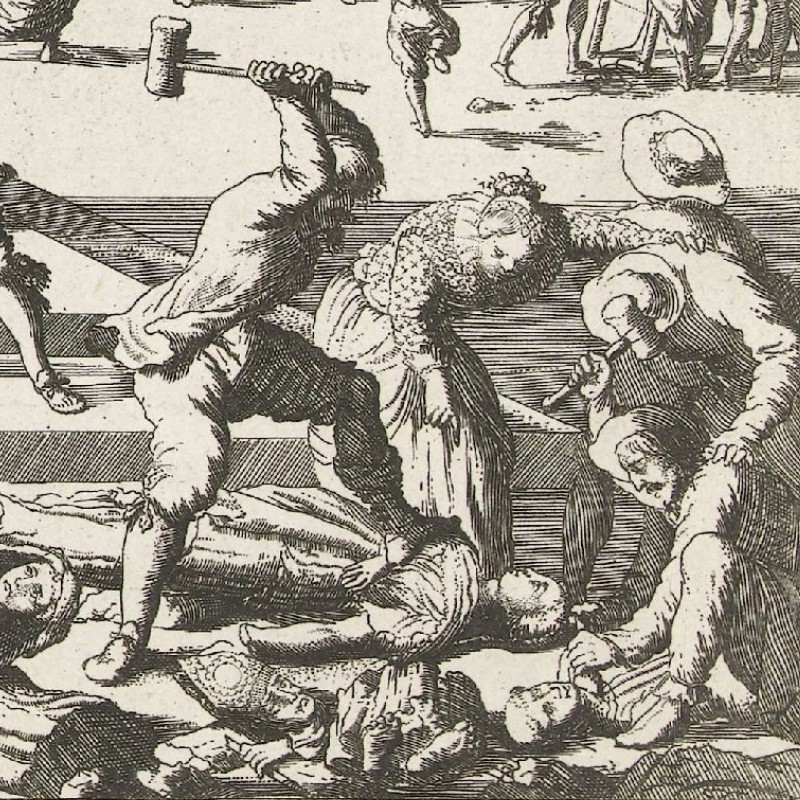
Destruction of Catholic church decorations during religious riots in the late sixteenth century
The events also divided Riga’s population. The split fell between the wealthy, established and influential families with positions on the council and the general population, who had no voice in city politics — in short, between the rich and the poor. Many of the city’s patricians, as well as the Protestant clergy, were willing to accept the changes and to keep the peace with the king. But a large part of the city’s population was unhappy about having the Polish King as their sovereign and felt that their religious beliefs were threatened.
Samuel Kiechel mentioned the sale of the Cathedral of Riga. This was not the Cathedral Church of Saint Mary, one of Riga’s best-known sights today. It was the aforementioned sale of St. James’ Church and its handover to the Jesuits. The sale was not a clandestine deal. However, the council members who had approved it were accused of treachery. Following the introduction of the Gregorian Calendar, riots broke out. The rioters broke into St. James’ Church, disrupted the service, attacked churchgoers and damaged its interior.
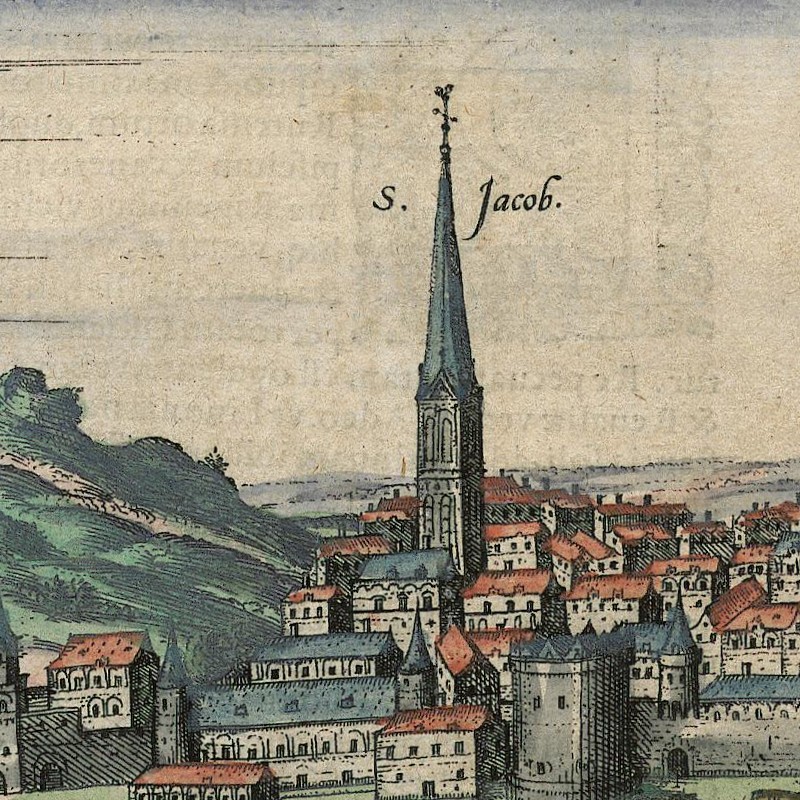
St. James’ Church, 1581 (in German: St. Jakobs’ Kirche, since 1923 a cathedral)
Contrary to what Kiechel heard, the rector of the Cathedral school was not among those who had agreed to the sale and introduction of the calendar. He protested this and apparently insulted the King in doing so. He was arrested, and this arrest incurred new riots. The riots were accompanied by looting, violence and intimidation. In particular, the council members were the targets of popular anger. As Kiechel wrote, the council was ordered not to make any decisions without the citizens’ consent.
The two executions, Samuel Kiechel mentioned, also took place. But since there was no real conspiracy, the trial by the agitated populace and the cowed council was far from fair. The verdict was therefore a revenge on two members of the city’s elite for their part in agreeing to take the Polish King as sovereign, the introduction of the Gregorian calendar and the loss of St. James’ Church.
I have not found anything about the mayor and his many friends, Kiechel mentioned. But our travellers’ characterisation of the city’s atmosphere as mistrustful and suspicious must have been quite accurate.
Leaving Riga
Samuel Kiechel spent five days in Riga. During this time, he met a merchant who traded with Pskov. The man was from Heiligenhafen in Holstein, Germany. He told Kiechel about his business and about Livonia. After the conversation, our traveller was eager to see more of the country. He found a Livonian carter willing to take him to Dorpat (Tartu), forty miles from Riga.
Illustrations & References
All images are in order of appearance with links to sources on external websites:
- van Delen, Dirck, Iconoclasm in a Church, 1630; Rijksmuseum Amsterdam.
- Riga, in: Braun, Georg, Hogenberg, Frans: Civitates Orbis Terrarum (3), Cologne 1593, fol. 43v; Heidelberg University.
- Schwengell, Georgius, Riga – Schlock – Mitau – Bauske – Üxkull, 1634; Swedish National Archives, Stockholm.
- Anonymous, Nachtwakers fouilleren een man, 1613 – 1667; Rijksmuseum Amsterdam.
- Die Reisen des Samuel Kiechel aus drei Handschriften, K. D. Haszler (ed.), Stuttgart 1866, p. 107; Bayerische Staatsbibliothek. ↩︎
- Ibid. ↩︎
- Ibid. ↩︎
- Ibid. ↩︎
- Ibid., pp. 107f. ↩︎
- Ibid., p. 108. ↩︎
- Ibid. ↩︎
- Ibid. ↩︎
- Ibid., p. 109. ↩︎
- Ibid. ↩︎
- Most of the following details are from a rather old publication: Bergmann, Benjamin, Die Kalenderunruhen in Riga in den Jahren 1585 bis 1590, Leipzig 1806, 67-109. ↩︎